
It's a long read, but worth finishing!
Any of us may face the dilemma: treat the tooth or take it out? The decision is often made harder by pain and by scientifically unfounded claims circulating online, for example that root canal treatment causes cancer. Content like this is quickly flagged as false or removed, which in itself undermines its credibility.
The "experts" in these materials cite research from the turn of the 19th and 20th centuries by Weston Price, according to which the root canal system can never be fully disinfected, leading to chronic inflammation. At the time this was true, but today, thanks to technological progress and modern treatment methods, endodontics is close to perfect.
These days it is easy to manipulate the facts – all you need to do is find patients with common conditions, such as high blood pressure, check how many of them have had root canal treatment (probably most), and you can draw the false conclusion that it is the cause of their health problems. Read on and see what the facts are!
Research published by the American Medical Association in 2013 showed that in 45% of patients with properly root-canal-treated teeth, the risk of developing cancer was reduced.
Another argument put forward in these theories is that the body rejects dead teeth, so they recommend replacing them with implants, ideally zirconia ones, which are, after all… DEAD. Yes – zirconia and titanium are biocompatible, but they will never be suspended on ligaments, nor will they have nerves or a blood supply. They are dead, biocompatible and excellent solutions permanently integrated with the bone. Current research puts the success rate of root canal treatment at 86-98%, depending on the patient's immune response, the operator's skills, and the techniques and equipment used during treatment. So the statistics show that this method of treating teeth is highly effective.
Why is saving your own teeth so important?
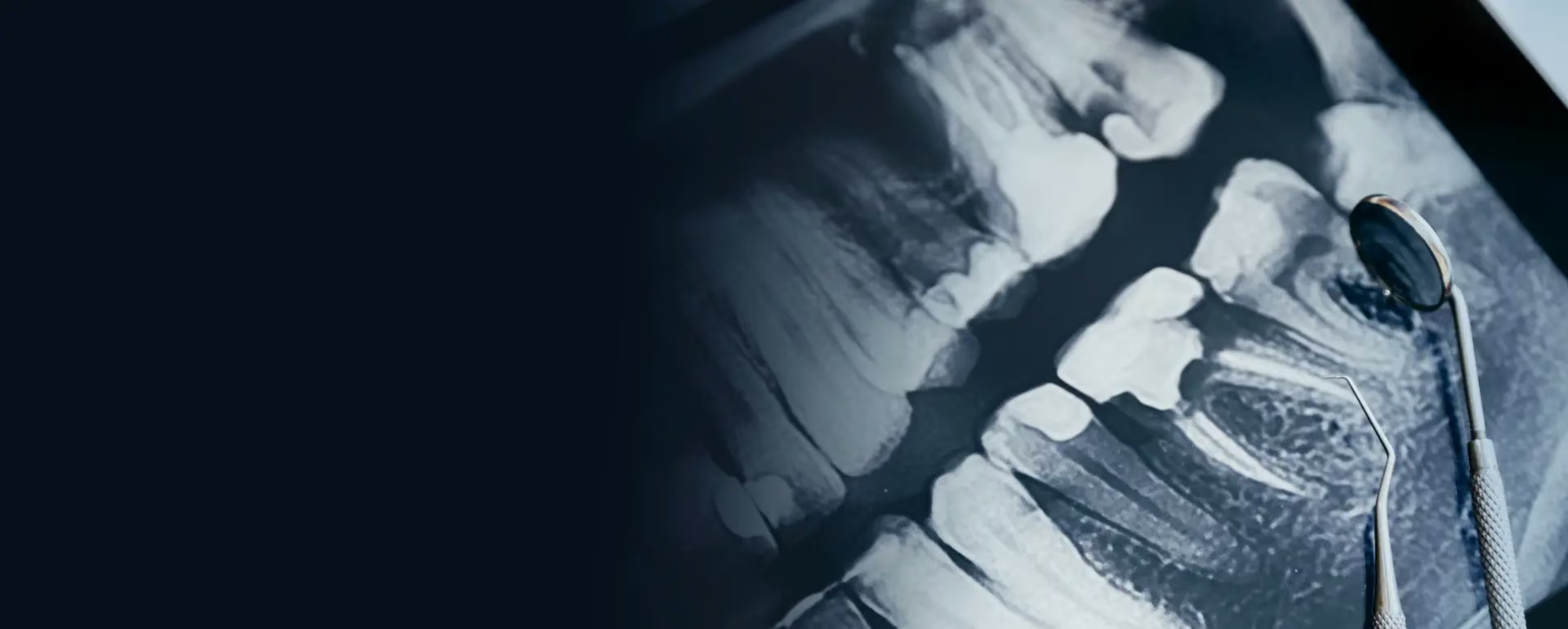
Your own tooth, suspended in its system of ligaments, is the best and cheapest "implant" there is. Thanks to its natural flexibility, it can often withstand loads that could damage a rigidly anchored implant. The success of treatment depends on the patient's general and oral health – for example, bite overload can hinder the healing of periapical lesions (visible on X-rays as dark patches of inflamed tissue that destroys bone).
Implant placement is a complex process that requires enough bone and precise positioning of the screw. To achieve the right emergence profile and the optimal angle between the implant and the crown, bone and soft tissue regeneration is often needed, which increases costs. In many cases, root canal treatment and a well-sealed restoration of the tooth make these additional procedures unnecessary (more on the methods later in this article).
Keeping your own tooth also helps maintain the right bone level, which is usually lost even when a tooth is extracted very gently.
Does every deep cavity or painful tooth mean you need root canal treatment?
The answer is NO. Today we have materials that are commonly called synthetic dentine (dentine is the natural tooth tissue beneath the enamel, full of tiny tubules into which Tomes' fibres from the tooth's nerve extend – it is these fibres that, with exposed tooth necks, decay or enamel loss, cause that stabbing sensation shooting through your whole head when you eat something very cold or sweet). This means we can use vital pulp therapy, an approach that has been known for a very long time, but today we can confidently say that it works.
Today's materials seal well and are anti-inflammatory, bioactive (they stimulate the rebuilding of natural dentine) and antibacterial. Vital pulp therapy for deep decay involves rebuilding the walls of the cavity, removing the decay and placing the material for 2 weeks (during this time it hardens and seals); then, at the next appointment, the top layer of the material is removed and a composite filling (a light-cured filling) is placed. In this situation, pain is usually minimal or absent.
Even with "irreversible" inflammation of the pulp (the nerve) – today the quotation marks are entirely justified – using this material we can encourage the inflammation to settle and restore natural function. In this particular case, however, the patient needs to place a lot of trust in us, as the tooth usually goes on hurting for up to 10 days. Research shows a remarkably high success rate in reversing the inflammation and keeping the tooth 100% vital.
Why is saving teeth so important?
Vital teeth are nourished and supplied with blood, which makes them stronger and more durable. Nor should we forget the sensory feedback of vital teeth. With a vital tooth, every one of us can feel even a grain of sand or the lightest contact with the opposing tooth, and this is extremely important for stabilising the bite and for treating the temporomandibular joints (when we can feel, it is easier to guide us into a healthy position).
Modern endodontics
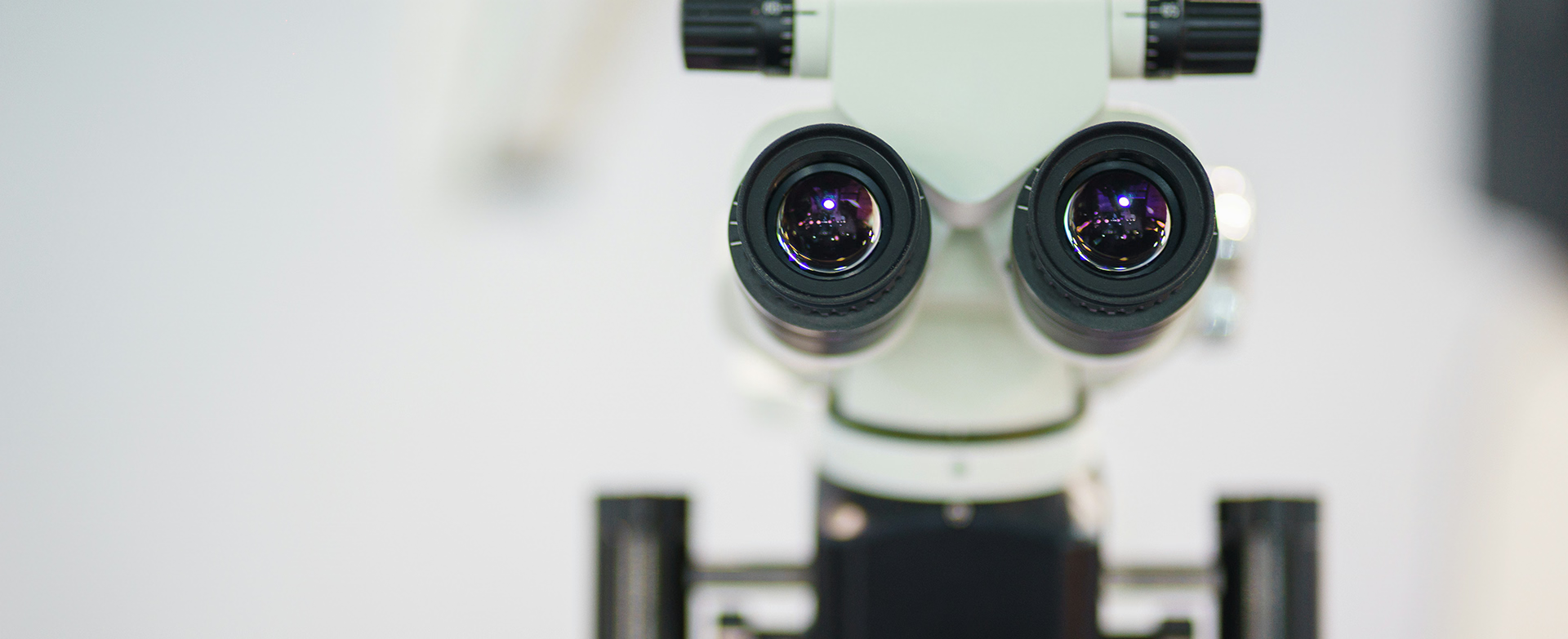
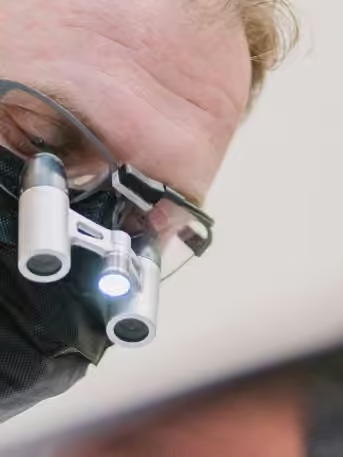
Root canal treatment without a microscope? Out of the question!
Being able to see deep inside the canal is a huge advantage – it lets us find every canal and its branches and remove broken instruments left behind by previous dentists.
Microscope and rubber dam – the perfect pair
A clean treatment field is essential, which is why your dentist insists on stretching that rubber sheet, the rubber dam, over your face. It keeps saliva (full of bacteria!) away from the tooth being treated, and lets the dentist focus entirely on the work. For you, it means more comfort – you do not have to worry about rinsing fluids running down your throat and, most importantly, there is no dreadful saliva ejector in your mouth drying out your tongue and sucking in your cheeks. You can simply swallow and wait for the doc to finish tinkering – ideally while watching a series on the ceiling.
Precise cleaning of the canals
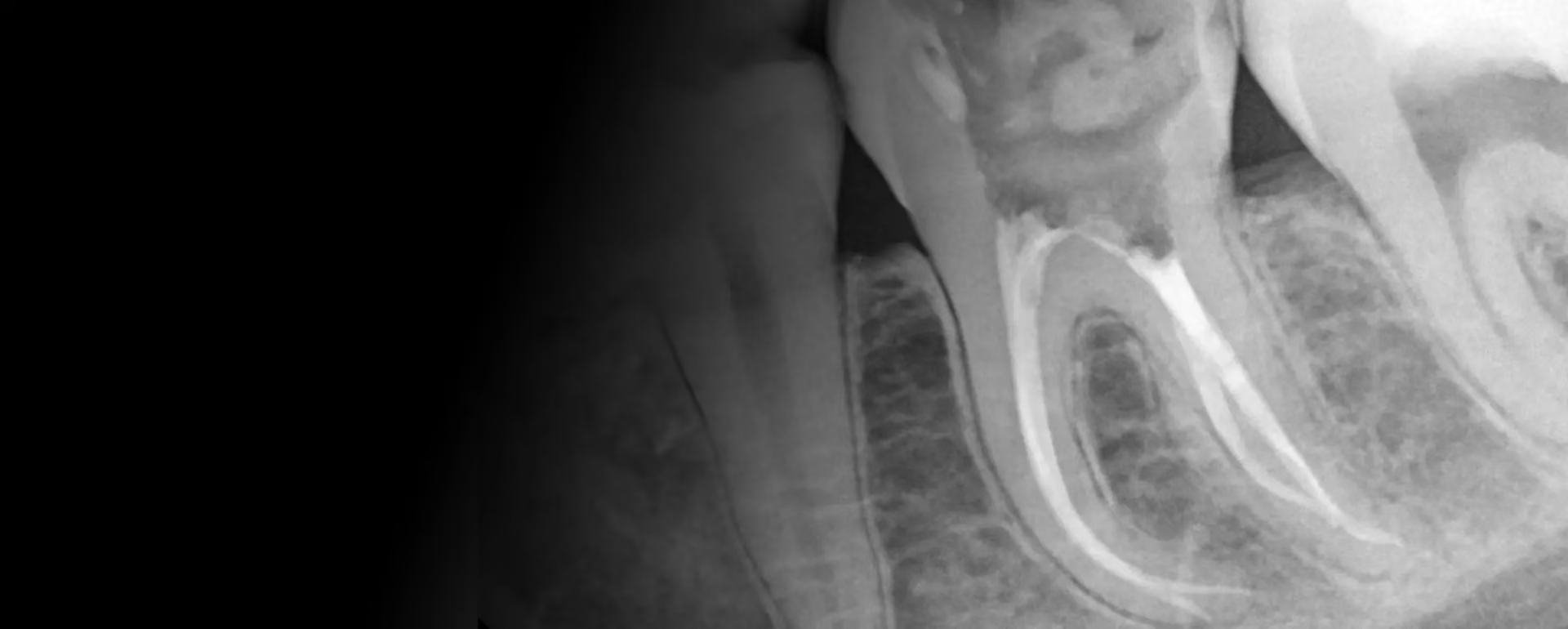
Treatment involves thoroughly cleaning the root canal system with special files, widening it and disinfecting it with ultrasonically activated solutions (which, incidentally, are excellent at destroying bacterial cell walls). This used to be a challenge; today, thanks to modern irrigation tips, endodontics is much more effective.
After the canals have been thoroughly rinsed (known as chemical preparation), it is time to dry them and seal them tightly so that bacteria have nowhere to "party". For this we use gutta-percha – a natural resin from the gutta-percha tree, which we deliver under pressure as a heated material. The result? The canal is perfectly sealed and bacteria no longer stand a chance.
Which symptoms should worry you?
Pain
This is probably the most obvious symptom – if it hurts, something is wrong. Spontaneous pain certainly means inflammation of the nerve, but it still does not mean root canal treatment for certain – the condition of the nerve should be assessed UNDER ANAESTHESIA and vital pulp therapy considered.
Pain triggered by cold
This is the start of inflammation, whereas pain that gets worse with heat, unfortunately, is already an indication for root canal treatment only; it is usually accompanied by a feeling that the tooth is being pushed out of its socket – which means that anaerobic bacteria in the root have started producing gases that cause these symptoms.
Tooth decay
A symptom that of course must not be ignored is ordinary tooth decay – it is no secret that treating decay gives the best prognosis. It is also the cheapest solution.
An even cheaper and very effective approach is keeping an eye on your oral health, regular, correct tooth brushing and, when needed, having professional teeth cleaning. In a word, PREVENTION in the broadest sense (as a well-known Polish children's song reminds us: a brush, toothpaste, a cup of warm water… though cold will do too).
A very common picture is you turning up at the practice after 2-3 sleepless nights in pain – the problem is that with severe inflammation, anaesthesia does not always work 100%, so it is worth coming in as soon as symptoms start. These are no longer the days of the school dentist (I still remember mine – I suspect she was one of the X-Men, because she kept saying "Ooooh, I can see bacteria…". Even with loupes or a microscope, I'm afraid I can't see them… What I can see is decay).
What does root canal treatment actually give us?
First of all, we do not have to extract the tooth and later place an implant in its place, which costs more than 3-4 times as much as treating the tooth. On top of that, we get a restored, good-looking tooth straight away, which is not always possible with implants – we cannot always screw a temporary crown onto the implant immediately after placement.
What is more, implants are not as perfect as many people think.
Recent research shows a 30-year implant survival rate of about 90%, but therapeutic and aesthetic success after 30 years is only 30%. Of course, the latest knowledge and the addition of bone and soft tissue regeneration improve these figures, but besides the operator's skills and knowledge, implant survival also depends on how well the patient looks after the implant – and keeping an implant clean is a little more complicated than keeping your own tooth clean.
If we decide against an implant, the next option (one I very rarely choose for patients because of the damage to neighbouring teeth) is a bridge, but this usually means grinding down two healthy neighbouring teeth.
And what are the options for restoring a tooth after root canal treatment?
It depends on a number of factors.
During root canal treatment we always try to remove as little healthy tooth tissue as possible. If we manage to keep a significant amount of enamel and dentine, the best method is a simple filling. If decay has caused somewhat greater tissue loss and we need to rebuild and support one more wall of the cavity, the tooth has to be reinforced with a fibreglass post before an aesthetic, functional filling is placed. Where a large part of the tooth has to be rebuilt, we make prosthetic restorations (an inlay, onlay, overlay or endocrown) – these are custom-designed restorations bonded in one piece, often after the tooth structure has been reinforced with a fibreglass post. In some cases we consider all-ceramic crowns.
Can every tooth be saved?
Unfortunately not. If the tissue damage is very extensive and reaches deep below the gum, making a tight seal impossible, or if even a tight seal would lead to bone loss in that area, we qualify the tooth for extraction and replace it with an implant at the same time. Where bone regeneration is needed, the procedure is carried out only 4 months after the extraction.
To sum up
Vital pulp therapy and root canal treatment are excellent ways of saving teeth, leaving them either vital (vital pulp therapy) or sterile, non-vital and safe for the body (root canal treatment).
And what if the tooth does not heal completely? Is it time for an implant?
Not always. Even if the lesions around the root do not resolve, we can still give the tooth a chance by performing a root resection (a procedure that involves cutting off the infected root tip and cleaning the bone).