
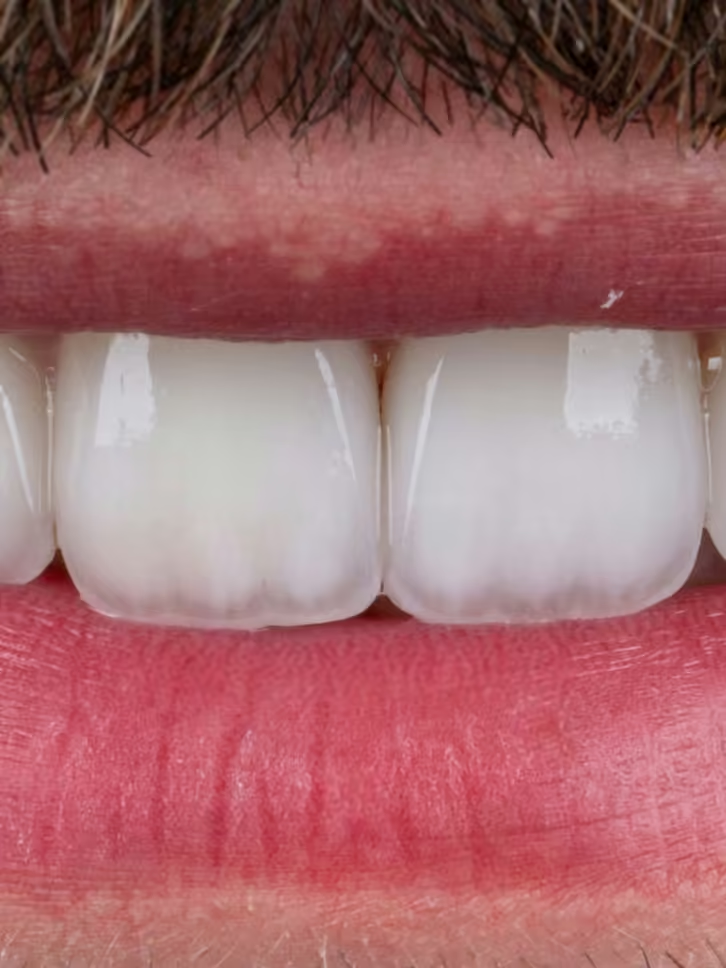
Dental crowns in Gdynia - all-ceramic tooth restoration
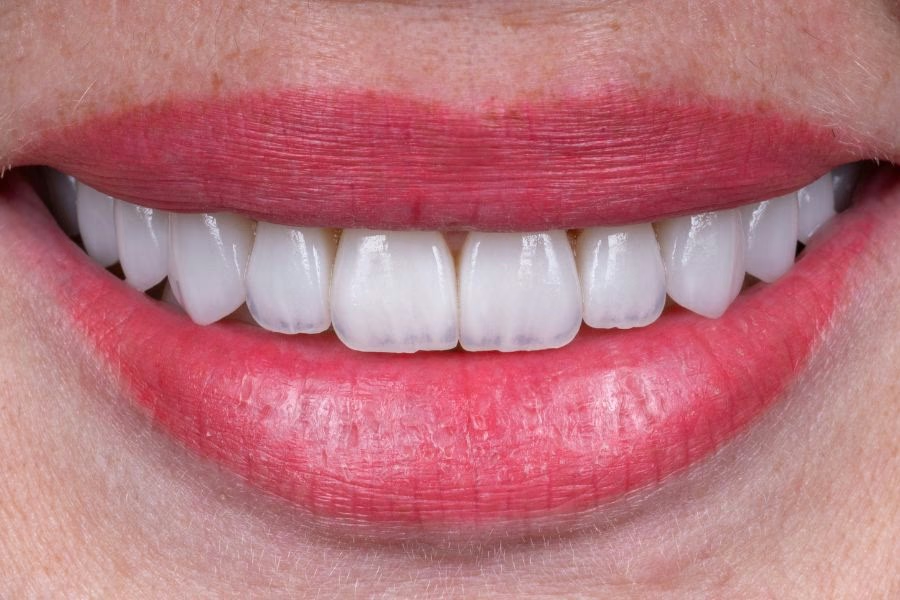
A dental crown is a fixed prosthetic restoration that covers a damaged tooth on all sides and restores its shape, natural appearance and chewing function. At Flow Dental Studio in Gdynia we mainly make all-ceramic crowns - zirconia and glass-ceramic - designed digitally using CAD/CAM technology and fitted under local anaesthetic. Each crown is chosen individually to suit the tooth, the bite and the patient's aesthetic expectations.
Book a prosthodontic consultation in Gdynia - tel. +48 786 420 004
4.9/5 43 reviews on Google
-
Metal-free crowns all-ceramic and zirconia
-
TRIOS 5 scanner and CAD/CAM a precise fit
-
2-3 visits within 1-2 weeks
-
Instalments spread the cost of treatment
How can you tell whether a dental crown is right for you?
My tooth crumbles when I eat after root canal treatment.
A large filling in my molar has chipped again.
My teeth are worn down and getting shorter.
My old crown sticks out and there is a dark edge at the gum line.
I am looking for a durable restoration that looks like a natural tooth.
If any of these sounds like you, a crown can protect the tooth and restore its shape. The choice between a crown, a veneer and a filling depends on the condition of the tooth, assessed during diagnostics.
How can we help?
The concerns that most often hold people back, and how we address them.
“I'm afraid the tooth preparation will hurt.”
If you are worried about pain: we prepare the tooth under local anaesthetic. Any temporary sensitivity after the procedure usually passes quickly.
“I don't want metal in my mouth or a bluish gum line.”
If appearance matters to you: we make metal-free crowns only. They have no metal cap, which is what causes a bluish edge at the gum line.
“I don't know how long a crown will last.”
If you are asking about durability: an all-ceramic crown usually lasts 10 to 15 years, often longer. Good oral hygiene, check-ups and not biting on hard objects help it last longer.
“My tooth is vital and I don't want root canal treatment.”
If your tooth is vital: a crown does not always require root canal treatment and is sometimes placed on a vital tooth, for example when it is worn down. Whether earlier treatment is needed is determined by diagnostics.
A dental crown in Gdynia: the process at a glance
You will find a full description of each stage further down the page. Here is the shortest version of what to expect.
A crown, a veneer or a filling - which should you choose?
Fills a smaller cavity.
Improves the appearance of a front tooth.
Covers the whole tooth on every side.
The choice between a crown, a veneer and a filling depends on how badly the tooth is damaged. A crown covers the whole tooth on every side and rebuilds it completely, a veneer improves the appearance of a front tooth, and a filling fills a smaller cavity. A crown is the choice when there is extensive damage and after root canal treatment.
A large filling rebuilds the missing part of the tooth, but it does not protect thin walls from cracking. A crown holds the whole tooth together and protects it from further damage, which matters especially for teeth after root canal treatment, as they are more brittle. A veneer, on the other hand, works well on healthy front teeth when the main concern is the appearance of the smile.
Who fits crowns at Flow Dental Studio in Gdynia?
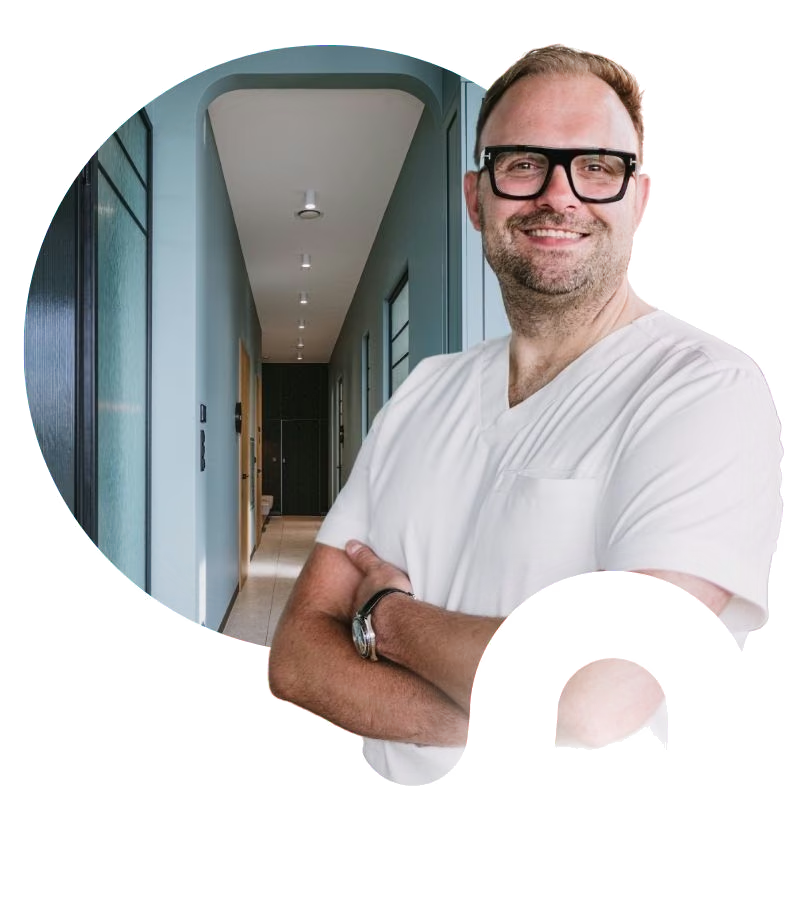
Prosthodontic treatment at Flow Dental Studio in Gdynia is provided by the team led by Adrian Kiepuszewski - implantologist and founder of the practice, with more than 16 years' experience in dentistry. We design and make crowns digitally, using our own equipment.
When working on a crown we use the TRIOS 5 scanner, ZEISS microscopes, Exocad software and CAD/CAM technology, in cooperation with a dental laboratory. This combination allows us to match the crown to the tooth, the bite and the patient's aesthetic expectations.
- Implantology
- All-ceramic crowns
- TRIOS 5 scanner
- ZEISS microscope
- CAD/CAM
How much does a dental crown cost in Gdynia and what affects the price?
A dental crown at Flow Dental Studio in Gdynia costs from 3000 PLN for an all-ceramic crown. The price of a crown depends on the type of material, the production technology and any preparatory procedures. We give you a full cost estimate after the consultation and diagnostics.
We price dental crowns individually, because the cost depends above all on the material and the extent of the restoration - which is why crown prices differ from patient to patient. A zirconia crown is an all-ceramic restoration, and its price depends on the number and size of the teeth being restored. How much a crown costs is also affected by any preceding treatment, for example root canal treatment or a post and core to strengthen the tooth.
Additional procedures are priced separately, and we tell you about all costs at the treatment planning stage. You can spread the payment in instalments, including 0% instalments, which helps match treatment to the patient's budget.
You can spread the payment in 0% instalments
You can spread the cost of treatment in instalments.
See the full price list“I particularly appreciate Dr Adrian's prosthetic work – a beautifully natural result that is very hard to find.”
See why they chose Flow Dental Studio. The reviews come from our Google Business Profile.

Very professional and friendly. A visit to the dentist can be a pleasant experience after all. The aligners are comfortable and hygienic, and week by week I can see my teeth straightening. I recommend it.
Translated from Polish
I had the pleasure of being treated by Dr Kiepuszewski at Flow Dental Studio, and I can honestly say he is an exceptional dentist. Wisdom tooth extraction, which so many patients dread, took place in a comfortable atmosphere. Dr Adrian is not only extremely competent but also has a wonderful approach to patients, full of understanding and care. I also decided on aligner treatment. The doctor's precise work and professionalism mean the visits run smoothly and in a pleasant atmosphere. My smile looks better and better, and I know it was the best decision. I recommend him to anyone who dreams of straight teeth without pain or discomfort! The Flow Dental Studio practice itself also deserves a special mention. Modern equipment, a beautiful interior, a pleasant atmosphere and kind, courteous staff make patients feel looked after, and the visit becomes a much more pleasant experience. It is a place that cares not only about healthy teeth but also about the patient's wellbeing.
Translated from Polish
Flow Dental Studio is a place where professionalism goes hand in hand with empathy and care for the patient. I had professional teeth cleaning and fillings there, and I am very impressed by the precision and gentleness of the treatment. Dr Julia and Daria explain everything thoroughly, and the atmosphere at the practice is calm and friendly. It is definitely a practice you can trust completely, which is why I will be back whenever the opportunity arises :)
Translated from Polish
Beautiful practice, professional staff, and the doctor is the GOAT. I didn't even notice when it was over – the nasty wisdom tooth is gone. Highly recommended.
Translated from Polish
It is rare to find places where professionalism goes hand in hand with genuine empathy — but Flow Dental Studio is exactly that kind of place. I had the pleasure (yes, it really can be called that!) of being in Dr Adrian's care for a wisdom tooth extraction I had been dreading for a long time because of severe hypersensitivity. What sets Dr Adrian apart is not only his exceptional skill and precision, but above all his extraordinary respect for the patient's boundaries and feelings. Every gesture and every word – full of calm, understanding and attentiveness – made me feel cared for at every stage of the procedure. A procedure that had filled me with fear turned out to be an almost... soothing experience. No pain, no tension, and great attention to my mental and physical comfort. This is not just dentistry at the highest level — it is the art of creating a safe space in a place usually associated with stress. From the bottom of my heart, thank you to Dr Adrian and the whole Flow Dental Studio team for making it possible to come to you anxious — and leave grateful and smiling.
Translated from Polish
I recommend Dr Adrian. A very professional approach to patients.
Translated from PolishFrequently asked questions about dental crowns
Is having a crown fitted painful?
Does a dental crown have to be placed on a non-vital tooth?
How long does an all-ceramic crown last?
Does Flow Dental Studio use porcelain-fused-to-metal crowns?
What are metal crowns and do you make them?
How does a crown differ from a dental bridge?
What should I do if a crown falls out or comes loose?
How often should I have my crown checked at the dental practice?
What happens at a prosthodontic consultation?
We start by assessing the tooth and carrying out diagnostics - you get the treatment plan and quote before you decide on treatment.
Book a consultation- Tooth assessment and diagnostics - an X-ray or CBCT scan to check the condition of the root.
- Choosing the crown - a material matched to the tooth, the bite and your aesthetic goals.
- Treatment plan with a cost estimate - you know the cost and stages in advance.
- No obligation – you decide once you have seen the plan.
Dental crowns at a glance
An all-ceramic crown restores a badly damaged, cracked or weakened tooth and protects it from fracture.
At Flow Dental Studio in Gdynia we fit all-ceramic crowns, without a metal substructure.
Treatment is carried out under local anaesthetic and usually involves 2-3 visits over 1-2 weeks.
The TRIOS 5 digital scanner and CAD/CAM technology give the crown a precise fit.
An all-ceramic crown at Flow Dental Studio costs from 3000 PLN; the final price depends on the case.
How long a crown lasts depends on oral hygiene and regular check-ups.
You can spread the payment in convenient instalments.
A crown covers the prepared tooth like a cap, with the healthy root providing support.
What is a dental crown and when is it fitted?
A dental crown is a cap-shaped fixed prosthetic restoration that covers the whole tooth and restores its shape, colour and function. It is fitted when a tooth is too damaged to be rebuilt with a filling, but its root remains healthy and provides solid support. A crown protects the weakened tooth structure, reduces the risk of the tooth fracturing and restores the appearance of the smile.
A crown is a fixed restoration, and dental crowns are fixed prosthetic restorations that the patient does not remove. A crown surrounds the tooth on every side and holds the remaining tissue together, spreading chewing forces evenly and restoring full function to the bite. It acts like a shield, allowing a tooth at risk of fracture to keep serving the patient and work in the bite like natural teeth. Unlike a removable denture, a fixed crown is not taken out of the mouth, and crowning is one of the most commonly used solutions in prosthodontics.
When does a dentist recommend a dental crown?
A dentist recommends a crown when a tooth cannot be rebuilt permanently with a filling and needs to be strengthened and protected from fracture. The decision is made after diagnostics, in specific clinical situations.
The most common reasons for fitting a crown are:
- extensive tooth damage caused by decay,
- a crack or fracture of the tooth crown and other mechanical damage,
- strengthening a tooth after root canal treatment (endodontic treatment), often with a post and core,
- advanced tooth wear and a reduced bite height,
- correcting the shape, colour or position of a single tooth,
- restoring a tooth on an implant where single teeth are missing.
What rules out a crown?
Several conditions rule out or postpone fitting a crown - above all advanced periodontal disease with marked tooth mobility, too little healthy tissue above the gum, active inflammation at the root tip and untreated bruxism, i.e. tooth grinding. Contraindications to crowns are assessed at the consultation, taking into account the condition of the tooth and the situation in the mouth.
Some contraindications are relative. Active treatment of periodontal disease must be completed before a crown is fitted. After initial treatment - for example fitting an occlusal splint (Bioorteza) for bruxism - a crown becomes possible and safe. At Flow Dental Studio in Gdynia, whether a tooth is ready is decided by diagnostics, not by a symptom alone.
What types of dental crowns are there?
Types of dental crowns differ in material, aesthetics and strength. The most common are all-ceramic crowns, zirconia crowns and - as a temporary measure - composite crowns. The choice depends on the position of the tooth, aesthetic expectations and the patient's individual needs. At our Gdynia practice we focus on metal-free solutions.
What sets all-ceramic and zirconia crowns apart?
All-ceramic crowns are made from zirconium oxide or glass-ceramic, with no metal inside. They mimic natural enamel - its translucency and colour - so they look natural and do not cause a bluish gum line. Glass-ceramic provides excellent aesthetics in the smile zone, while zirconia crowns combine good aesthetics with high durability and biocompatibility. The result is good aesthetics and high durability, which makes them an excellent solution for both front teeth and molars.
What are composite crowns and temporary crowns used for?
Composite and acrylic crowns are a temporary solution, not a final one. Temporary crowns are placed on the prepared tooth while the dental laboratory makes the final crown - usually for anything from a few days to two weeks or so. A temporary crown protects the tooth from stimuli and bacteria, holds the space in the dental arch and provides basic aesthetics and function.
How do ceramic crowns differ from porcelain crowns?
Ceramic (all-ceramic) crowns are made entirely of ceramic, with no metal core, whereas the everyday term “porcelain crowns” can be misleading, as it also covers porcelain fused to metal. In practice it is the presence of metal that weakens the aesthetics and biocompatibility. Metal-free crowns better reproduce the translucency and colour of a natural tooth, do not cause a bluish gum line and are better tolerated by the body - which is why at Flow Dental Studio in Gdynia we only do metal-free work.
How is a tooth restored with a crown on an implant?
A crown on an implant restores a tooth that has been lost completely. It is not supported by the tooth's own root but by an implant - a titanium or zirconia screw placed in the bone, which replaces the root. An abutment connects the crown to the implant, forming a single unit. Together they rebuild the tooth from the root to the visible part.
A crown on an implant is a way of restoring a single tooth when a tooth is missing, and the implant transfers chewing forces to the bone, which helps limit bone loss. Crowns also act as abutments - when a longer section is missing, a dental bridge is then supported on crowns or implants. This is how both single teeth and larger gaps are restored.
What does CAD/CAM technology offer when making crowns?
CAD/CAM technology makes it possible to design and make a crown digitally, with great precision. At Flow Dental Studio we scan the tooth with a TRIOS 5 intraoral scanner, design the crown in Exocad software, and a milling machine cuts it from a single block of ceramic.
The digital process brings real benefits: a precise fit and marginal seal, an excellent reproduction of the tooth's shape and shorter treatment without traditional impressions. Crowns made using CAD/CAM technology are consistently precise, and the result depends on the type of material and production technology, not on manual impressions.
Which crown should you choose for front teeth and which for molars?
For front teeth, all-ceramic crowns are chosen because aesthetics matter in the smile zone. Zirconia and glass-ceramic mimic natural enamel and are invisible when you smile, so with front teeth a natural look is key. All-ceramic restorations are therefore most often used to restore front teeth.
For molars, which carry the greatest chewing forces, monolithic zirconium oxide with high mechanical strength works well. A crown on a molar has to withstand heavy loads, so the strength of the material matters most here. This means a single all-ceramic crown can combine a good appearance with resistance to heavy loads, whatever the position of the tooth - it should look and work like natural teeth.
What does fitting a dental crown at Flow Dental Studio involve?
Fitting a dental crown at Flow Dental Studio in Gdynia usually involves 2-3 visits over 1-2 weeks and is done under local anaesthetic. The whole process is planned - from preparing the tooth to cementing the finished crown.
Consultation and tooth preparation
Diagnostics, including an X-ray or CBCT scan, a treatment plan and a cost estimate. Then precise preparation of the tooth under local anaesthetic to make room for the crown.
Digital impression and temporary crown
Instead of traditional impression material, we take a digital impression with the TRIOS 5 scanner. Based on it, the final crown is designed and made in the dental laboratory, and we protect the prepared tooth with a temporary crown.
Cementing the finished crown
The dentist tries in the crown, checks the fit, the marginal seal and the contacts in the bite and, once the patient approves, cements the crown permanently onto the tooth.

How should you care for dental crowns so they last longer?
How long crowns last depends above all on oral hygiene and avoiding overloading them. Good oral hygiene - brushing at least twice a day and cleaning between the teeth daily with floss or a water flosser, paying particular attention to the gum line - protects both the crown and the gums.
It also helps the crown if you avoid biting very hard objects, such as ice cubes or nutshells. If you tend to grind your teeth, a protective splint helps. Good care genuinely extends how long a crown serves you.
Plan your crown restoration
We will check the condition of the tooth, choose the right crown and present a plan with a quote - with no obligation.
Read before you decide

Veneers or crowns? How much tooth is filed down, durability, indications and price, and which to choose after a root canal or when a tooth is missing.
Read more
How much does a dental crown cost? Prices for all-ceramic, zirconia and implant crowns in Gdynia, what affects the cost and what having a crown fitted involves.
Read more
Considering a dental crown, but not sure whether crowns really last or whether they are right for you? Read our article to find out more about crowns!
Read moreBook a prosthodontic consultation in Gdynia
A consultation at Flow Dental Studio means an assessment of the tooth and diagnostics, on the basis of which we draw up a treatment plan and a cost estimate for the crown - with no obligation. Book an appointment to find out which crown is right for your tooth.
Flow Dental Studio
ul. Arkadiusza Rybickiego 2B/U2, 81-340 Gdynia
+48 786 420 004
info@flowdentalstudio.pl
Monday – Friday, 9:00 – 20:00