
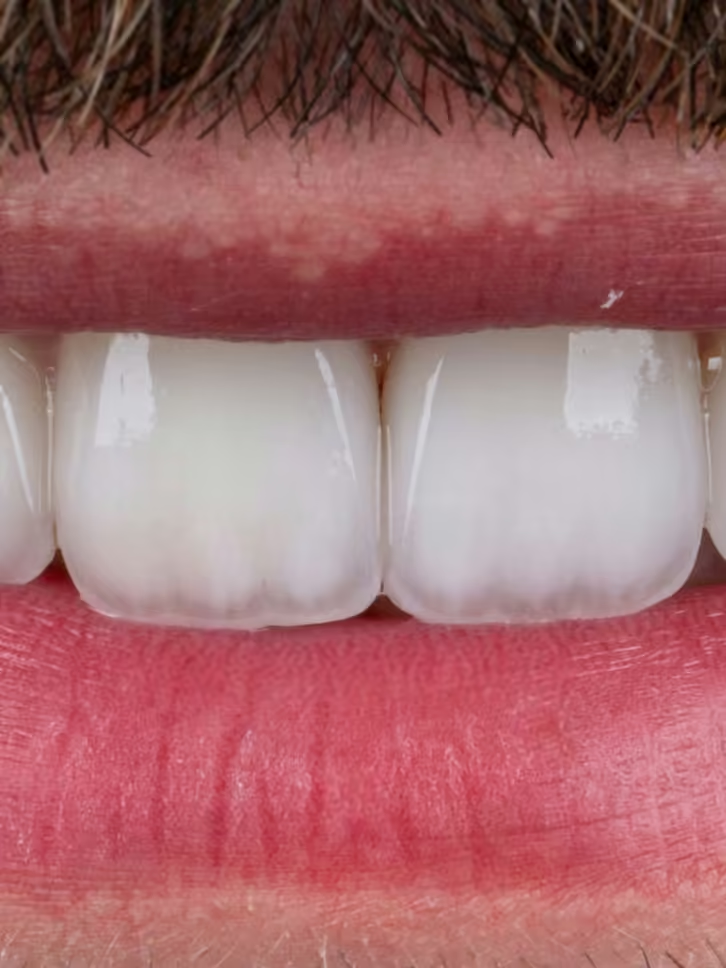
Missing teeth – how can extensive gaps be replaced in Gdynia?
Missing teeth means the loss of one or more teeth, and we talk about multiple missing teeth when three or more have been lost. It is worth replacing them, because missing teeth lead to bone loss, shifting of the remaining teeth and bite problems. At Flow Dental Studio we replace extensive gaps with fixed solutions – dental bridges and implant restorations – tailored to each patient's individual needs.
Book a consultation in Gdynia – tel. +48 786 420 004
4.9/5 43 reviews on Google
-
Fixed solutions bridges and implant restorations
-
Planning with CBCT NewTom Giano HR scanner
-
Local anaesthetic comfort during treatment
-
Instalments spread the cost of treatment over time
How can you tell whether treatment for multiple missing teeth is right for you?
I am missing several teeth and I avoid hard foods.
Since I lost my back teeth, my front teeth have started to shift.
My removable denture bothers me and I am looking for a fixed solution.
I am embarrassed to have lost so many teeth at my age.
I do not know what to choose: a bridge, implants or a full-arch restoration.
If you recognise yourself in any of these statements, it is worth starting with a plan for all your teeth, not just one gap. We choose the solution after a CBCT scan and an assessment of your bone.
How can we help?
The concerns that most often hold people back, and how we address them.
“I'm embarrassed that I've lost so many teeth.”
If your situation makes you feel self-conscious: losing many teeth in your thirties or forties is more common than you might think, and it can be reversed. We start with a consultation and diagnostics, without judgement.
“I don't know what to choose: a bridge or implants.”
If you are not sure which solution to choose: a bridge needs abutment teeth on both sides of the gap, whereas an implant does not put any load on the neighbouring teeth. We agree a plan for all your teeth after a CBCT scan and an assessment of the bone.
“I don't want to go months without teeth.”
If time matters to you: a dental bridge is usually made within 2 to 4 weeks. For patients with no teeth at all, an implant restoration means you can leave the practice with a temporary bridge in one day.
“I have gaps in my upper jaw and I've been told there isn't enough bone.”
If you have been told there is not enough bone: in the upper jaw it often recedes below the floor of the sinus. In that case we carry out a sinus lift before placing the implant, and we plan the extent of the procedure using the CBCT scan.
Replacing missing teeth: the process at a glance
You will find a full description of each stage further down the page. Here is the shortest version of what to expect.
Which way of replacing missing teeth will be best for you?
There is no single best solution for everyone: the choice depends on your bone, your general health, your aesthetic expectations and your own preferences. The comparison below sets out three methods against the key criteria.
Implants suit people who value comfort, durability and protecting their bone, provided their health and the amount of bone allow it. A bridge is a good option when the abutment teeth need crowns anyway. Removable dentures can be a tried-and-tested budget or temporary solution, although they are the least beneficial for oral health.
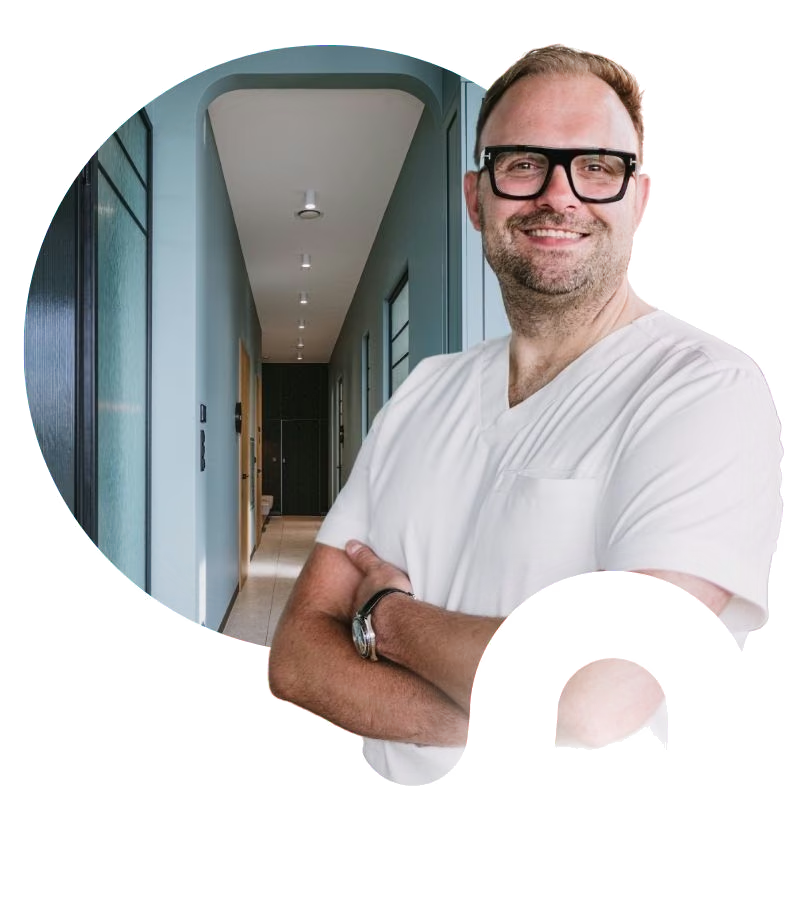
Treatment led by implantologist Adrian Kiepuszewski
Implant and prosthetic treatment is led by implantologist Adrian Kiepuszewski, who has more than 16 years of experience. In the hands of an experienced dentist the procedure is predictable, and the team's precision and experience mean treatment at our Gdynia practice runs safely.
- Implantology
- Prosthodontics
- Dental bridges
- Full-arch restorations
- CBCT
How much does it cost to replace missing teeth?
We set the cost of replacing missing teeth individually, as it depends on the number of gaps, the type of materials and any additional procedures, such as bone grafting. As a guide, placing a single implant at Flow Dental Studio costs from 3400 PLN, and an all-ceramic crown, which can form part of a bridge or a restoration on an implant, from 3000 PLN.
You receive a full cost estimate together with your treatment plan after the consultation and diagnostics. Treatment can be spread over 0% instalments.
-
All-ceramic crown (bridge or on an implant)from 3000 PLN
Full cost estimate and treatment plan after consultation and diagnostics
You can spread the cost of treatment in instalments.
See the full price list“This isn't just dentistry at the highest level – it's the art of creating a safe space in a place that usually means stress.”
See why they chose Flow Dental Studio. The reviews come from our Google Business Profile.

Very professional and friendly. A visit to the dentist can be a pleasant experience after all. The aligners are comfortable and hygienic, and week by week I can see my teeth straightening. I recommend it.
Translated from Polish
I had the pleasure of being treated by Dr Kiepuszewski at Flow Dental Studio, and I can honestly say he is an exceptional dentist. Wisdom tooth extraction, which so many patients dread, took place in a comfortable atmosphere. Dr Adrian is not only extremely competent but also has a wonderful approach to patients, full of understanding and care. I also decided on aligner treatment. The doctor's precise work and professionalism mean the visits run smoothly and in a pleasant atmosphere. My smile looks better and better, and I know it was the best decision. I recommend him to anyone who dreams of straight teeth without pain or discomfort! The Flow Dental Studio practice itself also deserves a special mention. Modern equipment, a beautiful interior, a pleasant atmosphere and kind, courteous staff make patients feel looked after, and the visit becomes a much more pleasant experience. It is a place that cares not only about healthy teeth but also about the patient's wellbeing.
Translated from Polish
Flow Dental Studio is a place where professionalism goes hand in hand with empathy and care for the patient. I had professional teeth cleaning and fillings there, and I am very impressed by the precision and gentleness of the treatment. Dr Julia and Daria explain everything thoroughly, and the atmosphere at the practice is calm and friendly. It is definitely a practice you can trust completely, which is why I will be back whenever the opportunity arises :)
Translated from Polish
Beautiful practice, professional staff, and the doctor is the GOAT. I didn't even notice when it was over – the nasty wisdom tooth is gone. Highly recommended.
Translated from Polish
It is rare to find places where professionalism goes hand in hand with genuine empathy — but Flow Dental Studio is exactly that kind of place. I had the pleasure (yes, it really can be called that!) of being in Dr Adrian's care for a wisdom tooth extraction I had been dreading for a long time because of severe hypersensitivity. What sets Dr Adrian apart is not only his exceptional skill and precision, but above all his extraordinary respect for the patient's boundaries and feelings. Every gesture and every word – full of calm, understanding and attentiveness – made me feel cared for at every stage of the procedure. A procedure that had filled me with fear turned out to be an almost... soothing experience. No pain, no tension, and great attention to my mental and physical comfort. This is not just dentistry at the highest level — it is the art of creating a safe space in a place usually associated with stress. From the bottom of my heart, thank you to Dr Adrian and the whole Flow Dental Studio team for making it possible to come to you anxious — and leave grateful and smiling.
Translated from Polish
I recommend Dr Adrian. A very professional approach to patients.
Translated from PolishFrequently asked questions about missing teeth
How can missing molars and back teeth be replaced?
How can missing teeth in the upper jaw be replaced?
I am 40 and have lost a lot of teeth – what should I do?
How quickly can missing teeth be replaced?
How can a missing tooth be disguised before treatment begins?
Missing teeth at a glance
Multiple missing teeth means the loss of three or more teeth, which leads to bone loss and shifting of the neighbouring teeth.
The main methods are dental bridges, implant restorations and removable dentures.
Implants prevent bone loss and do not require the neighbouring teeth to be ground down.
The choice of method depends on your bone, your health, your aesthetic expectations and your own preferences.
Treatment is carried out under local anaesthetic, and the cost can be spread over convenient instalments.
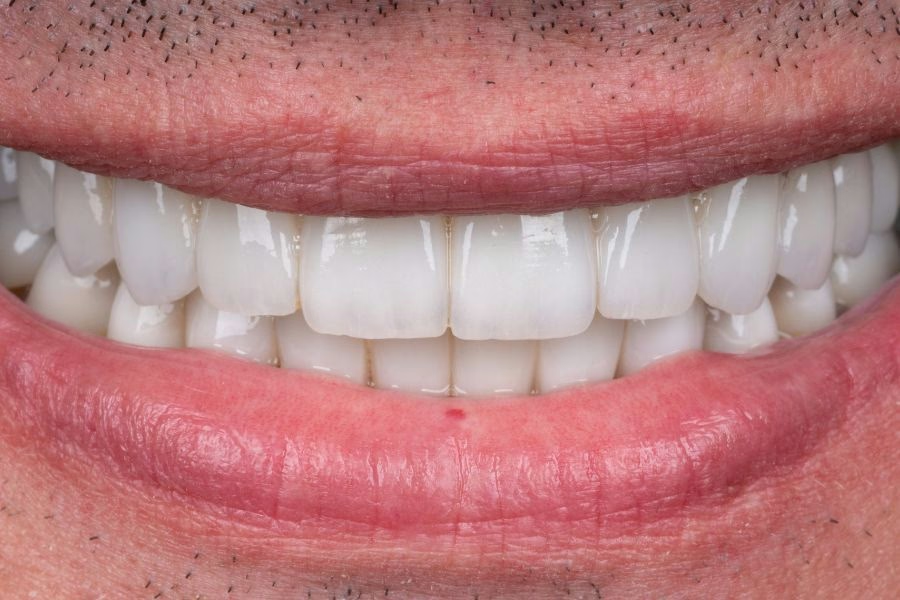
What are missing teeth and why do they need replacing?
Missing teeth means tooth loss, from a single gap to extensive gaps where three or more teeth are missing. The most common causes are tooth decay, advanced periodontal disease, mechanical injuries and external factors. Every gap needs a consultation, because missing teeth affect the whole chewing system.
Replacing missing teeth is an investment not only in a beautiful smile but in your oral health and quality of life. Acting quickly means simpler, less invasive methods can be used, and you avoid the serious health consequences that develop over time.
What are the consequences of missing teeth?
The consequences of missing teeth are serious and get worse over time. Missing teeth trigger bone loss where the teeth used to be, shifting of the neighbouring teeth and overloading of the remaining teeth, which crack and become loose. Not chewing food properly can also cause digestive problems.
The main consequences are:
once a tooth is lost, the bone of the alveolar ridge is no longer stimulated by the root and starts to recede, reducing its height and width,
the loss of support for the soft tissues causes the profile to sink and the corners of the mouth to droop,
the neighbouring teeth tilt towards the gap and the opposing tooth over-erupts, disrupting the bite,
headaches, clicking when opening the mouth and pain when chewing.
The longer you put it off, the more complex and expensive the later procedures become: significant bone loss often requires bone grafting before implants can be placed.
A missing molar is more than just a gap at the back
A missing back tooth is easy to ignore, because it does not show when you smile. Yet molars carry the greatest chewing forces, and losing one sets off a chain reaction throughout your mouth.
Check whether treatment for multiple missing teeth applies to you
Do you recognise even one of these situations? That is a sign to get advice about replacing missing teeth.
- You are missing a molar or back tooth, even though the gap does not show when you smile.
- You have a gap from a tooth removed long ago that you never replaced.
- Your denture is loose, rubs or moves around.
- You notice your teeth shifting or new gaps appearing.
- You mainly chew on one side because teeth are missing on the other.
- You are missing many teeth or have none at all.
Recognise even one? Book a consultation – we will assess your situation with no obligation.
Book a consultationHow can extensive gaps in your teeth be replaced?
Today, extensive gaps are replaced using three main methods, which differ in durability, comfort and their effect on the bone. The choice depends on how many teeth are missing, the condition of the bone and the patient's expectations.
Dental bridges – fixed restorations supported by the patient's own teeth, which are ground down.
Implant restorations – titanium implants that replace the roots and support crowns, bridges or full-arch restorations.
Removable dentures – restorations you can take out, seen as a budget or temporary solution.
At Flow Dental Studio we focus on fixed solutions, which are more comfortable to live with and better protect the structures of the mouth. Modern dentistry lets us choose the method to suit each individual situation, not the other way round.
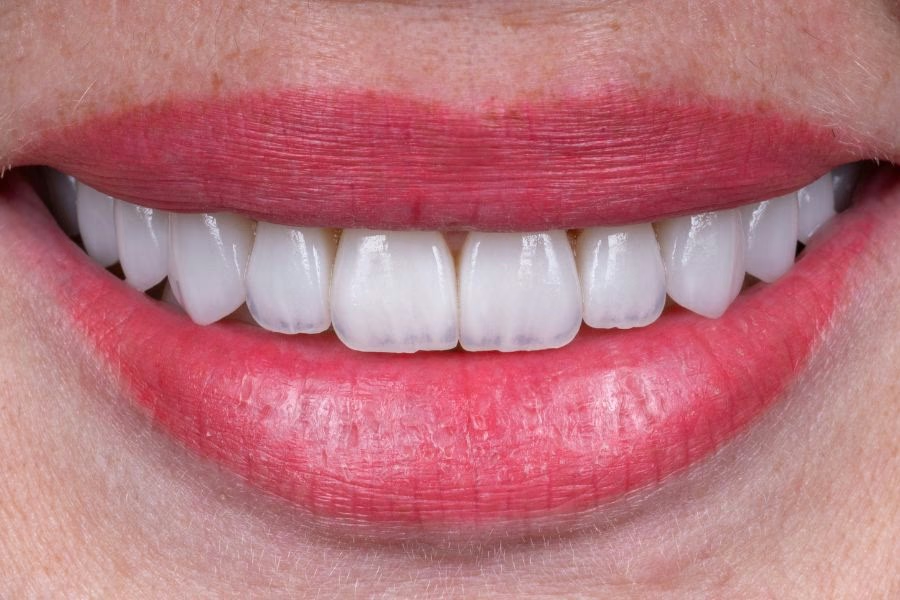
Lost many teeth in your 30s or 40s? You are not alone
Losing many teeth after the age of 30 or 40 happens more often than you might think, and it is nothing to be ashamed of. Modern methods can effectively reverse it, from implants to a full-arch restoration supported by several implants.
The first step is a consultation and diagnostics, during which the dentist will assess your bone and propose a restoration. For patients with no teeth, a full-arch restoration means you can leave the practice with a temporary bridge, even in one day. The sooner you start, the simpler the treatment will be.
Book a no-obligation consultationWhat are dental bridges and do they work for extensive gaps?
Dental bridges are fixed restorations that replace missing teeth with a pontic supported by abutment teeth that have been ground down. Making a bridge means grinding down the neighbouring teeth, which often involves intervening in healthy teeth – the main difference compared with implant treatment. This solution works well when the abutment teeth are already damaged and need crowns anyway.
Depending on your needs, we use all-ceramic bridges, recommended for restorations in the smile zone and for front teeth, and bridges on a zirconia framework, which combine aesthetics with strength and also work well for molars in the back sections of the dental arch. A bridge usually replaces one or several adjacent missing teeth and looks natural.

What are dental implants and are they the best solution when you are missing many teeth?
Dental implants are titanium implants that replace the root of a lost tooth in the upper or lower jawbone. Once fused with the bone (osseointegration, usually 3–6 months), the implant becomes the support for a crown, a bridge or an implant-retained denture. Implants can be used to restore a single tooth or a whole arch.
Dental implants do not require healthy neighbouring teeth to be ground down, and they restore full function and comfort close to that of natural teeth. The dentist decides whether you are suitable after diagnostics, including a CBCT scan: your general health and the amount of bone are what matter, and contraindications can include uncontrolled diabetes, cancer under active treatment, heavy smoking and advanced periodontal disease.
Why do dental implants protect the bone from receding, even when many teeth are missing?
Dental implants are the only method that actively stimulates the bone and prevents bone loss where teeth are missing. The implant takes over the role of the root, so the bone continues to receive mechanical stimulation and does not recede as it does under a bridge or denture.
A bridge does not slow bone loss under the pontic, and a removable denture, by transferring chewing forces to the mucosa, actually speeds it up. That is why, with extensive gaps, implants are the solution that best protects the bone and your facial features in the long term.
What are zygomatic implants?
Zygomatic implants are an advanced implantology method for patients with severe bone loss in the upper jaw, in which the implant is anchored in the cheekbone rather than the alveolar ridge. They make it possible to restore teeth where standard implants cannot be placed without extensive bone regeneration.
At Flow Dental Studio, where there is not enough bone, we use bone grafting and sinus lifts, and we carry out full-arch restorations on several implants. We decide on the scope of possible treatment after a CBCT scan and an assessment of the bone.
How can one missing tooth be replaced?
One missing tooth is most often replaced with an implant and a prosthetic crown or with a bridge supported by the neighbouring teeth. An implant does not require any intervention in the healthy teeth next to it and replaces the root on its own. A bridge requires the neighbouring teeth to be ground down, so it is mainly suitable when those teeth need treatment anyway.
The prosthetic crown on the implant recreates the visible part of the tooth, and the implant itself recreates its root. This closes a single gap without putting strain on the other teeth and without speeding up bone loss.
What can be done when all your teeth are missing?
When all your teeth are missing, that is in complete edentulism, the most durable restoration is a full-arch restoration on implants, which at Flow Dental Studio we also offer as a teeth in one day procedure. An alternative is an implant-retained denture, which stops the denture from moving and makes speaking and eating more comfortable.
Traditional complete dentures remain a budget option, but they sit on the gums, transfer chewing forces to the mucosa and speed up bone loss. That is why, for patients with no teeth, implant-based solutions protect the bone better and are more comfortable to wear.
What does implant treatment involve?
Implant treatment takes place in 3 stages, tailored to each patient's individual situation. First a consultation and diagnostics, then the treatment phase, and finally the prosthetic work.
Consultation and diagnostics
Consultation, oral examination and imaging: when planning implants we take a CBCT scan with a NewTom Giano HR scanner, after which the dentist discusses the options, for example a dental bridge compared with implant treatment, and gives you a cost estimate.
Treatment phase
Treatment phase: preparing the abutment teeth under a microscope for a bridge, or surgically placing the implants, often with a guided surgical guide. Procedures are carried out under local anaesthetic, which keeps pain to a minimum.
Prosthetic phase
Prosthetic phase: once everything has healed, we take digital impressions with a TRIOS 5 scanner without traditional impression materials, and the laboratory makes the final restoration, which we cement or screw into place.
How should you look after your new teeth and your oral health?
How long prosthetic restorations last depends largely on hygiene and regular check-ups at the practice. Careful oral care prevents inflammation and extends the life of the restoration.
Hygiene differs depending on the type of restoration:
- dental bridges – the space under the pontic needs cleaning with Super Floss and a water flosser,
- implants – need brushes, floss and a water flosser, as well as regular professional cleaning to prevent inflammation of the tissues around the implant,
- removable dentures – need cleaning every day and storing correctly.
In short, missing teeth are worth replacing as soon as possible, and among modern methods it is fixed solutions that best protect the natural neighbouring teeth and the bone.
Replacing missing teeth at Flow Dental Studio in Gdynia
At Flow Dental Studio in Gdynia we replace extensive gaps with fixed solutions, planned digitally using a NewTom Giano HR CBCT scanner and a TRIOS 5 scanner. This gives us an accurate picture of your bone and teeth before treatment even begins.
Book a consultation and plan how to replace your missing teeth
We will assess your bone and teeth, choose the method and give you a cost estimate, with the option of spreading the cost over 0% instalments.

Book a consultation in Gdynia
Book a consultation at Flow Dental Studio, during which we will assess your bone and teeth and present a plan for replacing your missing teeth, together with a cost estimate. You decide on treatment after the diagnostics, with no obligation.
Flow Dental Studio
ul. Arkadiusza Rybickiego 2B/U2, 81-340 Gdynia
+48 786 420 004
info@flowdentalstudio.pl
Monday – Friday, 9:00 – 20:00