
Digital implant planning in Gdynia
The position of the implant determines how the crown fitted on it will look and work a few months later. That is why we set it before the procedure, on a model built from a CBCT scan and an intraoral scan, and not during surgery.
See your treatment plan before you decide - tel. +48 786 420 004
4.9/5 43 reviews on Google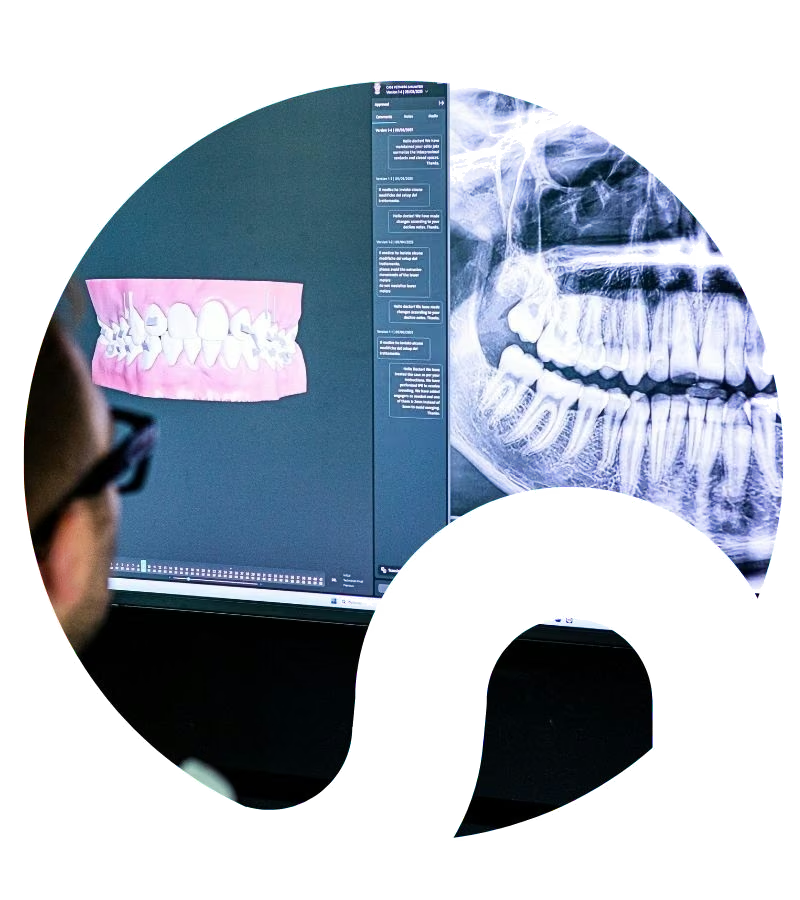
-
a plan before the procedure, not during it
-
3D diagnostics on site CBCT scanner and TRIOS 5 intraoral scanner
-
One dentist from consultation to result
How can you tell that digital implant planning is right for you?
I want to see the implant treatment plan before I agree to the procedure.
I need several implants and I am worried about surprises during surgery.
My bone conditions are difficult and I want to know whether an implant will even fit.
I want the crown on my implant to match the rest of my teeth.
I would rather have one extra visit for planning than corrections after the procedure.
If any of these sounds like you, a digital plan will show you the position of the implants and your future teeth before the procedure. The plan is created from a CBCT scan, an intraoral scan and photographs, and we go through it together before treatment begins.
How can we help?
The concerns that most often hold people back, and how we address them.
“I want to see the result before I agree to the procedure.”
If you want to know what you are agreeing to: the visualisation is prepared before treatment and we go through it together. Your comments are added to the plan before any procedure begins.
“I am worried that planning will make treatment take longer.”
If time matters to you: planning adds one visit at the preparation stage. In return, it shortens the procedure itself and reduces the number of adjustments at later stages.
“I am not sure the plan will be followed exactly.”
If you are looking for certainty: the plan is a plan, not a guarantee to the millimetre. If conditions during the procedure differ from those expected, the dentist adjusts the plan and tells you about it.
“I do not know whether I need a surgical guide.”
If you are asking about the guide: we use it mainly when placing several implants and in difficult anatomical conditions. The decision is made after analysing the CBCT scan.
Digital implant planning: the process in brief
You will find a full description of each stage further down the page. Here is the shortest version of what to expect.
Three sources of data, one model, one guide
Who will treat you?
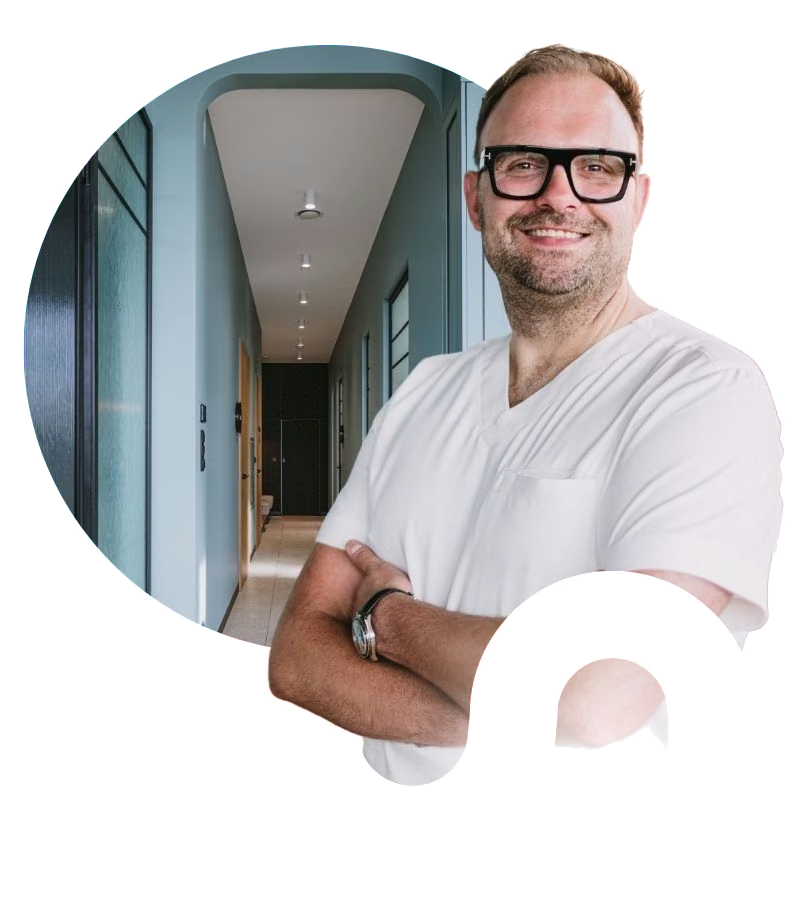
From the first consultation to the end of treatment, you are cared for by the same dentist - and he is responsible for the result.
How much does digital treatment planning cost in Gdynia?
With us, planning is not a separate item detached from treatment. It consists of the consultation, diagnostic imaging and preparation of the plan, and these costs are included in the plan presented before any procedures begin.
A plan with axiography includes bite diagnostics, the design of the work and a cost estimate, so it is a treatment plan rather than just a visualisation. The prices given are for information only and do not constitute a commercial offer within the meaning of Article 66 § 1 of the Polish Civil Code.
Book a consultation and you will receive a plan with stages and prices before treatment begins.
-
implant consultation:200 PLN
-
CBCT scan of the upper or lower jaw:250 PLN
-
CBCT scan of the upper and lower jaw:400 PLN
-
panoramic X-ray:150 PLN
-
scan report:200 PLN
-
plan with ZEBRIS digital axiography:3000 PLN
-
functional plan with ZEBRIS digital axiography:7000 PLN
You can spread the cost of treatment in instalments.
See the full price list“Modern equipment, a beautiful interior, a pleasant atmosphere and friendly, courteous staff make you feel well looked after”
Patient reviews on Google

Very professional and friendly. A visit to the dentist can be a pleasant experience after all. The aligners are comfortable and hygienic, and week by week I can see my teeth straightening. I recommend it.
Translated from Polish
I had the pleasure of being treated by Dr Kiepuszewski at Flow Dental Studio, and I can honestly say he is an exceptional dentist. Wisdom tooth extraction, which so many patients dread, took place in a comfortable atmosphere. Dr Adrian is not only extremely competent but also has a wonderful approach to patients, full of understanding and care. I also decided on aligner treatment. The doctor's precise work and professionalism mean the visits run smoothly and in a pleasant atmosphere. My smile looks better and better, and I know it was the best decision. I recommend him to anyone who dreams of straight teeth without pain or discomfort! The Flow Dental Studio practice itself also deserves a special mention. Modern equipment, a beautiful interior, a pleasant atmosphere and kind, courteous staff make patients feel looked after, and the visit becomes a much more pleasant experience. It is a place that cares not only about healthy teeth but also about the patient's wellbeing.
Translated from Polish
Flow Dental Studio is a place where professionalism goes hand in hand with empathy and care for the patient. I had professional teeth cleaning and fillings there, and I am very impressed by the precision and gentleness of the treatment. Dr Julia and Daria explain everything thoroughly, and the atmosphere at the practice is calm and friendly. It is definitely a practice you can trust completely, which is why I will be back whenever the opportunity arises :)
Translated from Polish
Beautiful practice, professional staff, and the doctor is the GOAT. I didn't even notice when it was over – the nasty wisdom tooth is gone. Highly recommended.
Translated from Polish
It is rare to find places where professionalism goes hand in hand with genuine empathy — but Flow Dental Studio is exactly that kind of place. I had the pleasure (yes, it really can be called that!) of being in Dr Adrian's care for a wisdom tooth extraction I had been dreading for a long time because of severe hypersensitivity. What sets Dr Adrian apart is not only his exceptional skill and precision, but above all his extraordinary respect for the patient's boundaries and feelings. Every gesture and every word – full of calm, understanding and attentiveness – made me feel cared for at every stage of the procedure. A procedure that had filled me with fear turned out to be an almost... soothing experience. No pain, no tension, and great attention to my mental and physical comfort. This is not just dentistry at the highest level — it is the art of creating a safe space in a place usually associated with stress. From the bottom of my heart, thank you to Dr Adrian and the whole Flow Dental Studio team for making it possible to come to you anxious — and leave grateful and smiling.
Translated from Polish
I recommend Dr Adrian. A very professional approach to patients.
Translated from PolishDigital planning in Gdynia: patient questions
Is the dentist bound by the plan?
Can I see a simulation before treatment?
Does planning make treatment take longer?
Will the planning data be useful later?
Does every procedure need a surgical guide?
Is digital planning used for other treatments too?
Is teeth whitening planned together with the design?
This page is for people who are planning implant treatment and want to know what happens between the consultation and the procedure. Here you will find a description of the data the plan is built from and an explanation of the role of the surgical guide. After that come the benefits for the patient and the difference between planning an implant and designing the appearance of the teeth. This matters, because both the safety of the procedure and the result you see in your smile depend on the quality of the plan.
At Flow Dental Studio in Gdynia, the whole process is digital, from imaging to the design of the prosthetic work.
Digital implant planning at Flow Dental Studio in Gdynia:
The plan is created before the procedure, based on a CBCT scan and an intraoral scan.
The implant position is determined by the planned crown, not the other way round.
A surgical guide transfers the design from the screen to the mouth with a high degree of accuracy.
Digital impressions replace traditional impression materials and the discomfort that comes with them.
The planning data is kept and used at later stages of treatment.
An implant consultation costs 200 PLN, and a CBCT scan of the upper or lower jaw 250 PLN.

What is digital implant planning?
Digital implant planning means planning the position of each implant on a computer before the dentist picks up any instruments. Specialist software combines the CBCT image with a model of the teeth from the scanner and makes it possible to place the implant where the prosthetic plan requires.
The order here is the reverse of the older approach. First we decide where the crown should go, and only then where the implant must be to support it. In this way, digital implant planning has changed how implant prosthodontics is done.
The result is a digital design, i.e. a precise treatment plan that you can see on the screen before the procedure. Precise planning of the implant position is based on the CBCT scan and the intraoral scan. You can see how many implants are needed and what the work fitted on them will look like once treatment is complete. The individual stages of dental treatment are then clear from the start.
What does digital treatment planning look like in Gdynia?
The plan is created from two independent sources of data, which we overlay in the software. One shows the bone, the other the surface of the teeth and gums.
CBCT scans and intraoral scans
A CBCT scan allows the implant position to be planned precisely, because it shows the height and width of the bone, its density and the position of anatomical structures. It shows the course of the inferior alveolar nerve and the boundaries of the maxillary sinus, which is exactly what must be avoided.
Intraoral scanning adds the surface to this picture. The scanner creates a three-dimensional model of the teeth in a few minutes, and digital impressions replace traditional impression materials. For you, this means no more gagging and no more waiting for the material to set.
Photographic records complete the set. Photographs of the face and smile show how the teeth sit in relation to the lips and eye line, which no intraoral model can capture.
Overlaying the data and the surgical guide
Overlaying the CBCT image on the scan produces a single model in which the bone and the future crown are visible at the same time. Digital overlaying of the data minimises the risk of damaging anatomical structures, because the implant position is checked against the nerve and the sinus while it is still on screen.
We transfer the approved plan to the mouth using a surgical guide. This is a custom-made template with sleeves that guide the drills in exactly the planned direction and to the planned depth.
In selected cases, a surgical guide makes it possible to place the implant without cutting the gum, through a small punch access. A less invasive procedure means less pain and faster healing, and it also shortens the time spent working in the tissues.
What is decided on screen, and what is left for the chair
- the number of implants and their exact position in the bone,
- the direction and depth of each implant in relation to the nerve and the sinus,
- the shape, length and position of the future crown,
- the decision on whether bone regeneration or a sinus floor lift is needed,
- your comments on the design, added before anything begins,
- a cost estimate for the whole treatment, broken down into stages.
- local anaesthetic,
- implant placement through the guide, which steers the instruments to where they were planned to go,
- in selected cases, a small punch access without cutting the gum,
- an adjustment if the conditions in the bone turn out to be different from the image - and you are told that this has happened.
The more decisions are made on the left, the fewer unknowns remain on the right. It is this proportion, not the equipment itself, that sets digital planning apart from freehand work.
What does digital planning give you as a patient?
The benefits cover three areas at once: safety, comfort and a predictable result.
- Digital planning increases the precision and safety of the procedure, because the implant position is known before the first incision.
- Digital planning makes for a shorter procedure, because there is no need to search for the right direction.
- Less surgical trauma means you need fewer painkillers after the procedure.
- Digital planning makes the aesthetic result more predictable, because the prosthetic work is designed together with the implant position.
- Digital techniques reduce the number of conventional steps in treatment, and we complete some of them faster.
- Digital data can be used at future stages of treatment, even years later.
Patient comfort also improves for a reason that is hard to measure. You see the plan, understand each stage of treatment and can take an active part in decision-making, instead of agreeing to something you have not seen. The digital design lets you have your say before anything begins.
Modern technology used in Gdynia
Behind the digital workflow are specific equipment and specific software. Below are the tools we use at each stage.
a NewTom Giano HR scanner for three-dimensional imaging,
a TRIOS 5 intraoral scanner for digital impressions,
CoDiagnostiX software for planning implant positions and surgical guides,
Exocad software for designing prosthetic work,
a ZEBRIS digital axiograph for functional analysis of the bite,
a ZEISS Extaro 300 microscope for working under magnification,
Tupel photogrammetry for recording implant positions,
a SprintRay Pro 2 3D printer for temporary work.
Modern technology alone does not decide anything, however. What decides is whether the data from each of these devices is brought together into one coherent plan. That is the job of the dentist and the whole team.
“The modern equipment gave me a complete sense of safety. Healing was free of complications and the end result is excellent - the implant looks and works like a natural tooth.”
Digital smile design and implant planning
Both processes use similar tools, but they answer different questions. Implant planning decides where to place the implant in the bone. Aesthetic design decides what the teeth should look like.
In practice, these two paths meet when restoring teeth in the smile zone. In that case the design of the appearance comes first, and the implant position follows from it, not the other way round.
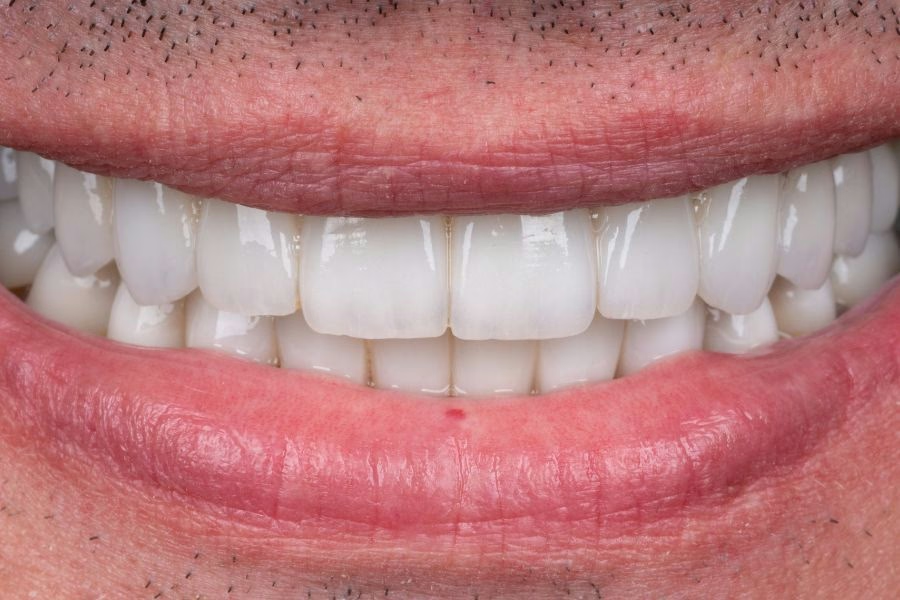
What is digital smile design?
Digital smile design brings photography, 3D scanning and software together in a single process. On this basis, the dentist prepares a visualisation of your new smile, which you see before treatment begins.
Smile design includes an aesthetic and functional analysis of the teeth: their proportions, lengths and widths, and how they sit when you speak. The starting point is always the patient's expectations and clinical conditions. You see a simulation of the final result before treatment begins. You have a real say in the shape, colour and proportions, because the digital visualisation is created precisely to gather your comments.
This innovative method improves communication between dentist and patient, because the conversation centres on an image rather than words. In aesthetic dentistry, it is a modern way of working with expectations. 3D visualisations also improve communication within the team, including with the dental technician who makes the work.
Digital Smile Design (DSD): what does the name mean?
Digital Smile Design is a proprietary smile design protocol, developed and licensed by an external training organisation. The abbreviation DSD refers to that brand specifically, not to the whole field.
It is worth keeping the two apart, because in everyday use Digital Smile Design (DSD) is sometimes used as a name for any digital smile design. In reality, DSD technology is used under a specific licence, while digital design itself is carried out in various software programs.
At Flow Dental Studio we prepare designs in Exocad, based on an intraoral scan, a CBCT scan and photographs. The principle remains the same: DSD lets you see the result before treatment, and a design made in our software gives you exactly the same.
On the market, Digital Smile Design costs roughly around 1000 PLN. DSD prices can vary, however, and depend on the individual treatment plan. With us, the design is part of the plan, not a service sold separately.
Facial analysis as a stage of smile design
Facial analysis is a key stage of this process, because teeth are seen in the context of the whole face, not in isolation. The reference points are the interpupillary line, the facial midline and the outline of the lower lip when you smile.
The assessment also covers movement. Photographs and videos of your facial expressions show how many teeth are visible when you speak and when you laugh. This is crucial in deciding the length of the front teeth.
We take your individual features into account, such as the shape of your face, your age and your sex. An individual approach here means a design based on the unique needs of a particular person, not on a template. A design matched to your facial features looks natural. One that ignores them stands out, even when the teeth themselves are flawlessly made.
When does digital design give you a beautiful smile and confidence?
A beautiful smile comes when aesthetics go hand in hand with function. The shape of the teeth alone is not enough if the bite overloads the restoration or if there is not enough bone support in the smile zone.
That is why, for work involving several teeth, we combine the aesthetic design with a functional analysis. The ZEBRIS digital axiograph shows the path of jaw movement and the distribution of contacts, and the result of this analysis goes into the design before any prosthetic restoration is made.
The result is a plan that takes both appearance and mechanics into account. For many patients, restored aesthetics translate into greater confidence, but it is function that decides whether the result lasts for years.
The planning process step by step in Gdynia
The stages are fixed, and you know them before you decide on treatment.
Consultation visit: medical history and a clinical examination of the mouth.
Diagnostics: CBCT scan, intraoral scan and photographs.
Overlaying the data and designing the implant positions and the future work.
Presenting the plan to you, together with a simulation of the expected result.
Making the surgical guide and preparing for the procedure.
The first step is always a consultation visit, because without a clinical examination the imaging data means little. During this consultation we also establish what you expect from the result. The simulation of the expected result comes as one of the last stages of planning, once the bone conditions are known.
We add your comments to the design before the procedure, often in real time during a single visit. Changing the shape or length of the teeth on screen takes a moment, whereas the same change made to finished work means making it again.
What you will see when the plan is presented
Book a consultation at Flow Dental Studio in Gdynia
If you would like to find out what a treatment plan would look like in your case, start with a consultation with diagnostics. After this visit you will know how many implants are needed, what the scope of the work will be and what it will cost.
The studio is at ul. Arkadiusza Rybickiego 2B/U2 in Gdynia and is open Monday to Friday, from 9:00 to 20:00. You can arrange an appointment by calling +48 786 420 004 or using the contact form.
Read before you decide
Diabetes, Hashimoto’s, high blood pressure, osteoporosis and implants: which contraindications are absolute, which are relative and how suitability is assessed.
Read more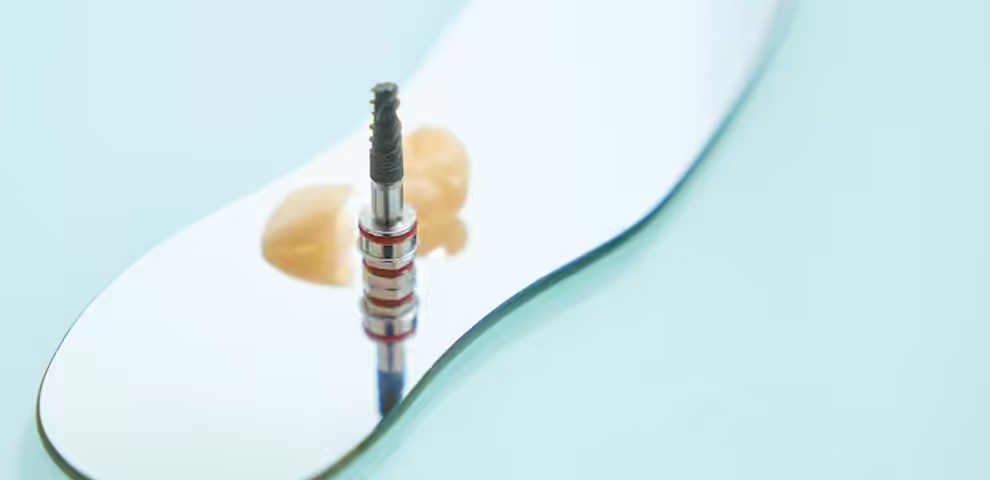
Are dental implants safe? Contraindications, the healing process, the most common complications and symptoms that mean you should contact your dentist.
Read more
What does an implant really cost? Placement from 3400 PLN, crown on an implant 4500 PLN. We break down the price before you decide.
Read moreTell us how many teeth are missing and whether you already have any X-rays or a CBCT scan, and we will call you back to book a consultation with diagnostics in Gdynia.
Flow Dental Studio
ul. Arkadiusza Rybickiego 2B/U2, 81-340 Gdynia
+48 786 420 004
info@flowdentalstudio.pl
Monday – Friday, 9:00 – 20:00