
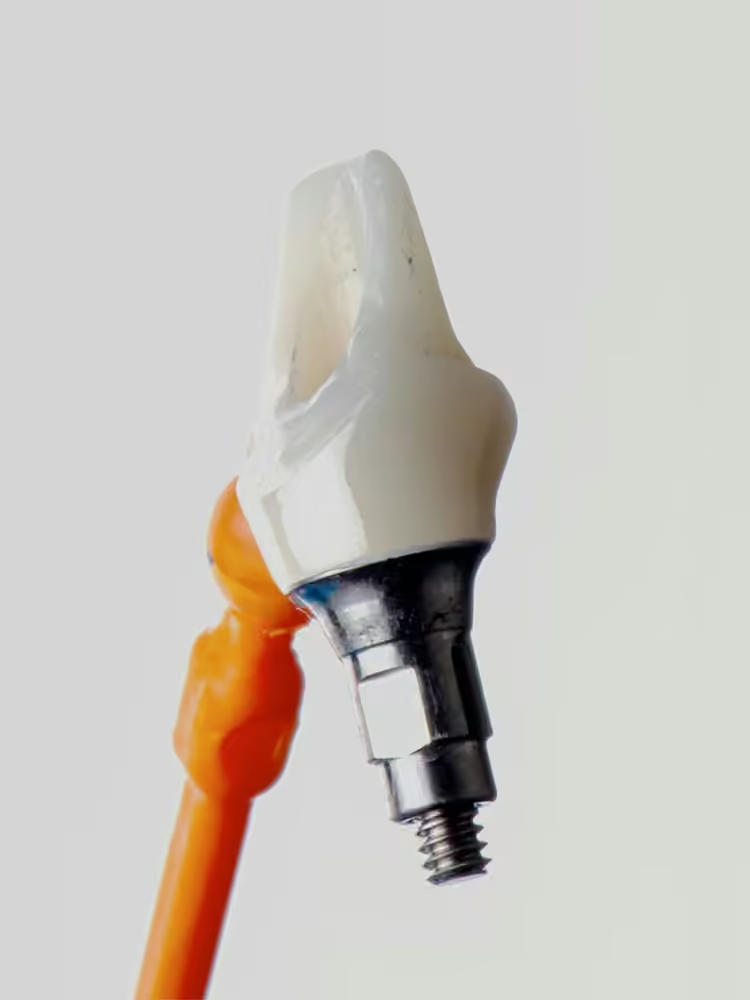
Single-tooth implant in Gdynia
A single-tooth implant is a titanium or zirconia screw that replaces the root of the lost tooth, together with a prosthetic crown that recreates its visible part. It fills the gap without grinding down the neighbouring teeth and protects the bone from shrinking. At Flow Dental Studio in Gdynia, we plan implants digitally based on a 3D CBCT scan.
Book an implant consultation in Gdynia – tel. +48 786 420 004
4.9/5 43 reviews on Google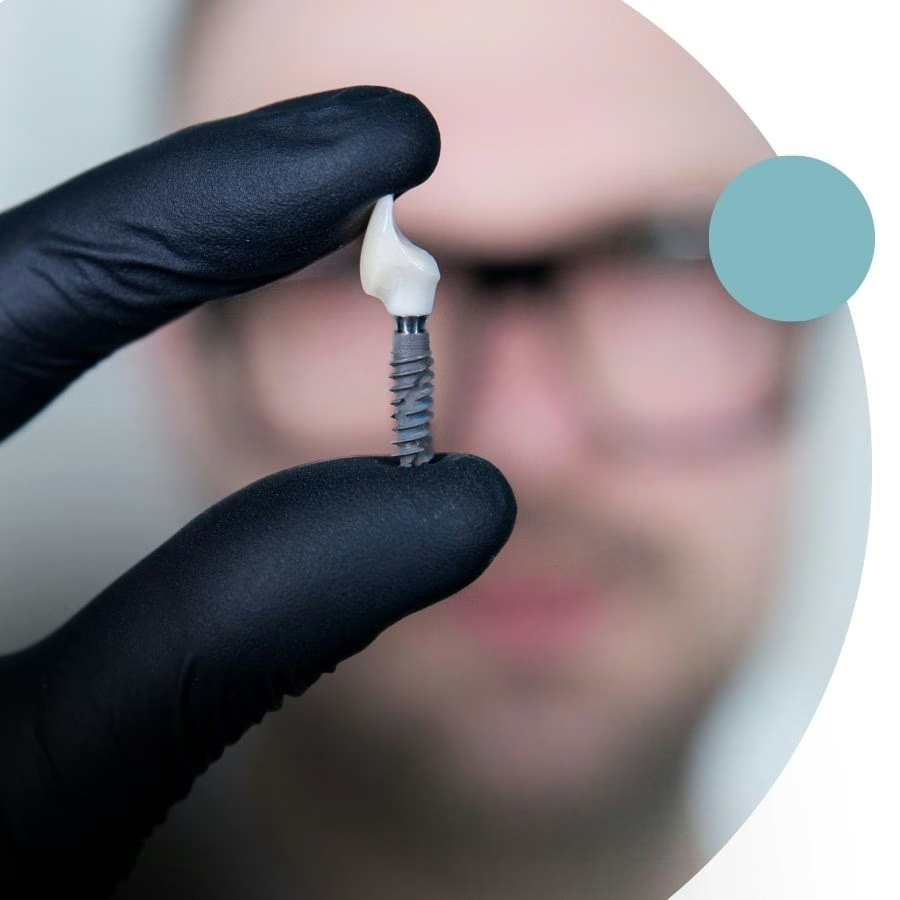
-
3D planning NewTom Giano HR CBCT scanner
-
No grinding of teeth we leave the neighbouring teeth intact
-
Local anaesthetic comfort during treatment
-
Instalments spread the cost over time
How do you know a single-tooth implant is right for you?
I've had a gap since a tooth was extracted, and I automatically chew on the other side.
I don't want a bridge, because it would mean grinding down the healthy teeth next to the gap.
I have a tooth that needs extracting and I want to replace it straight away with something permanent.
A gap at the front makes me smile with my mouth closed.
I want a solution that looks and works like my own tooth.
If any of these sound like you, an implant with a crown may be a good option. Whether your bone allows it is something we determine at an implant consultation with a CBCT scan.
How can we help?
The concerns that most often hold people back, and how we address them.
“I'm afraid the procedure will hurt.”
If you are worried about pain: we place the implant under local anaesthetic, so you only feel touch, pressure and the vibration of the instruments. Any mild discomfort or swelling after the procedure can be eased with cold compresses and the medication recommended by the dentist.
“I don't want to be without a tooth for long.”
If time matters to you: it usually takes 3 to 6 months from placement to the final crown. In favourable conditions, we load the implant with a temporary crown on the day of the procedure.
“I'm worried people will be able to tell which tooth is artificial.”
If a natural look matters to you: a porcelain or zirconia crown matches the shape, size and colour of the neighbouring teeth. The implant transfers chewing forces to the bone just as your own root does.
“I need a tooth taken out and I don't know what happens next.”
If you are facing an extraction: if there is no inflammation and the bone is good, the implant can be placed in the socket straight after the tooth is removed, during a single visit. The implantologist decides whether you qualify after diagnostics.
Single-tooth implant: the process at a glance
You will find a full description of each stage further down the page. Here is the shortest version of what to expect.
What can replace a missing tooth?
There are several ways to replace a single missing tooth – most often an implant, a bridge or a removable denture is considered. What to put in place of the missing tooth depends on the condition of the neighbouring teeth, the amount of bone and your expectations, and the dentist chooses the option after diagnostics.
Implant with a crown – recreates the root and the visible part of the tooth, does not require grinding down the neighbouring teeth and protects the bone from shrinking. The most common choice when one tooth is missing.
Dental bridge - crowns supported on the neighbouring teeth after they have been reduced. Quicker, but it means drilling down healthy teeth and does not protect the bone beneath the pontic.
Removable denture - an affordable option you can take out, less comfortable than fixed restorations, with visible retaining elements.
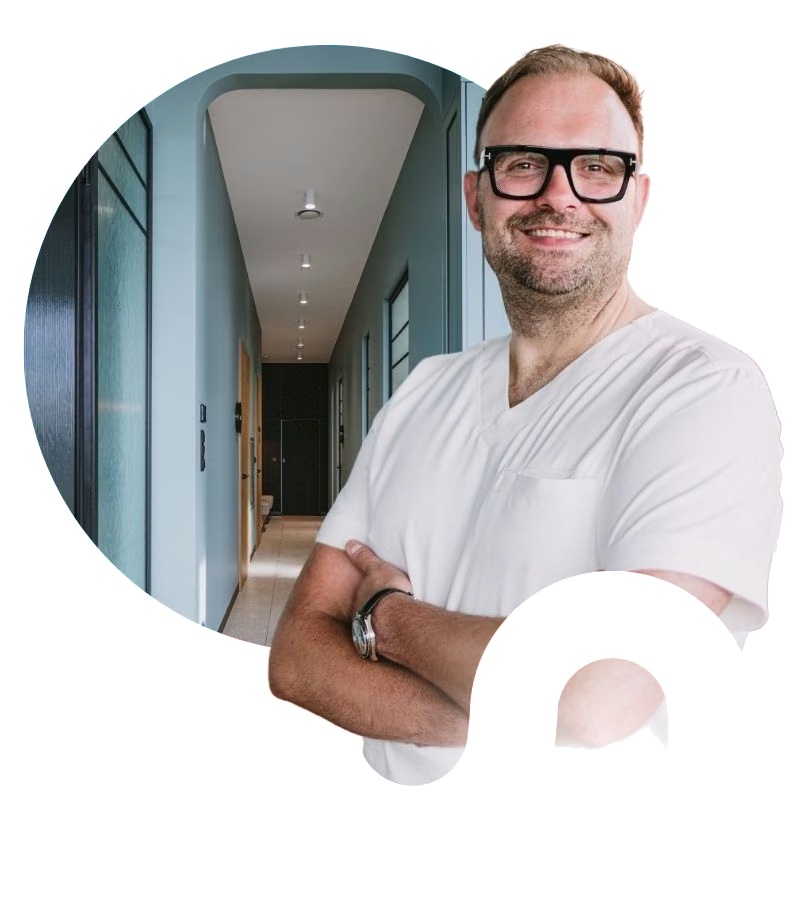
Implant treatment is carried out by Adrian Kiepuszewski
Implant treatment is carried out by Adrian Kiepuszewski, an implantologist with more than 16 years of experience. Our dentists' experience and digital planning make the procedure more predictable and safer.
- Implantology
- Single-tooth implant
- CBCT
- CoDiagnostiX
- Surgical navigation
Single-tooth implant - the price and what it includes
The price of a single-tooth implant is the sum of several stages, which is why we work out how much your dental implant will cost individually, after diagnostics. Guide prices at Flow Dental Studio in Gdynia: implant consultation 200 PLN, implant placement from 3400 PLN (fully guided placement 4300 PLN, zirconia implant 5000 PLN), and an all-ceramic crown from 3000 PLN. On top of that comes the abutment and, if needed, bone grafting from 2500 PLN. A single dental implant with a crown is therefore made up of several items, and the total cost depends on the elements chosen.
-
Implant consultation200 PLN
-
All-ceramic crownfrom 3000 PLN
-
Bone grafting (if needed)from 2500 PLN
Plus the abutment. A full cost estimate after diagnostics, with 0% instalments available.
You can spread the cost of treatment in instalments.
See the full price list“The doctor’s precise work and professionalism mean that visits run smoothly and in a pleasant atmosphere.”
See why they chose Flow Dental Studio. The reviews come from our Google Business Profile.

Very professional and friendly. A visit to the dentist can be a pleasant experience after all. The aligners are comfortable and hygienic, and week by week I can see my teeth straightening. I recommend it.
Translated from Polish
I had the pleasure of being treated by Dr Kiepuszewski at Flow Dental Studio, and I can honestly say he is an exceptional dentist. Wisdom tooth extraction, which so many patients dread, took place in a comfortable atmosphere. Dr Adrian is not only extremely competent but also has a wonderful approach to patients, full of understanding and care. I also decided on aligner treatment. The doctor's precise work and professionalism mean the visits run smoothly and in a pleasant atmosphere. My smile looks better and better, and I know it was the best decision. I recommend him to anyone who dreams of straight teeth without pain or discomfort! The Flow Dental Studio practice itself also deserves a special mention. Modern equipment, a beautiful interior, a pleasant atmosphere and kind, courteous staff make patients feel looked after, and the visit becomes a much more pleasant experience. It is a place that cares not only about healthy teeth but also about the patient's wellbeing.
Translated from Polish
Flow Dental Studio is a place where professionalism goes hand in hand with empathy and care for the patient. I had professional teeth cleaning and fillings there, and I am very impressed by the precision and gentleness of the treatment. Dr Julia and Daria explain everything thoroughly, and the atmosphere at the practice is calm and friendly. It is definitely a practice you can trust completely, which is why I will be back whenever the opportunity arises :)
Translated from Polish
Beautiful practice, professional staff, and the doctor is the GOAT. I didn't even notice when it was over – the nasty wisdom tooth is gone. Highly recommended.
Translated from Polish
It is rare to find places where professionalism goes hand in hand with genuine empathy — but Flow Dental Studio is exactly that kind of place. I had the pleasure (yes, it really can be called that!) of being in Dr Adrian's care for a wisdom tooth extraction I had been dreading for a long time because of severe hypersensitivity. What sets Dr Adrian apart is not only his exceptional skill and precision, but above all his extraordinary respect for the patient's boundaries and feelings. Every gesture and every word – full of calm, understanding and attentiveness – made me feel cared for at every stage of the procedure. A procedure that had filled me with fear turned out to be an almost... soothing experience. No pain, no tension, and great attention to my mental and physical comfort. This is not just dentistry at the highest level — it is the art of creating a safe space in a place usually associated with stress. From the bottom of my heart, thank you to Dr Adrian and the whole Flow Dental Studio team for making it possible to come to you anxious — and leave grateful and smiling.
Translated from Polish
I recommend Dr Adrian. A very professional approach to patients.
Translated from PolishFrequently asked questions about single-tooth implants in Gdynia
Does implant placement hurt, or is it completely painless?
How long does the whole implant treatment take?
Does an implant look and work like a natural tooth?
How many teeth can be restored on one implant?
Can two teeth be fitted on one implant?
How long does a dental implant last?
Can an implant be placed straight after a tooth is extracted?
Are implants funded by the NFZ (Polish National Health Fund)?
Single-tooth implants at a glance
A single-tooth implant is a titanium or zirconia screw that replaces the root, with a crown forming the visible part of the tooth.
An implant stops the bone loss that follows losing a tooth, and it does not require healthy neighbouring teeth to be drilled down.
We place implants under local anaesthetic.
Full osseointegration usually takes 3 to 6 months, after which we fit the final crown.
The cost is set individually, and treatment can be spread over convenient instalments.
Why is one missing tooth a problem?
One missing tooth is not just about appearance - losing a single tooth sets off bone loss and the drifting of the remaining teeth. The alveolar bone loses the stimulation the root used to provide and begins to shrink, fastest in the first year after the tooth is lost. The Godon effect also appears: the neighbouring teeth tilt towards the gap, and the opposing tooth over-erupts. This leads to bite problems, issues with the temporomandibular joint and harder cleaning, which raises the risk of tooth decay.

What is a single-tooth implant?
A dental implant is a small, biocompatible titanium screw (a zirconia version is also available) that is surgically placed in the upper or lower jaw where the tooth was lost. After osseointegration, meaning it has fused permanently with the bone, the implant becomes a stable foundation for the abutment and the future crown. The crown recreates the visible part of the tooth, acting as the artificial tooth, while the implant itself replaces the root. This way it fills the gap without affecting the structure of the healthy neighbouring teeth.
Why choose an implant when one tooth is missing?
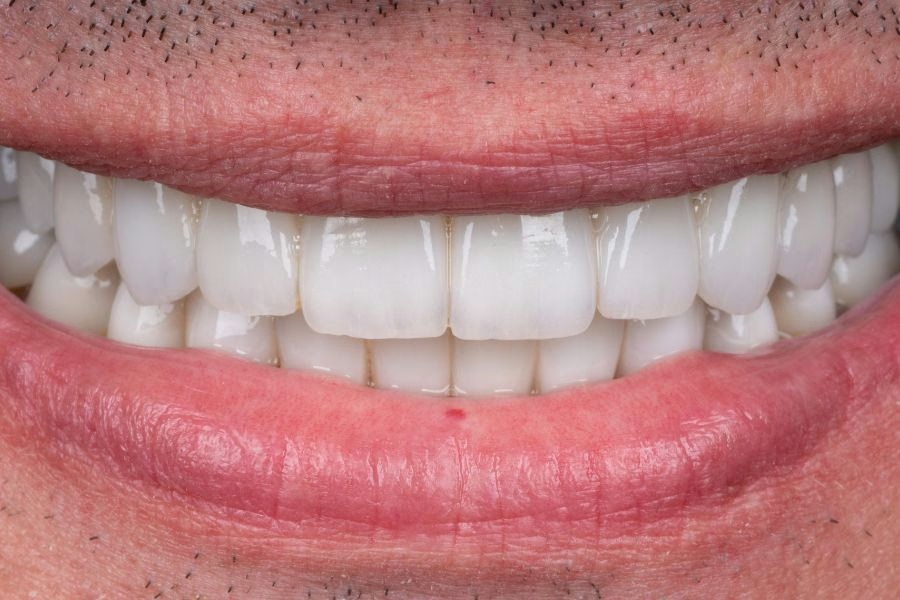
Dental implants have one advantage over other methods: they are the only option that actively stimulates the bone and prevents it from shrinking where the tooth is missing. Implant treatment does not involve drilling down healthy teeth, unlike a bridge, which rests on reduced abutment teeth. Compared with removable dentures, an implant offers greater stability and comfort, because it is fixed in place like your own tooth and has no visible clasps.
The choice of method depends on your situation: an implant works well when you want a long-lasting restoration that protects the bone; a bridge can make sense when the neighbouring teeth need crowns anyway; a denture remains the affordable option. In the aesthetic zone, when a front tooth is visibly missing, an implant supports the soft tissues and looks natural, and a porcelain or zirconia crown is hard to tell apart from the neighbouring teeth. Titanium implants have a wide range of uses - from a single missing tooth to larger gaps, where they serve as bridge supports.
A missing front tooth, back tooth or upper tooth - what matters?
Where the tooth is missing affects how the implant is planned - the aesthetic zone, the chewing teeth and gaps in the upper jaw each call for a different approach.
A missing front tooth
The front of the mouth, meaning a central incisor (tooth 1) or lateral incisor (tooth 2), is above all about appearance and speech - the tooth shows when you smile. An implant with a porcelain or zirconia crown recreates a natural look and supports the gum.
Missing back teeth
Here it is mainly about chewing. A gap left unfilled encourages the neighbouring teeth to tilt and puts strain on the bite. An implant restores comfortable biting and transfers chewing forces to the bone.
Missing teeth in the upper jaw
The bone here can be less dense, and in the side sections the sinus lies close by - sometimes a sinus lift or bone grafting is needed. The upper first premolar (tooth 4) combines appearance with function. A CBCT scan shows how much preparation is needed.
How does single-tooth implant treatment work, step by step?
Dental implant treatment at Flow Dental Studio in Gdynia takes place in several stages. First diagnostics, then the procedure, healing and the crown.
Implant consultation and a CBCT scan on the NewTom Giano HR - we assess the amount and quality of bone and plan the implant position to avoid nerves and sinuses.
An individual treatment plan with a cost estimate, often with a digital smile design that lets you see the result before treatment.
Implant placement under local anaesthetic - the dentist places a titanium implant in the prepared site, often using surgical navigation, which makes the procedure safer.
Healing and osseointegration, which usually takes 3 to 6 months, depending on the implant site and the patient's condition.
Prosthetic restoration - an abutment is attached to the implant, and on it the final crown, matched in shape and colour to the neighbouring teeth.
What is a temporary crown on a single-tooth implant?
A temporary crown is a restoration fitted to the implant during healing, before the final crown is made. In favourable conditions, immediate loading is possible - the implant receives a temporary restoration on the day of the procedure. A temporary crown does not replace the final treatment, as the permanent crown is fitted only once osseointegration is complete. Whether this protocol is used during healing is decided by the dentist after a thorough examination.
When is bone grafting needed?
Bone grafting, or bone regeneration, is an additional procedure needed when there is not enough of your own bone at the implant site. This most often happens when a long time has passed since the tooth was lost and significant bone loss has occurred. Rebuilding the bone increases its volume so that it can hold the implant securely. Regeneration uses bone substitute materials or autogenous bone, meaning your own. Bone grafting is priced separately as a stage of the treatment plan.
What is a sinus lift?
A sinus lift (raising the floor of the maxillary sinus) is a type of bone grafting carried out only in the upper jaw, in the side sections, where the bone is sometimes too short because the sinus is so close. The procedure involves gently lifting the membrane lining the sinus and placing bone material beneath it, which creates room for the implant. A sinus lift is a separate item in the cost estimate, needed to carry out the procedure in difficult anatomical conditions.
What affects the cost of a single dental implant?
Several factors affect the price of an implant. The most important are the type of implant system, the crown material - an all-ceramic crown or porcelain fused to a framework - and whether additional procedures are needed, such as bone grafting or a sinus lift. The condition and quality of the bone at the implant site also matter, because the more preparation is needed, the higher the cost. The dentist discusses the factors affecting the price in the treatment plan after a thorough examination.
Can the total cost of a single dental implant be spread over instalments?
Yes. The total cost of implant treatment at Flow Dental Studio in Gdynia can be spread over 0% instalments. Once you have received your treatment plan and cost estimate, you can apply for financing, and a decision is often made quickly. We always set the full cost individually, with no hidden fees, after diagnostics.
What does an individual approach mean at Flow Dental Studio in Gdynia?
An individual approach at Flow Dental Studio in Gdynia means that every treatment plan is drawn up after thorough diagnostics and tailored to the patient's needs and health. We plan the implant position digitally in CoDiagnostiX software based on a CBCT scan, and we carry out the procedure with surgical navigation.
Who is a candidate for a single-tooth implant?
Practically any adult in good general health who has lost a tooth, has suitable bone and looks after their oral hygiene is a candidate for an implant. With good hygiene and stable health, age is not a contraindication - implants are placed in younger adults and older patients alike, and they often improve quality of life.
Absolute contraindications are rare - they include:
- active cancer currently being treated,
- some mental health conditions,
- a recent heart attack.
Relative contraindications, which call for preparation or postponing treatment, are more common:
- uncontrolled diabetes,
- osteoporosis treated with bisphosphonates,
- heavy smoking,
- poor oral health.
Once the patient's health has been stabilised, the procedure usually becomes possible.
How should you care for your implant and your oral health?
How long an implant lasts depends on hygiene and regular check-ups - the implant itself cannot decay, but the gum and bone around it can become inflamed (peri-implantitis). Brush the crown on your implant just like your natural teeth, and clean between the teeth with implant floss, a water flosser and interdental brushes. At check-ups at the dental practice, the hygienist removes tartar and deposits, and the dentist assesses the bone on an X-ray. Looking after your oral health and following your dentist's advice help your implant last longer.
Plan your single-tooth implant in Gdynia
We will assess your bone on a 3D CBCT scan, choose the right solution and give you a cost estimate - with the option of spreading the cost over 0% instalments.
Read before you decide
What does an implant really cost? Placement from 3400 PLN, crown on an implant 4500 PLN. We break down the price before you decide.
Read more
Can one implant support two teeth? What a cantilever bridge is, when it is an option, what risks it carries and how to replace two missing teeth safely.
Read more
Cheap implants and long-term cost: how implant quality, 3D diagnostics and planning affect how long treatment lasts and the risk of costly corrections.
Read moreBook a consultation in Gdynia
Book an implant consultation at Flow Dental Studio in Gdynia - we will assess your bone and plan your single-tooth implant. We present the treatment plan and cost estimate after 3D diagnostics, with no obligation.
Flow Dental Studio
ul. Arkadiusza Rybickiego 2B/U2, 81-340 Gdynia
+48 786 420 004
info@flowdentalstudio.pl
Monday – Friday, 9:00 – 20:00