

Splint therapy in Gdynia – bruxism treatment
Do you grind your teeth at night, wake up with a tense jaw, or has your dentist pointed out worn tooth edges? These are exactly the situations where splint therapy helps: a custom-fitted splint takes the force of grinding, protects your teeth from wear, relaxes tense muscles and takes the load off the jaw joint. We design it digitally, from a scan of your bite.
Book a splint therapy consultation in Gdynia – tel. +48 786 420 004
4.9/5 43 reviews on Google
-
Digital splint design TRIOS 5 scan, no impression putty
-
Tooth protection the splint protects enamel from wear
-
Functional diagnostics ZEBRIS digital axiography
-
Custom fit a splint made of hard, biocompatible acrylic
Do any of these thoughts sound familiar?
My partner hears me grinding my teeth at night.
I wake up with a tense jaw and pain in my temples.
My dentist showed me worn tooth edges and cracks in the enamel.
When I am stressed, I clench my teeth until my facial muscles ache.
I want to protect the results of bonding or teeth straightening from grinding.
If at least one of these sounds like you, a splint can take on what is currently damaging your teeth. Which one to choose, and whether you need one at all, is decided by functional diagnostics at your first visit.
How can we help?
The five questions patients ask most often before splint treatment, and our answers to each of them.
“Does a splint actually treat anything, or does it just protect my teeth?”
If you are picturing an ordinary plastic mouthguard: a well-chosen splint does three things at once – it protects enamel from wear, relaxes the muscles and takes the load off the temporomandibular joint. Which of these matters most in your case comes out of the diagnostics, and that determines the type of splint.
“How is this different from a 50 PLN mouthguard bought online?”
If a ready-made mouthguard is tempting: a one-size-fits-all splint knows nothing about your bite – it can get in the way at night, and it can sometimes reinforce an unfavourable jaw position. Ours is made from a digital scan and fitted in your mouth at the appointment. We cover this in more detail further down the page.
“I will never sleep with something like that in my mouth.”
If you are worried about your sleep: slight pressure and extra saliva during the first few nights are normal and pass once wearing the splint becomes a habit. When we hand it over, we fit it in your mouth and adjust anything that rubs – you do not take home anything that bothers you.
“Why do prices range from 500 PLN to 5000 PLN?”
If the price list is confusing: the 500 PLN deprogrammer is a tool for diagnosis and initial treatment, while the Bioorteza and the MAGO splint at 5000 PLN are therapeutic splints. They are different tools for different problems, not cheaper and more expensive versions of the same thing – the choice follows from the diagnostics, and you receive a cost estimate after your first visit.
“Is a splint enough on its own?”
If the problem also lies in the muscles: a splint is often part of a wider plan, alongside dental physiotherapy and decisions about your bite. We handle everything within one team and in one place, so the whole plan is held together by a single diagnosis.
Splint treatment in Gdynia: the process at a glance
You will find a full description further down the page. Here is the shortest version of what to expect.
How is bruxism linked to masticatory dysfunction?
Bruxism is involuntary teeth grinding combined with involuntary clenching – a parafunction of the masticatory system unrelated to eating or speaking. Excessive activity of the masseter muscles overloads the whole system: the teeth, the facial muscles and the temporomandibular joints. We distinguish night-time bruxism, which happens during sleep, and daytime bruxism, which involves clenching the jaw, often under stress. Left untreated, the dysfunction leads to pain, tooth damage and joint overload.
Occurs during sleep – unconscious grinding and clenching of the teeth that the patient usually cannot control.
Involves clenching the jaw while awake, most often in stressful and tense situations.
Who will treat me?
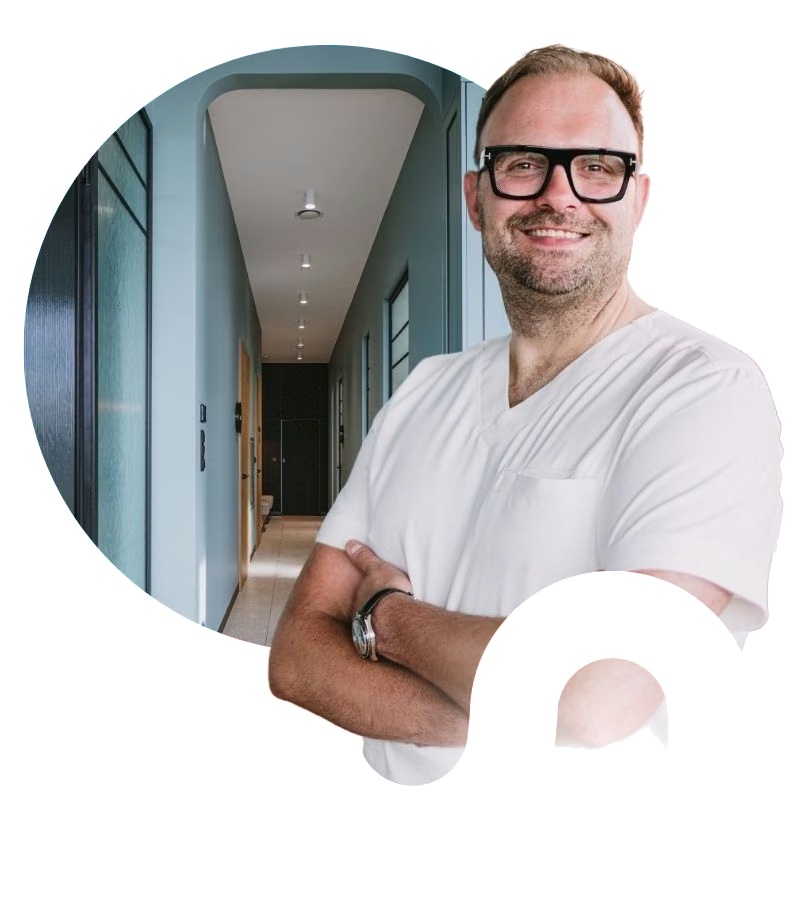
Treatment is led by Adrian Kiepuszewski, dentist. He makes the diagnosis after a functional examination, often with ZEBRIS axiography recording of jaw movements, and he is the one who chooses the type of splint for the problem, fits it in your mouth and carries out the check-ups.
On the muscle side he is supported by Paulina Rojek, a dental physiotherapist – when tension also calls for manual therapy, everything happens within one team. You can read more about his experience on the About Dr Adrian Kiepuszewski page.
- Functional diagnostics and ZEBRIS
- Deprogrammer, Bioorteza, MAGO splint
- Design from a digital scan
- Splint check-ups and adjustments
How much does splint therapy cost in Gdynia?
The cost of splint therapy at Flow Dental Studio in Gdynia depends on the diagnostics, the type of splint and the number of check-up visits. As a guide, diagnostics of the temporomandibular joints and bite disorders costs 1000 PLN, a Bioorteza or MAGO therapeutic splint costs 5000 PLN, and a deprogrammer costs 500 PLN. Check-up visits during temporomandibular joint treatment cost 500 PLN. Regular check-ups let us monitor progress and adjust the splint if needed. You receive a detailed cost estimate after your first diagnostic visit.
-
Diagnostics of the temporomandibular joints and bite disorders1000 PLN
-
Deprogrammer500 PLN
-
Check-up visit (temporomandibular joint treatment)500 PLN
Prices are a guide. You receive a detailed cost estimate after your first diagnostic visit.
You can spread the cost of treatment in instalments.
See the full price list“From the bottom of my heart, thank you to Dr Adrian and the whole Flow Dental Studio team for making it possible to walk in feeling anxious – and walk out grateful and smiling.”
See why they chose Flow Dental Studio. The reviews come from our Google Business Profile.

Very professional and friendly. A visit to the dentist can be a pleasant experience after all. The aligners are comfortable and hygienic, and week by week I can see my teeth straightening. I recommend it.
Translated from Polish
I had the pleasure of being treated by Dr Kiepuszewski at Flow Dental Studio, and I can honestly say he is an exceptional dentist. Wisdom tooth extraction, which so many patients dread, took place in a comfortable atmosphere. Dr Adrian is not only extremely competent but also has a wonderful approach to patients, full of understanding and care. I also decided on aligner treatment. The doctor's precise work and professionalism mean the visits run smoothly and in a pleasant atmosphere. My smile looks better and better, and I know it was the best decision. I recommend him to anyone who dreams of straight teeth without pain or discomfort! The Flow Dental Studio practice itself also deserves a special mention. Modern equipment, a beautiful interior, a pleasant atmosphere and kind, courteous staff make patients feel looked after, and the visit becomes a much more pleasant experience. It is a place that cares not only about healthy teeth but also about the patient's wellbeing.
Translated from Polish
Flow Dental Studio is a place where professionalism goes hand in hand with empathy and care for the patient. I had professional teeth cleaning and fillings there, and I am very impressed by the precision and gentleness of the treatment. Dr Julia and Daria explain everything thoroughly, and the atmosphere at the practice is calm and friendly. It is definitely a practice you can trust completely, which is why I will be back whenever the opportunity arises :)
Translated from Polish
Beautiful practice, professional staff, and the doctor is the GOAT. I didn't even notice when it was over – the nasty wisdom tooth is gone. Highly recommended.
Translated from Polish
It is rare to find places where professionalism goes hand in hand with genuine empathy — but Flow Dental Studio is exactly that kind of place. I had the pleasure (yes, it really can be called that!) of being in Dr Adrian's care for a wisdom tooth extraction I had been dreading for a long time because of severe hypersensitivity. What sets Dr Adrian apart is not only his exceptional skill and precision, but above all his extraordinary respect for the patient's boundaries and feelings. Every gesture and every word – full of calm, understanding and attentiveness – made me feel cared for at every stage of the procedure. A procedure that had filled me with fear turned out to be an almost... soothing experience. No pain, no tension, and great attention to my mental and physical comfort. This is not just dentistry at the highest level — it is the art of creating a safe space in a place usually associated with stress. From the bottom of my heart, thank you to Dr Adrian and the whole Flow Dental Studio team for making it possible to come to you anxious — and leave grateful and smiling.
Translated from Polish
I recommend Dr Adrian. A very professional approach to patients.
Translated from PolishFrequently asked questions about splint therapy in Gdynia
How long does splint therapy take?
Is the splint made for the upper or the lower teeth?
Does an occlusal splint straighten teeth?
What are the side effects or drawbacks of an occlusal splint?
How long does it take for an occlusal splint to help?
Can orthodontic braces cure bruxism?
How do we treat bruxism – teeth grinding and tooth wear?
With a custom-designed splint that, at night and sometimes also during the day, keeps the teeth apart and absorbs the force of clenching. The acrylic of the splint wears down instead of your enamel, the muscles get a signal to relax, and the load is taken off the temporomandibular joint.
This is not a one-size-fits-all mouthguard from a shop: the type of splint – a deprogrammer, Bioorteza or MAGO splint – is chosen by the dentist after functional diagnostics, and the splint itself is made from a digital scan of your bite. The whole process takes three visits.
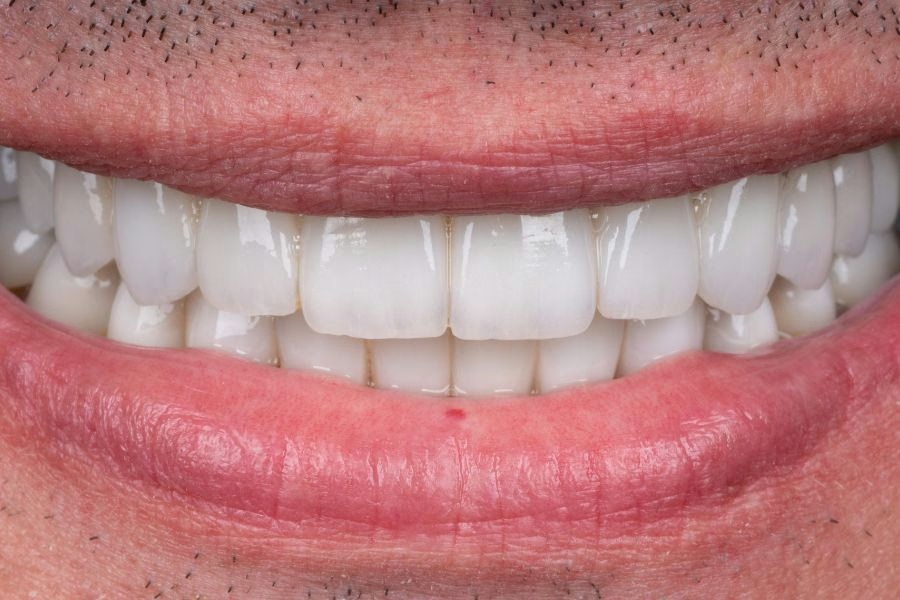
Splint therapy and bruxism treatment at a glance
Splint therapy treats bruxism and temporomandibular joint disorders with a custom-fitted occlusal splint.
The splint protects teeth from wear, relaxes the masseter muscles and takes the load off the joint.
It helps relieve symptoms such as morning headaches, jaw and neck pain, and worn teeth.
Treatment starts with a consultation and functional diagnostics, followed by a digital scan of your teeth.
A custom splint fits better than ready-made mouthguards from online shops.
What is splint therapy?
Splint therapy is a dental treatment in which a custom-designed occlusal splint treats disorders of the masticatory system, above all bruxism. The splint, in most cases worn at night, separates the upper teeth from the lower teeth, relaxes the muscles and restores normal function of the temporomandibular joints. Unlike orthodontic treatment, an occlusal splint does not straighten teeth; its role is therapeutic. At Flow Dental Studio in Gdynia we design the splint digitally, from a scan of your teeth.
How does an occlusal splint work?
An occlusal splint works by separating the upper teeth from the lower teeth, which interrupts the unconscious grinding and clenching reflex. This separation reduces the activity of the masseter muscles and lets them gradually relax, easing muscle tension. The splint holds the lower jaw in a therapeutic position, takes the load off the temporomandibular joint and relieves pain. At the same time, its hard, smooth surface protects the enamel from wear and guards the teeth against further damage.
What are the symptoms of bruxism?
The main symptoms of bruxism are:
- morning headaches around the temples,
- pain and stiffness in the jaw and neck,
- visibly worn or cracked teeth,
- tension headaches and pain in the temporal muscles,
- pain in the face,
- clicking in the temporomandibular joint,
- sensitive teeth.
Some people bite their cheeks or feel pain in the ear or neck. These signs are a reason to book a dental consultation.
Does teeth grinding always mean bruxism?
When is it bruxism?
Not all teeth grinding means bruxism. A single episode, for example on a stressful night, is not a disorder. We speak of bruxism when grinding and clenching are regular, chronic and cause harm – enamel wear, pain or loosening teeth. If involuntary grinding keeps coming back and is accompanied by morning jaw pain or headaches, it is a sign to visit a dental practice.
How is bruxism treated?
Bruxism is treated primarily with splint therapy – a custom-fitted occlusal splint that protects the teeth and relaxes the muscles. It is worth combining this with treatment of the underlying cause: stress reduction and dental physiotherapy with exercises that relax the chewing muscles. When the masseter muscles are very tense, botulinum toxin injected into the masseters can help. The first step is always a consultation and diagnostics, which identify the causes and determine the method.
Splint therapy – a custom-fitted occlusal splint protects the teeth and relaxes the muscles. The core method of treating bruxism.
Treating the cause – stress reduction and dental physiotherapy with exercises that relax the chewing muscles.
Botulinum toxin – for severe masseter tension, injected into the masseters to reduce their excessive activity.
What types of occlusal splint are there?
We choose the type of occlusal splint to suit the problem and the goal of treatment. At Flow Dental Studio in Gdynia we use, among others, the Bioorteza and the MAGO splint, and for diagnosis and initial treatment – a deprogrammer. Each one is made of hard, biocompatible acrylic and custom-fitted to the patient’s bite. The specific splint is chosen by the dentist after functional diagnostics.
Bioorteza – a therapeutic splint used to treat bruxism and muscle tension.
MAGO splint – a therapeutic splint that supports temporomandibular joint function and muscle relaxation.
Deprogrammer – used in diagnosis and initial treatment; helps bring the lower jaw into a therapeutic position.
What are the benefits of treating bruxism with an occlusal splint?
Treating bruxism with an occlusal splint protects teeth from damage, reduces pain and improves sleep quality. The splint absorbs the force of grinding, protecting the enamel from wear and crowns, bridges and veneers from fracturing. Wearing it regularly reduces morning headaches, jaw tension and neck pain. The splint serves above all to protect the teeth and limits tension-related sleep disturbance, and better sleep means a better quality of life.
Protection for teeth and dental restorations – the splint absorbs the force of grinding, protecting the enamel from wear and crowns, bridges and veneers from fracturing.
Less pain – wearing it regularly reduces morning headaches, jaw tension and neck pain.
Better sleep and quality of life – the splint limits tension-related sleep disturbance, and better sleep means a better quality of life.
What does splint therapy involve in Gdynia?
Splint therapy at Flow Dental Studio in Gdynia takes 3 visits. First diagnostics and a plan, then a scan, and finally the splint is handed over.
Consultation and diagnostics – a medical history, an assessment of your teeth and a functional examination of the muscles and joints, often with ZEBRIS digital axiography. The dentist makes a diagnosis and presents a plan and a cost estimate.
Digital scan of your teeth with a TRIOS 5 scanner, without traditional impression putty. The scan goes to the laboratory as the basis for designing the splint.
Handover and fitting of the splint – the dentist fits it in your mouth and shows you how to put it in and clean it. Slight pressure during the first few nights is normal and passes.
Is it worth buying a splint from an online shop?
Why is a custom splint better?
Ready-made mouthguards from online shops and pharmacies are one-size-fits-all products that do not take the individual anatomy of your bite into account. Made of soft material, they often provoke the muscles into reflex biting, so they can increase muscle activity rather than relax it. A poor fit can also cause an incorrect jaw position, irritated or bleeding gums and new complaints. Despite the wide choice of such mouthguards, a custom-made splint fits better for treating bruxism.
Do home remedies for bruxism work?
Home remedies can ease the symptoms of bruxism, but they cannot replace treatment. Stress reduction, exercises that relax the chewing muscles, warm compresses on tense facial muscles and good sleep habits can help. They ease tension, but they do not protect the teeth from wear the way a splint does. If grinding and clenching persist, it is worth combining home remedies with a consultation and splint therapy.
What is splint therapy like at Flow Dental Studio in Gdynia?
At Flow Dental Studio in Gdynia we design splints digitally. We begin treatment with functional diagnostics of the temporomandibular joints and muscles, and the dentist chooses the splint after a thorough examination, individually for your bite.
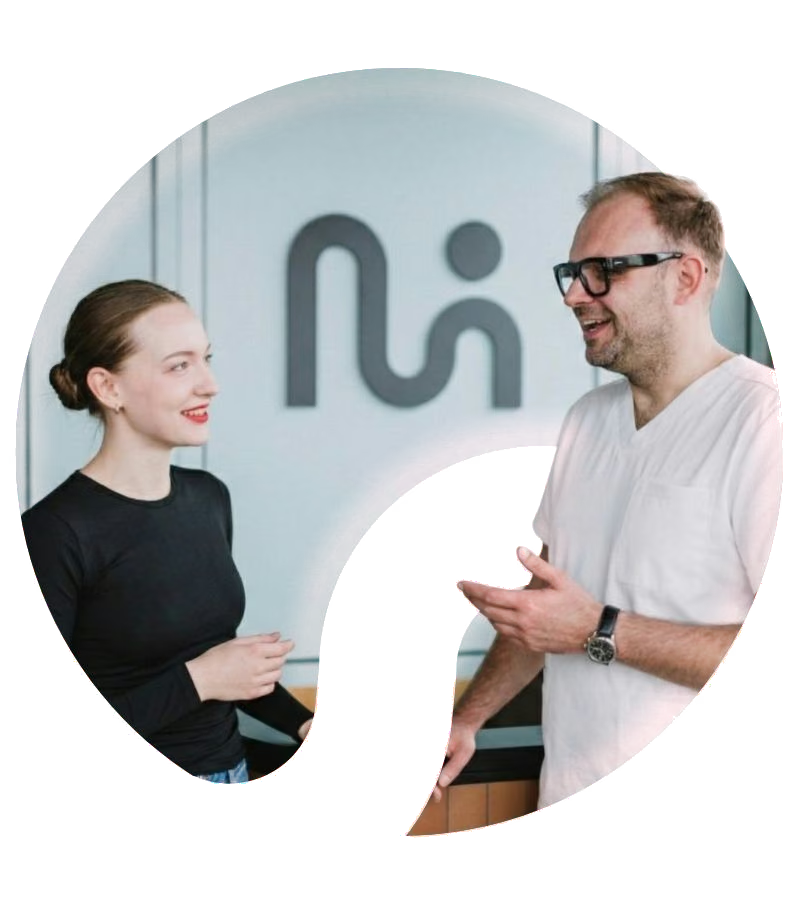
A digitally designed splint, fitted to your bite
After functional diagnostics and a digital scan of your teeth, the splint is designed in the laboratory, and the dentist fits the finished splint in your mouth. The specific splint and the scope of diagnostics are decided by the dentist after the examination.
How should you care for your splint and your oral hygiene?
Clean your occlusal splint every day after taking it out, under cool running water, using a toothbrush and mild soap. Avoid hot water, which can warp the splint, and toothpaste, as its abrasive ingredients scratch the surface. Once it is dry, store the splint in a dry, ventilated case. Do not eat or drink anything other than water while wearing it. Looking after your splint and your oral hygiene, along with regular check-ups, helps the therapy work for longer.
Plan your bruxism treatment in Gdynia
We will assess the causes of your bruxism and how your temporomandibular joint is working, then choose a splint for your bite – we present the plan and cost estimate after diagnostics.
Read before you decide

Veneers or crowns? How much tooth is filed down, durability, indications and price, and which to choose after a root canal or when a tooth is missing.
Read more
How much do porcelain and composite veneers cost in 2026? Prices, what affects the cost, what treatment involves and how long veneers last.
Read moreBook a consultation in Gdynia
Book a splint therapy consultation at Flow Dental Studio in Gdynia – we will assess the causes of your bruxism and choose a splint for your bite. We present the plan and cost estimate after diagnostics, with no obligation.
Flow Dental Studio
ul. Arkadiusza Rybickiego 2B/U2, 81-340 Gdynia
+48 786 420 004
info@flowdentalstudio.pl
Monday – Friday, 9:00 – 20:00