
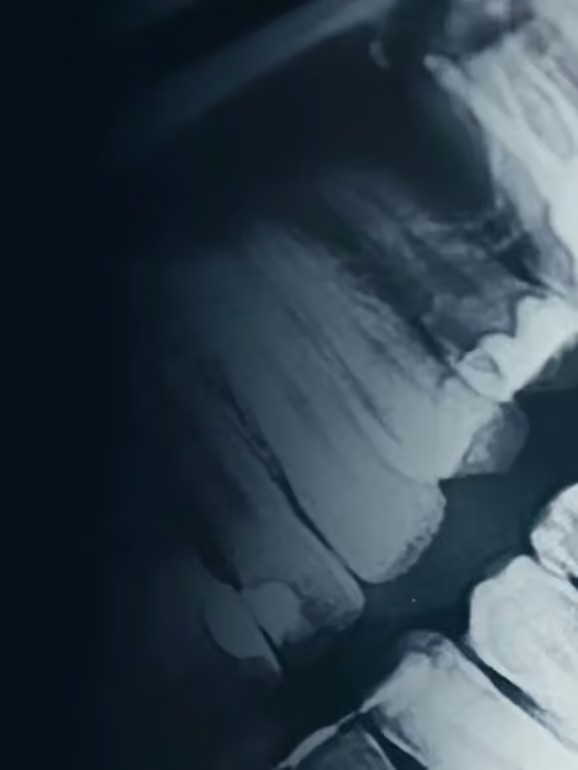
Bone grafting in Gdynia – rebuilding bone for an implant
Bone grafting is a surgical procedure that rebuilds missing bone tissue to create a stable foundation for a future implant. At Flow Dental Studio in Gdynia we carry it out based on a CBCT scan when there is not enough of your own bone to place an implant safely. Bone grafting prepares the ground for implant treatment and a complete restoration of your smile.
Book an implant consultation in Gdynia – tel. +48 786 420 004
4.9/5 43 reviews on Google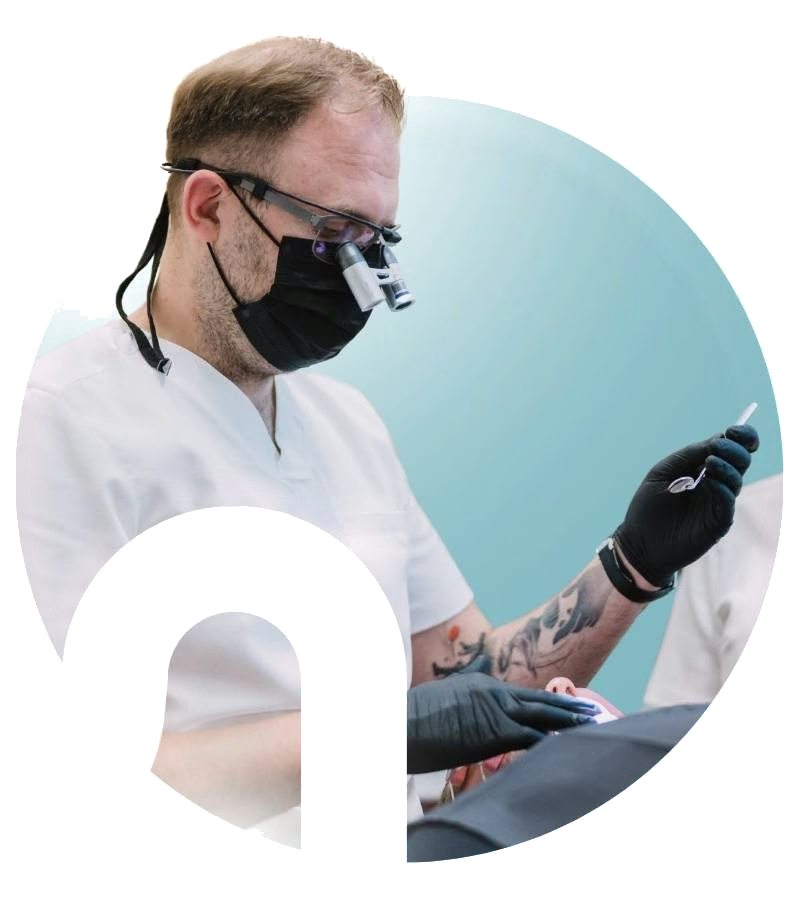
-
Planning with CBCT assessing bone quantity and quality
-
Sinus lift open and closed method
-
Local anaesthetic a minimally invasive procedure
-
Consultation 200 PLN with diagnostics and a cost estimate
How can you tell whether bone grafting is right for you?
I have been told I don’t have enough bone for an implant.
It has been several years since I lost a tooth, and I am worried the bone has shrunk.
I have missing teeth in my upper jaw, close to the sinus.
I want to replace a tooth that needs extracting with an implant, without losing bone in the process.
My denture has been getting looser for years, as if my gums have shrunk.
If any of these sounds like you, rebuilding the bone can prepare the site for an implant. We assess the quantity and quality of the bone on a CBCT scan, and only then do we decide on the scope of the procedure.
How can we help?
The concerns that most often hold people back, and how we address them.
“I’m worried the procedure isn’t safe.”
If safety is your concern: with proper assessment, bone grafting and sinus floor elevation are predictable procedures. Digital planning on a CBCT scan reduces the risk of complications even further.
“I don’t know if I’m suitable.”
If you are not sure whether you qualify: it depends on the amount of bone, the condition of your sinuses and your general health. Active sinusitis or uncontrolled general health conditions need treating first.
“I need a tooth taken out and I’m worried about bone loss.”
If you are facing an extraction: we often preserve the socket with bone substitute material straight after the tooth is removed. This limits bone loss and shortens treatment, provided there is no active inflammation.
“I don’t know what to expect after the procedure.”
If you are worried about the recovery period: swelling, bruising and mild pain are normal. You receive instructions for the first few days and a list of symptoms that mean you should call the Studio straight away.
Bone grafting: the procedure at a glance
You will find a full description of each stage further down the page. Here is the shortest version of what to expect.
From diagnostics to a new tooth – where does bone grafting fit in?
Bone grafting is one of the stages on the way to a long-lasting implant. First we assess the bone on a CBCT scan, rebuild the missing tissue and wait for it to heal; only then do we place the implant and fit a crown or bridge.
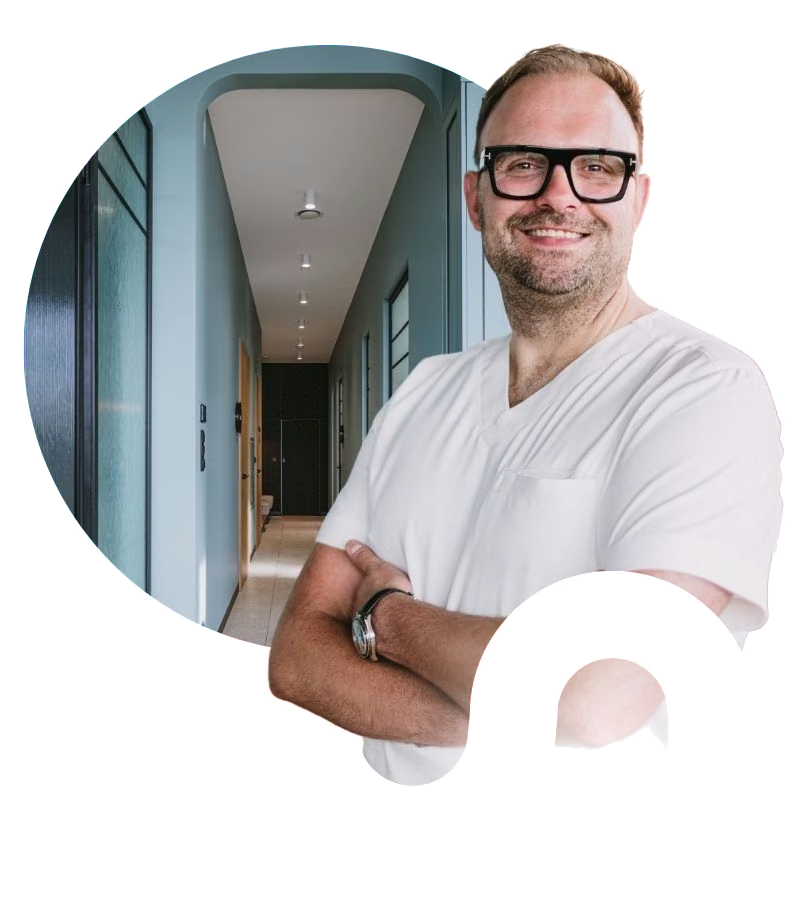
Procedures are performed by implantologist Adrian Kiepuszewski
Procedures are performed by implantologist Adrian Kiepuszewski, who has more than 16 years of experience in implantology and bone regeneration. In the hands of an experienced surgeon the procedure is predictable, and the experience of the surgical team and the precision of the work translate into safe treatment at our Gdynia practice.
- Implantology
- Bone grafting
- Sinus lift
- Bone regeneration
- CBCT
How much do bone grafting and sinus lift cost in Gdynia?
At Flow Dental Studio in Gdynia, bone grafting (regeneration) costs from 2500 PLN. A closed sinus floor elevation costs 2000 PLN (5000 PLN with bone condensation), and an open one costs 6000 PLN. An implant consultation costs 200 PLN, and we give you a detailed cost estimate after diagnostics.
The price depends on the size of the bone defect, the type of bone substitute material and membrane used, the complexity of the case and whether a sinus lift is needed. A sinus lift may be a separate item, so we price the whole treatment individually after the CBCT scan.
-
Bone grafting (regeneration)from 2500 PLN
-
Closed sinus lift2000 PLN
-
Closed sinus lift with bone condensation5000 PLN
-
Open sinus lift6000 PLN
A sinus lift may be a separate item – we price the whole treatment after the CBCT scan
You can spread the cost of treatment in instalments.
See the full price list“I recommend Dr Adrian. A very professional approach to patients.”
See why they chose Flow Dental Studio. The reviews come from our Google Business Profile.

Very professional and friendly. A visit to the dentist can be a pleasant experience after all. The aligners are comfortable and hygienic, and week by week I can see my teeth straightening. I recommend it.
Translated from Polish
I had the pleasure of being treated by Dr Kiepuszewski at Flow Dental Studio, and I can honestly say he is an exceptional dentist. Wisdom tooth extraction, which so many patients dread, took place in a comfortable atmosphere. Dr Adrian is not only extremely competent but also has a wonderful approach to patients, full of understanding and care. I also decided on aligner treatment. The doctor's precise work and professionalism mean the visits run smoothly and in a pleasant atmosphere. My smile looks better and better, and I know it was the best decision. I recommend him to anyone who dreams of straight teeth without pain or discomfort! The Flow Dental Studio practice itself also deserves a special mention. Modern equipment, a beautiful interior, a pleasant atmosphere and kind, courteous staff make patients feel looked after, and the visit becomes a much more pleasant experience. It is a place that cares not only about healthy teeth but also about the patient's wellbeing.
Translated from Polish
Flow Dental Studio is a place where professionalism goes hand in hand with empathy and care for the patient. I had professional teeth cleaning and fillings there, and I am very impressed by the precision and gentleness of the treatment. Dr Julia and Daria explain everything thoroughly, and the atmosphere at the practice is calm and friendly. It is definitely a practice you can trust completely, which is why I will be back whenever the opportunity arises :)
Translated from Polish
Beautiful practice, professional staff, and the doctor is the GOAT. I didn't even notice when it was over – the nasty wisdom tooth is gone. Highly recommended.
Translated from Polish
It is rare to find places where professionalism goes hand in hand with genuine empathy — but Flow Dental Studio is exactly that kind of place. I had the pleasure (yes, it really can be called that!) of being in Dr Adrian's care for a wisdom tooth extraction I had been dreading for a long time because of severe hypersensitivity. What sets Dr Adrian apart is not only his exceptional skill and precision, but above all his extraordinary respect for the patient's boundaries and feelings. Every gesture and every word – full of calm, understanding and attentiveness – made me feel cared for at every stage of the procedure. A procedure that had filled me with fear turned out to be an almost... soothing experience. No pain, no tension, and great attention to my mental and physical comfort. This is not just dentistry at the highest level — it is the art of creating a safe space in a place usually associated with stress. From the bottom of my heart, thank you to Dr Adrian and the whole Flow Dental Studio team for making it possible to come to you anxious — and leave grateful and smiling.
Translated from Polish
I recommend Dr Adrian. A very professional approach to patients.
Translated from PolishFrequently asked questions about bone grafting and sinus lift
Are bone grafting and sinus lift safe?
Is a sinus lift suitable for everyone?
What should I do after a sinus lift?
How long does a sinus lift take?
Which symptoms after the procedure should concern me?
Can bone grafting be combined with a tooth extraction?
What happens at an implant consultation?
We start with diagnostics and an assessment of your bone – based on that, we draw up a bone grafting plan and a cost estimate, with no obligation.
Book a consultation- CBCT scan – a three-dimensional image of the bone and its anatomy.
- Bone assessment – the quantity and quality of tissue where the implant will go.
- Plan and cost estimate – the extent of bone grafting and any sinus lift.
- No obligation – you decide once you have seen the plan.
Bone grafting in brief
Bone grafting rebuilds bone tissue when there is not enough of it to place an implant.
It is most often needed after losing a tooth, which leads to bone loss.
The procedure at our Gdynia practice is carried out under local anaesthetic; afterwards you may have temporary swelling and discomfort.
Healing and bone remodelling usually take 4 to 9 months, depending on the method used.
Sinus floor elevation (sinus lift) is a common type of bone grafting in the back of the upper jaw.
The cost depends on the size of the bone defect, the type of material used and the complexity of the case.
What does bone grafting (guided bone regeneration) involve?
Bone grafting, also known as guided bone regeneration, is a surgical procedure that rebuilds lost bone tissue in the upper or lower jaw. Its aim is to create the conditions for safe placement of dental implants. An adequate bone foundation is the basis for the long-term success of the whole implant treatment.
The procedure stimulates the body to form new bone tissue in a defined area. After a tooth is lost, the bone of the alveolar ridge, no longer loaded by chewing forces, gradually shrinks and loses volume. Bone grafting makes it possible to restore the quantity and quality of bone needed to carry out implant treatment safely.
Why rebuild bone – a stable foundation for a dental implant
Rebuilding bone gives the implant a stable foundation, without which proper osseointegration – the lasting fusion of the implant with the bone – cannot take place. The bone has to be tall and wide enough to fully surround the implant. This is the condition for the implant to stay firmly in place for years.
Sufficient bone quantity and quality determine primary stability – the mechanical anchoring of the implant immediately after placement. Too little bone exposes the implant to overloading and micromovement, which increases the risk of failure. That is why bone grafting creates a foundation for stable placement and secure anchoring of the implant.
Without a stable foundation there can be no osseointegration – the implant must be fully surrounded by bone of adequate height and width.
What do we use to rebuild a bone defect?
The dentist chooses the type of material to suit the clinical situation. Each one acts as a scaffold that stimulates the body to form its own mature bone in the defect.
The patient’s own bone, taken from another site in the mouth.
A graft of human bone from a tissue bank.
Material of animal origin, purified and prepared for grafting.
A synthetically produced material that replaces bone tissue.
When is it necessary to rebuild jawbone before an implant?
Rebuilding the jawbone is necessary when a CBCT scan shows there is too little bone to place an implant of the right length and diameter safely. The dentist decides after diagnostics and an assessment of how much bone is available. The most common causes of bone loss are:
Tooth loss. Without the load of chewing forces after a tooth is lost, the bone gradually shrinks.
Gum disease. Periodontal disease destroys the tissues around the tooth, including the bone of the alveolar ridge.
Mechanical injuries. Fractures of the facial skeleton can result in bone defects.
Long-term use of removable dentures. Poorly fitting dentures can speed up bone loss.
Bone can be rebuilt in both the upper and the lower jaw, although their structure differs. The upper jawbone is more spongy, while the lower jaw is harder and contains the inferior alveolar nerve, which has to be protected.

What is a sinus floor elevation (sinus lift)?
A sinus floor elevation, or sinus lift, is a bone grafting procedure carried out in the back of the upper jaw, in the area of the premolars and molars. It is needed when, after tooth loss, the bone in the upper jaw has shrunk and the floor of the sinus has dropped so far that there is no room for a standard-length implant. The procedure involves lifting the sinus lining and placing bone-forming material underneath it.
A sinus lift makes it possible to place implants of the right length safely in difficult anatomical conditions. It means teeth can be restored even when there has been significant bone loss in the upper jaw. Whether it is needed depends on the amount of bone available, as assessed on a CBCT scan. We always plan sinus lifts in Gdynia based on a CBCT image.
Sinus lift – open and closed method
The choice of technique depends on how much bone is missing, as assessed on a CBCT scan. The open method is used when a larger, vertical increase in bone height is needed, and the closed method when the shortfall is smaller.
An open sinus floor elevation (open sinus lift) is used when there is a larger shortage of bone. It involves creating a small bone window in the side wall of the maxillary sinus, through which the surgeon lifts the sinus lining and fills the space with bone substitute material. This method is for a larger, vertical increase in bone height.
A closed sinus floor elevation (closed sinus lift) is less invasive and is used when the shortage of bone is smaller. Access is through the site of the planned implant, with no window in the side wall. The closed method usually involves shorter healing than the open technique.
Sinus lift before dental implants – when is it necessary?
A sinus lift may be necessary before placing dental implants in the back of the upper jaw when there is too little bone and the sinus floor is too low. Without it, an implant in that position would not be stably anchored. A sinus lift prepares the foundation for stable placement of dental implants.
Whether you are suitable for a sinus lift is decided on the basis of a CBCT scan, which shows the height of the bone and the position of the sinus. Depending on how much bone is available, the open or closed method is chosen. We plan every case individually.
What does bone grafting involve, step by step?
Bone grafting in Gdynia is minimally invasive, carried out under local anaesthetic and planned on the basis of diagnostics. The procedure consists of several stages:
Consultation and diagnostics. A CBCT scan and an assessment of the quantity and quality of bone at the treatment site.
Local anaesthetic. We carry out the procedure under local anaesthetic.
Access to the bone. A careful incision in the gum to expose the area that needs regenerating.
Placing the material. The defect is filled with bone substitute material that stimulates the formation of new bone tissue.
Barrier membrane. The material is covered with a membrane that protects it and separates it from the soft tissues.
Stitches. The wound is stitched so that the gum heals properly.
The type of material – the patient’s own bone (autogenous), allogeneic, xenogeneic or synthetic – is chosen by the dentist to suit the clinical situation. The scope of the procedure depends on the extent of the bone defect, and the amount of bone substitute material needed depends on its size.
How long does healing take, and when can an implant be placed?
Healing and bone remodelling after bone grafting usually take 4 to 9 months. During this time the bone substitute material turns into mature bone of your own, capable of taking an implant. How long this takes depends on your body’s ability to regenerate, the extent of the procedure and the method used.
The decision to place the implant is made by the dentist after a follow-up examination, often after another CBCT scan that assesses the volume and quality of the new bone. Regular check-up visits help with this. Only when the image confirms a suitable foundation do we move on to placing the implant.
Does bone grafting hurt?
Bone grafting is carried out under local anaesthetic, which covers the area being treated. Once the anaesthetic wears off, you may have temporary swelling, bruising and mild pain – these are normal reactions after a surgical procedure. Taking the recommended painkillers and applying cold compresses to your cheek eases the discomfort.
How should you care for your mouth and the wound after the procedure? Aftercare instructions
After the procedure, the most important things are leaving the wound undisturbed and proper aftercare. Following the aftercare instructions in the first few days protects the treatment site and supports proper healing. The key instructions are:
- apply cold compresses to your cheek to reduce swelling,
- eat soft, mushy or liquid food so as not to irritate the wound,
- avoid strenuous physical exercise, which raises blood pressure and the risk of bleeding,
- keep up gentle but thorough oral hygiene as instructed by your dentist.
The success of bone grafting genuinely depends on oral hygiene and following the aftercare instructions. If in doubt, contact the practice.
What are the contraindications to bone grafting?
Contraindications to bone grafting are either absolute or relative – the latter meaning the procedure is possible once the patient has been prepared. Your general health matters, as does an honest conversation about the medicines you take. The most important are:
- uncontrolled diabetes,
- active cancer and cancer treatment in the head and neck area,
- certain bone diseases, including advanced osteoporosis treated with bisphosphonates,
- blood clotting disorders,
- heavy smoking, which impairs healing,
- active inflammation and very poor oral hygiene.
The dentist decides whether you are suitable, taking your general health into account. Some contraindications are temporary and resolve after treatment.
What is the risk of complications from the procedure?
Bone grafting and sinus lift are predictable procedures, and the risk of complications is low with proper assessment and care. Complications are relatively rare. The most common are perforation of the sinus lining (Schneiderian membrane) during a sinus lift, swelling, infection or sinusitis.
The risk of complications is reduced by precise surgical technique, thorough diagnostics and the experience of the surgical team. Proper aftercare and following the instructions reduce the risk further. We describe the warning signs below.
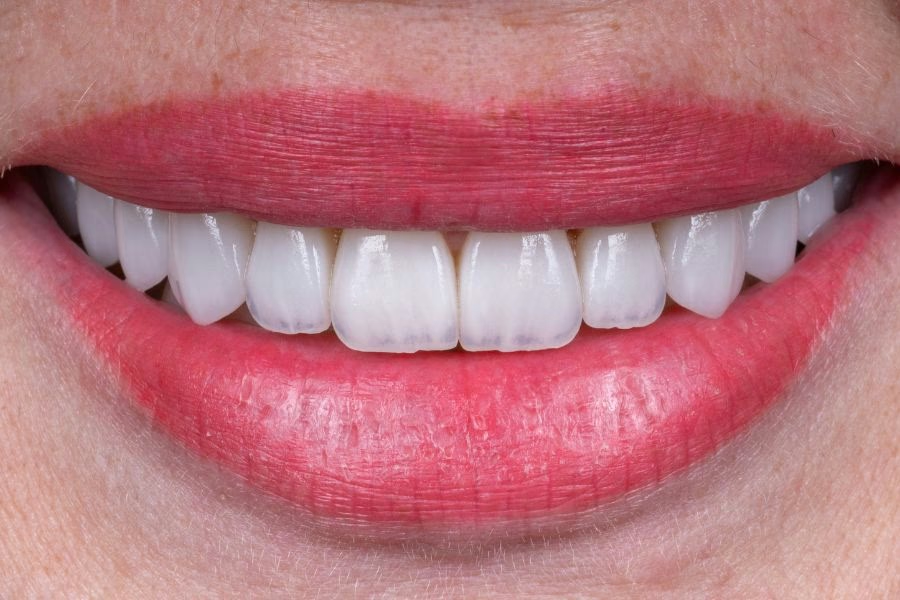
Bone grafting and restoring your smile – why an implant after regeneration?
Bone grafting is a stage on the way to a lasting restoration of your smile with an implant. An implant placed after bone regeneration replaces not only the crown but also the root of the tooth, so it loads the bone naturally and itself limits further bone loss. This is a more physiological solution than a bridge or a denture.
There are alternatives, and they are worth discussing with your dentist: short implants, which sometimes avoid the need for bone grafting, a dental bridge (which requires the neighbouring teeth to be filed down) and a removable partial denture, which does not prevent bone loss. Knowing the pros and cons makes it easier to make an informed decision.
Bone grafting at Flow Dental Studio in Gdynia
At Flow Dental Studio in Gdynia we plan bone grafting and sinus lifts digitally, using a NewTom Giano HR CBCT scanner and a TRIOS 5 scanner, as an oral surgery procedure. This gives an accurate assessment of the quantity and quality of bone before the procedure.
Find out whether you need bone grafting before an implant
We will assess your bone on a CBCT scan, prepare a bone grafting plan and present a cost estimate – with no obligation.
Read before you decide
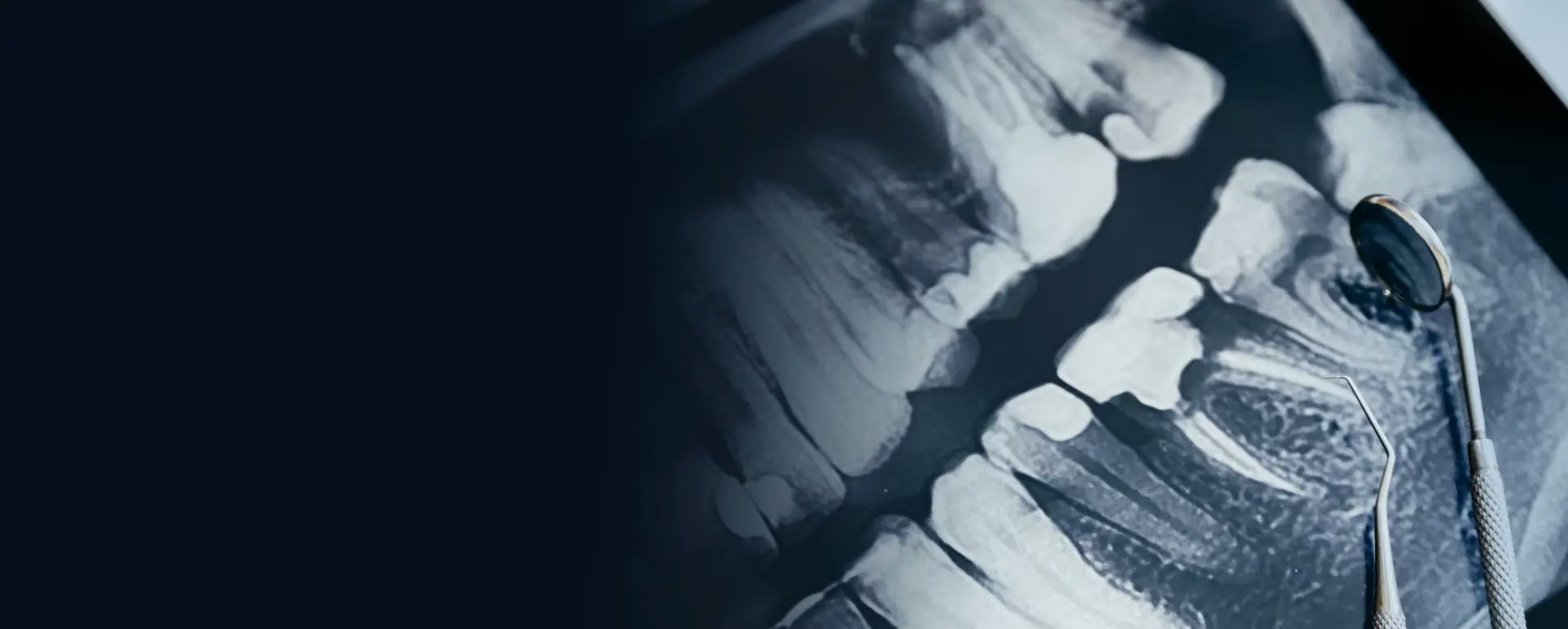
What causes bone loss after root canal treatment, how to recognise periapical inflammation or a cyst, and the options before a tooth must be extracted.
Read more
What does an implant really cost? Placement from 3400 PLN, crown on an implant 4500 PLN. We break down the price before you decide.
Read more
Diabetes, Hashimoto’s, high blood pressure, osteoporosis and implants: which contraindications are absolute, which are relative and how suitability is assessed.
Read moreBook an implant consultation in Gdynia
An implant consultation at Flow Dental Studio means diagnostics and an assessment of your bone, on the basis of which we draw up a bone grafting plan and a cost estimate – with no obligation. Book an appointment to find out whether you need bone grafting before an implant.
Flow Dental Studio
ul. Arkadiusza Rybickiego 2B/U2, 81-340 Gdynia
+48 786 420 004
info@flowdentalstudio.pl
Monday – Friday, 9:00 – 20:00