
Periodontics in Gdynia – treatment of gum and periodontal disease
Bleeding when brushing is often seen as a minor issue. In fact, it is the most common first sign of a disease that progresses painlessly for years and ends with loose teeth. Periodontal disease is the most common cause of tooth loss in adults, and it develops silently, without clear symptoms for a long time.
Book a periodontal consultation in Gdynia – tel. +48 786 420 004
4.9/5 43 reviews on Google
-
No judgement we examine the condition of your gums, not how it came about
-
Diagnosis in one visit pocket measurements and imaging on site
-
The goal: your own teeth stopping the disease before restoration, not instead of it
-
Cost estimate after diagnostics a full plan with stages and prices before you decide
Do any of these thoughts sound familiar?
My gums have bled when I brush for as long as I can remember.
A tooth has started to feel slightly loose, and it frightens me.
My gums are receding and my teeth look as if they have got longer.
Periodontal disease cost people in my family their teeth, and I'm afraid the same thing is starting to happen to me.
My dentist told me I already have periodontal disease.
If at least one of these sounds like you, do not wait for the symptoms to get worse. Periodontal disease develops silently, but it can be stopped – and the sooner we start, the more can be saved.
How can we help?
Each of these problems has its own answer – and no decision is made in advance, only after measurements and an X-ray.
“My gums are red and they bleed.”
If the problem is gum inflammation, we start with cleaning and professional hygiene. Removing the deposits eliminates the cause of the inflammation, and the gums usually stop bleeding within a few days of the procedure.
“I feel the problem goes deeper, under the gum.”
If the bacteria are deeper under the gum, we thoroughly clean the root surfaces within the pockets under local anaesthetic. A smooth root makes it harder for bacteria to reattach, and we assess the result after a few weeks.
“My gum has receded and the neck of the tooth is exposed.”
If your gum has receded, in selected cases we can rebuild the right amount of it – with a gum graft or by covering the recession using the tunnel technique. Whether this is possible depends on an assessment of the tissues at the appointment.
“My tooth is loose.”
If a tooth is loose, we use measurements and an X-ray to check how much bone support it still has and whether we can stabilise it. The goal is to keep your tooth – extraction is out of the question until we have exhausted the other options.
“I'm afraid it's already too late for me.”
If you have put this off for years, smoke or have diabetes – these are reasons to start, not to give up. We measure your starting point rather than judge it, and build a staged plan from there. We write about this openly further down the page.
Gum treatment in Gdynia: the process at a glance
You will find a full description of each stage further down the page. Here is the shortest version of what to expect.
From bleeding gums to a loose tooth – four steps that can be stopped
At each of the first three steps, professional cleaning and a change of habits are enough. At the fourth, treatment is needed, but there is still something to save – the sooner you start, the more bone will remain around the tooth.
Who will treat me?
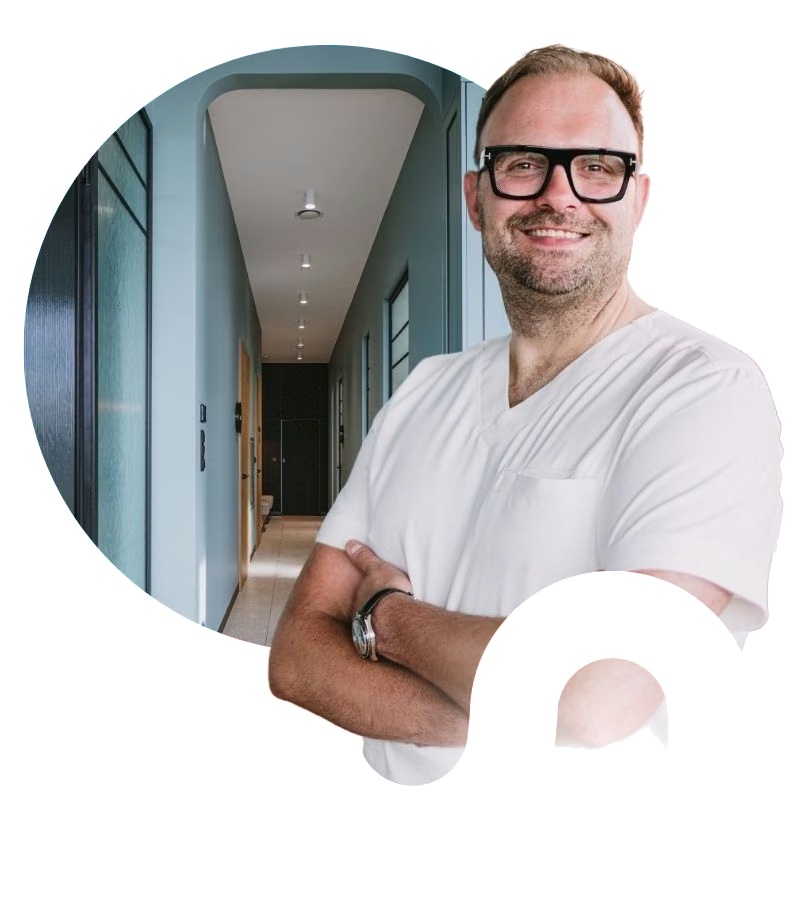
Treatment at Flow Dental Studio is coordinated by Adrian Kiepuszewski, a dentist who has completed a Harvard School of Dental Medicine programme in periodontal and implant rehabilitation. He assesses your starting point using pocket measurements and a CBCT scan, and draws up a plan with the aim of keeping your own teeth.
The cause-related stage is supported by our hygienist, Daria Zazulińskaya, who carries out professional cleaning and oral hygiene instruction. And because one team handles periodontal care, prosthodontics and surgery here, we know straight away what can be planned next once your gums are healthy. You can read more on the page about Dr Adrian Kiepuszewski.
- Periodontal rehabilitation – Harvard programme
- Pocket measurements and CBCT scan
- Gum grafts and recession coverage
- Maintenance phase
Periodontal treatment prices in Gdynia
The cost depends on how advanced the disease is, the number of teeth being treated and the type of procedures. The prices of individual procedures give you an idea of the order of magnitude even before your visit.
You receive a cost estimate for the whole treatment after the diagnostic appointment, together with your treatment plan. Periodontal treatment is sometimes compared in cost with later prosthetic or implant restoration, and keeping your own tooth remains the cheaper option.
-
professional teeth cleaning, including scaling, air polishing, fluoride treatment and oral hygiene instruction:450 PLN
-
periodontal treatment visit, root planing, one arch:500 PLN
-
FGG, free gingival graft:3500 PLN
-
CTG, connective tissue graft:3500 PLN
-
recession coverage for up to two teeth using the tunnel technique with a connective tissue graft and Emdogain:3000 PLN
-
clinical crown lengthening, price per tooth:850 PLN
-
bone grafting:from 2500 PLN
-
check-up:300 PLN
A cost estimate for the whole treatment after the diagnostic appointment, together with your treatment plan.
You can spread the cost of treatment in instalments.
See the full price list“I had professional cleaning and fillings here, and I am hugely impressed by the precision and gentleness with which the procedures are carried out.”
No judgement and no scaremongering – in our patients' words
The reviews come from our Google Business Profile and the ZnanyLekarz website.

Very professional and friendly. A visit to the dentist can be a pleasant experience after all. The aligners are comfortable and hygienic, and week by week I can see my teeth straightening. I recommend it.
Translated from Polish
I had the pleasure of being treated by Dr Kiepuszewski at Flow Dental Studio, and I can honestly say he is an exceptional dentist. Wisdom tooth extraction, which so many patients dread, took place in a comfortable atmosphere. Dr Adrian is not only extremely competent but also has a wonderful approach to patients, full of understanding and care. I also decided on aligner treatment. The doctor's precise work and professionalism mean the visits run smoothly and in a pleasant atmosphere. My smile looks better and better, and I know it was the best decision. I recommend him to anyone who dreams of straight teeth without pain or discomfort! The Flow Dental Studio practice itself also deserves a special mention. Modern equipment, a beautiful interior, a pleasant atmosphere and kind, courteous staff make patients feel looked after, and the visit becomes a much more pleasant experience. It is a place that cares not only about healthy teeth but also about the patient's wellbeing.
Translated from Polish
Flow Dental Studio is a place where professionalism goes hand in hand with empathy and care for the patient. I had professional teeth cleaning and fillings there, and I am very impressed by the precision and gentleness of the treatment. Dr Julia and Daria explain everything thoroughly, and the atmosphere at the practice is calm and friendly. It is definitely a practice you can trust completely, which is why I will be back whenever the opportunity arises :)
Translated from Polish
Beautiful practice, professional staff, and the doctor is the GOAT. I didn't even notice when it was over – the nasty wisdom tooth is gone. Highly recommended.
Translated from Polish
It is rare to find places where professionalism goes hand in hand with genuine empathy — but Flow Dental Studio is exactly that kind of place. I had the pleasure (yes, it really can be called that!) of being in Dr Adrian's care for a wisdom tooth extraction I had been dreading for a long time because of severe hypersensitivity. What sets Dr Adrian apart is not only his exceptional skill and precision, but above all his extraordinary respect for the patient's boundaries and feelings. Every gesture and every word – full of calm, understanding and attentiveness – made me feel cared for at every stage of the procedure. A procedure that had filled me with fear turned out to be an almost... soothing experience. No pain, no tension, and great attention to my mental and physical comfort. This is not just dentistry at the highest level — it is the art of creating a safe space in a place usually associated with stress. From the bottom of my heart, thank you to Dr Adrian and the whole Flow Dental Studio team for making it possible to come to you anxious — and leave grateful and smiling.
Translated from Polish
I recommend Dr Adrian. A very professional approach to patients.
Translated from PolishPeriodontics in Gdynia: patient questions
How do I know if I should see a periodontist?
Does scaling damage enamel?
How long does the whole treatment take?
Is periodontal disease hereditary?
Can anything still be done for loose teeth?
How often should I have check-ups after treatment?
How do we treat bleeding gums, exposed tooth necks and loose teeth?
These symptoms are most often linked by one silently progressing condition – periodontal disease, commonly called gum disease. It starts with bacterial deposits that cause gum inflammation and, over time – hidden deep beneath the gum line – take away the bone support of the teeth.
Treatment involves removing these deposits and stopping the disease, and its goal is to keep your own teeth. We start with measurements and an X-ray, in selected cases we rebuild receded gums with a graft, and the whole process ends with a maintenance phase that protects the result for years.
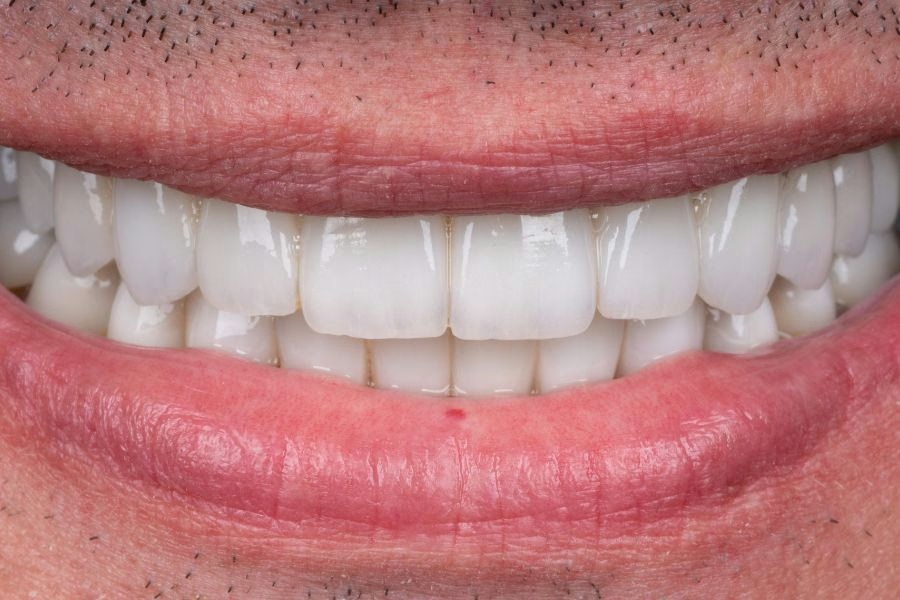

The good news is that early detection makes a huge difference. Gingivitis in its early stage is fully reversible, and even advanced periodontal disease can be stopped and kept under control. The key is to start treatment quickly, before the bone loss becomes irreversible.
At Flow Dental Studio in Gdynia, we treat periodontal disease alongside bite diagnostics, professional cleaning and prosthetic planning. If you notice bleeding, swollen gums or exposed tooth necks, book a consultation, because the scope of treatment can only be decided after an examination.
Why patients come to see a periodontist in Gdynia
- Your gums bleed when you brush, and for a long time you have put it down to scrubbing too hard.
- Your teeth look longer than they used to and are sensitive to cold near the gum line.
- One of your teeth has started to feel slightly loose, or your front teeth are drifting apart.
- Despite brushing, you notice bad breath, and your gums are red or swollen.
- You smoke or have diabetes and wonder whether treatment makes sense for you at all.
- You have been putting off a visit for years because you are afraid of hearing that it is too late.
None of these points determines the diagnosis. A periodontal examination takes one visit and tells you what stage you are at.
Periodontics at Flow Dental Studio in Gdynia: key information
Periodontics deals with the prevention, diagnosis and treatment of periodontal disease, that is, disease of the tissues surrounding the teeth.
The periodontium consists of the gum, the periodontal ligament, the root cementum and the alveolar bone.
The most common symptoms of periodontal disease are bleeding gums, swelling, bad breath, gum recession and loose teeth.
Gingivitis is reversible, whereas periodontitis leads to permanent bone loss.
Treatment is carried out in stages: diagnostics, professional cleaning, non-surgical therapy, surgical procedures if needed and, finally, a maintenance phase.
Treatments available include root planing, FGG and CTG grafts, recession coverage using the tunnel technique and clinical crown lengthening.
Periodontics in Gdynia: what does this field of dentistry cover?
Periodontics is the field of dentistry concerned with diagnosing, treating and preventing periodontal disease. The periodontium is the set of structures that hold a tooth in its socket and absorb the forces of chewing. A healthy tooth is not rigidly fixed in the bone but suspended in it by the fibres of the periodontal ligament, which allow it to move very slightly.
The periodontium is made up of four elements: the gum, the periodontal ligament, the root cementum and the alveolar bone. The disease does not affect them all at once. It starts in the gum and only spreads to the deeper layers, including the bone, if left untreated. This sequence explains why the timing of treatment matters so much for the prognosis.
Periodontics also covers prevention in patients who do not yet have symptoms but are at increased risk. A regular examination that includes an assessment of the periodontium makes it possible to detect changes before they can be felt.
Periodontal disease and abnormalities of the oral mucosa
This field covers more than periodontal disease alone. During a periodontal examination, the whole area around the teeth is assessed, including the condition of the oral mucosa. Any abnormalities of the mucosa that are spotted require further diagnosis and sometimes a consultation outside dentistry. Early detection of oral diseases matters here just as much as with tooth decay.
Gingivitis: the reversible stage of the disease
Gingivitis is an early inflammation limited to the gum tissue. It is caused by bacterial plaque building up along the gum line. At this stage there is no bone loss yet, so treating the inflammation with good oral hygiene and professional cleaning reverses the changes completely.
Periodontal disease (periodontitis)
At the next stage, the process affects the structures that support the tooth and becomes a chronic infectious disease. Bacteria move under the gum and form pockets, and the body, in response to chronic inflammation, begins to resorb the bone. Lost bone does not grow back on its own, so the effects of this stage are permanent.
The difference between these two stages is well illustrated by traffic lights. Gingivitis is an amber light, because the changes can still be reversed. Periodontitis is a red light, and the goal of treatment then becomes stopping further loss, not reversing it.
Symptoms of periodontal disease you should not ignore
The body signals the problem early, but the signals can be subtle and easy to dismiss. Pain usually appears late, often only with an abscess or when a tooth is very loose. That is why diagnosis is based on observing the appearance of the gums rather than waiting for pain.
bleeding gums when brushing, flossing or biting hard foods,
swollen gums and a change in their colour to deep red or bluish,
bad breath that persists despite good oral hygiene,
gum recession and exposed tooth necks,
teeth that are sensitive to cold, heat and touch,
loose teeth, front teeth fanning out, a change in the bite.
None of these symptoms is normal and none goes away on its own. Bleeding is often wrongly blamed on brushing too hard, so patients brush more gently instead of coming in for an examination. Healthy gums do not bleed with proper oral hygiene.

Why does neglecting oral hygiene lead to periodontal disease?
Poor oral hygiene is the direct cause of most cases. Bacterial plaque builds up on the surface of the teeth within hours and mineralises after a few days, forming tartar. Tartar cannot be removed with a toothbrush, because it is hard and adheres firmly to the enamel and the roots of the teeth.
The rough surface of tartar encourages more plaque to build up, and deposits that move under the gum keep the inflammation going. This creates a self-perpetuating cycle that cannot be broken at home. Only professional cleaning breaks it.
Smoking, diabetes and other risk factors
Oral hygiene alone does not explain everything, however. In some patients the disease progresses faster despite careful oral care, while in others it develops slowly despite neglect. This depends on a set of factors that modify the body's response.
- genetic predisposition affecting the course of the inflammatory response,
- smoking, which reduces the blood supply to the gums and masks bleeding,
- poorly controlled diabetes and other systemic diseases,
- chronic stress and the teeth clenching that comes with it,
- a poor diet and vitamin deficiencies,
- hormonal changes, including during pregnancy and the menopause,
- certain medicines, especially those that reduce saliva production.
Smoking deserves particular attention because it changes the clinical picture. A smoker's gums bleed less, so the disease is often diagnosed later and at a more advanced stage. Quitting smoking improves the prognosis more than any single procedure.
“I smoke, I have diabetes, I've put this off for years – is there any point in my case?”
Smoking does not rule out treatment. It affects how treatment goes and the prognosis, which is why you will know about this from your first visit, not only when the results are assessed.
That is one of the reasons to come sooner, not later. Healthy gums make it easier to control blood sugar, and the plan takes your doctor's advice into account.
What matters at the examination is how much bone is left around the tooth, not when you should have come in. Many teeth can still be stabilised.
Gum treatment during pregnancy is recommended, not contraindicated. We decide on the scope after a consultation, taking into account the advice of the doctor looking after your pregnancy.
How periodontal disease affects your general health
Chronic inflammation in the mouth does not stay confined there. Bacteria and inflammatory mediators enter the bloodstream, which carries a risk of serious consequences beyond the mouth. Research points to links that should not be read as simple cause and effect, but which appear consistently.
A link has been described between periodontal disease and cardiovascular conditions, including heart attack and stroke. There is also a clear two-way relationship with diabetes: periodontitis makes it harder to control blood sugar levels, and poorly controlled diabetes makes gum problems worse. In pregnant women, advanced disease is associated with a higher risk of premature birth and low birth weight.
Looking after the health of your teeth and gums affects your general health, not just the comfort and appearance of your smile. Neglecting oral health can be one of the factors behind serious health problems diagnosed later by a GP.
Who treats periodontal disease at Flow Dental Studio in Gdynia?
At Flow Dental Studio, periodontal disease is treated by experienced specialists who work in one team with the dentists responsible for restorative, prosthetic and surgical treatment. This has a practical significance, because the condition of the periodontium determines whether, and when, a prosthetic restoration can be planned at all.
Our goal is to stop the disease, keep your own teeth and prepare a stable foundation for further treatment. At every stage, you know what has been done, what is planned and what the aim of the next visit is.
What does periodontal treatment in Gdynia involve?
Periodontal treatment is carried out in stages and cannot be shortened without losing the result. Each stage prepares the conditions for the next, and moving on requires an assessment of how the tissues have responded. The plan is drawn up after each patient's diagnostics and is tailored to how advanced the disease is and to the patient's needs.
Stage 1: diagnostics and assessment of the periodontium
The first visit includes a medical history, a clinical examination and measurements with a periodontal probe. The depth of the gum pockets is measured at every tooth and recorded on a chart, providing a reference point for later check-ups. Tooth mobility and the condition of the mucosa are also assessed.
Diagnostics are completed with X-rays: a panoramic X-ray or a CBCT scan, taken with a NewTom Giano HR scanner. Imaging shows the bone level, which cannot be assessed by examination alone. On this basis we describe your starting situation and propose an individual treatment plan.
Stage 2: professional cleaning, scaling and root planing
Cause-related treatment involves removing the deposits that keep the inflammation going. It begins with professional teeth cleaning, including scaling, air polishing and fluoride treatment, together with oral hygiene instruction and help choosing a toothbrush. Scaling removes tartar from the tooth surfaces above and below the gum line.
The actual therapeutic procedure is root planing – cleaning and smoothing the root surfaces within the gum pockets. A smooth root makes it harder for bacteria to reattach. The procedure is carried out under local anaesthetic, one arch at a time, and its effect is assessed a few weeks after it is completed.
Stage 3: surgical procedures in the treatment of periodontal disease
We move on to the surgical stage when the pockets remain deep despite properly performed non-surgical therapy. Surgical access allows the root surfaces to be cleaned under direct vision and bone defects to be treated.
- recession coverage for up to two teeth using the tunnel technique with a connective tissue graft and Emdogain,
- FGG, a free gingival graft,
- CTG, a connective tissue graft,
- clinical crown lengthening where too much gum is visible,
- bone regeneration using biomaterials and membranes in selected cases.
The scope of the procedure is decided after assessing the results of the earlier stages, never in advance. Some patients complete their treatment at the non-surgical stage and move straight on to the maintenance phase.
Stage 4: check-ups and the maintenance phase
The end of active treatment is not the end of care. Bacteria return and recolonise the pockets within a few months, so regular check-ups are essential to maintain the result. How often they take place is decided individually, usually every few months.
At each visit we assess the condition of the periodontium, check your oral hygiene and carry out a professional clean. This is the cheapest and simplest part of the whole process, yet skipping it is the most common cause of relapse. Restoring gum health is achievable, but keeping it in the long term takes consistency.
What you will hear at your first visit in Gdynia – and what you won’t
- what stage the disease is at: gingivitis or periodontitis,
- which teeth have a good prognosis and which ones need a decision,
- how many stages we expect, in what order, and how we will judge whether it is working,
- how much it will cost, broken down by procedure, before you decide anything,
- what you can do at home to maintain the result.
- that you brought this on yourself,
- that it is too late, before we have measured the pockets and seen the bone on an X-ray,
- a suggestion to extract a tooth that can still be stabilised,
- a promise that the bone will grow back,
- a price for the whole treatment given over the phone without an examination.
Gum recession and gum grafts in Gdynia
Gum recession is the gradual lowering of the gum margin, exposing the root surface. The effects are both functional and aesthetic: the teeth look longer, sensitivity appears, and the exposed root is more prone to decay. The cause may be a thin gum biotype, incorrect brushing technique, bite overload or past inflammation.
The approach depends on the extent of the gum recession. For single defects, coverage using the tunnel technique with a connective tissue graft taken from the palate is used. The procedure improves the look of the smile and reduces sensitivity. Where the problem is too narrow a band of keratinised gum, a free gingival graft is performed. Emdogain supports healing and the attachment of the tissues to the root surface.
These procedures are carried out under local anaesthetic, and healing usually takes a few weeks. The result depends on the initial condition of the tissues and on whether the cause of the recession has been eliminated, which is why we also assess your bite and brushing technique before the procedure.
Inflammation of the tissues around the implant
The tissues around an implant become diseased in a similar way to those around a natural tooth, but the process can be faster. Inflammation of the mucosa around an implant is reversible, whereas peri-implantitis already involves bone loss and can lead to the implant loosening and being lost. The symptoms are subtle: bleeding on probing, swelling and sometimes discharge.
Further steps depend on how far the changes have progressed and are decided after assessing the condition of the tissues and the X-ray image. Prevention is much simpler, however, which is why oral hygiene and regular check-ups after implant treatment matter just as much as with natural teeth.
Dental treatment during pregnancy and gum health
Dental treatment during pregnancy is not only permissible but, in the case of periodontal disease, recommended. Hormonal changes intensify the inflammatory response, so pregnant women more often experience bleeding and overgrowth of the gums, known as pregnancy gingivitis. Left untreated, it persists throughout pregnancy and gets worse.
The second trimester is considered the most suitable time for scaling and root planing. The scope of treatment is decided after a consultation, taking into account the course of the pregnancy and the advice of the doctor looking after it. Caring for the periodontium at this time also benefits the pregnancy itself, which gives a visit focused on gum health an added reason.
Local anaesthesia in periodontal treatment: do the procedures hurt?
We carry out subgingival scaling, root planing and surgical procedures under local anaesthetic. During the procedure you feel touch, pressure and the vibration of the instruments, but no pain. The anaesthetic is matched to the scope of the work and to your sensitivity.
Once the anaesthetic wears off, your gums may feel tender for a day or two. Over-the-counter painkillers are usually enough. Every patient receives aftercare advice on oral hygiene, diet and the symptoms that mean they should come back sooner.
Can periodontal disease be cured completely?
Periodontitis is a chronic disease, like diabetes or high blood pressure. It cannot be cured in the sense of returning to the state before the disease, because lost bone does not grow back on its own. What can be done is to stop its progression, calm the inflammation, reduce the depth of the pockets and keep the situation stable for many years.
So the goal of treatment is not to turn back time, but to stop the clock. A tooth that had bone loss at diagnosis will still have it after successful therapy, but the loss will stop getting worse.
The result depends on two things: when treatment starts, and whether the patient keeps up good oral hygiene and attends check-ups. It is a partnership spanning years, not a closed course of procedures.
Book an appointment with a periodontist in Gdynia
If your gums bleed or are receding, or one of your teeth is starting to feel loose, an examination will tell you what stage the disease is at and what can still be stopped. The earlier treatment begins, the simpler the procedures and the more tissue can be preserved.
Flow Dental Studio sees patients at ul. Arkadiusza Rybickiego 2B/U2 in Gdynia, Monday to Friday from 9:00 to 20:00. The convenient location also makes it easy for patients from Gdańsk and Sopot to reach us. You can book an appointment by phone on +48 786 420 004 or using the contact form.
Read before you decide

What causes bone loss after root canal treatment, how to recognise periapical inflammation or a cyst, and the options before a tooth must be extracted.
Read more
Diabetes, Hashimoto’s, high blood pressure, osteoporosis and implants: which contraindications are absolute, which are relative and how suitability is assessed.
Read more
Are dental implants safe? Contraindications, the healing process, the most common complications and symptoms that mean you should contact your dentist.
Read moreTell us what you have noticed about your gums, and we will call you back to arrange a periodontal examination in Gdynia.
Flow Dental Studio
ul. Arkadiusza Rybickiego 2B/U2, 81-340 Gdynia
+48 786 420 004
info@flowdentalstudio.pl
Monday – Friday, 9:00 – 20:00