
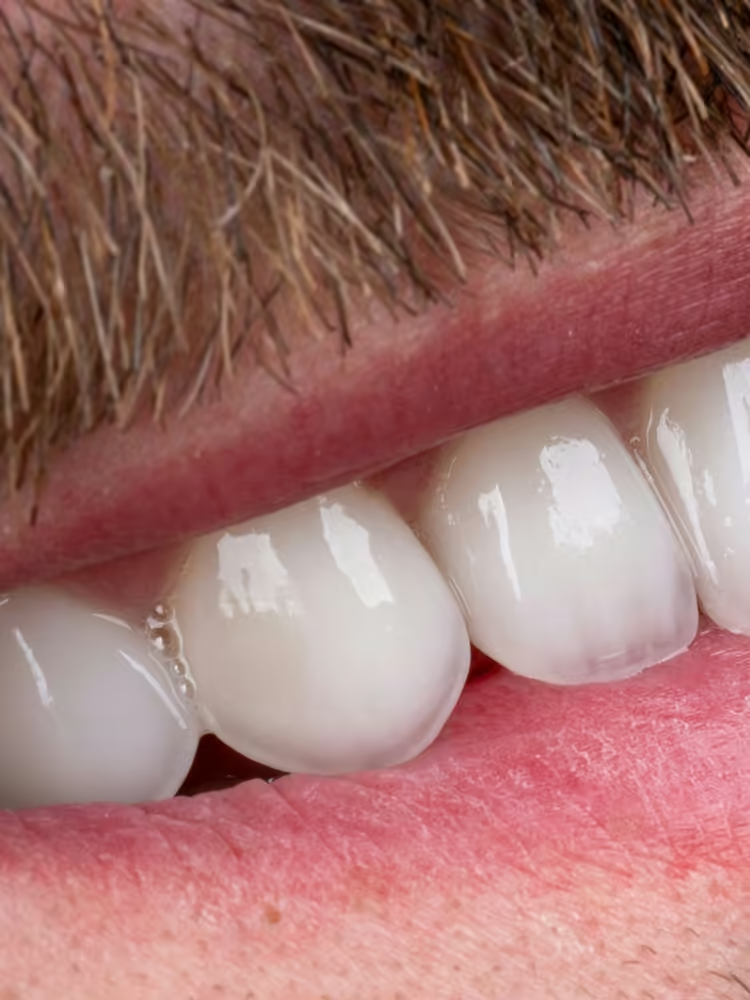

You are paying for a crown and one question is at the back of your mind: are dental crowns durable, or will they need replacing in a few years? It is a reasonable concern – some restorations last a dozen or more years, others crack much sooner, and the difference is not always down to the price. The durability of dental crowns depends on three things: the material, the precision of the work and your daily hygiene. In this post we explain how long the different types of crown really last, what shortens their lifespan and how to make sure your crown stays with you for as long as possible. That way you can choose a solution with your eyes open and avoid premature replacement.
-
The durability of dental crowns depends on the material, the precision of the work and the patient's hygiene.
-
All-ceramic and zirconia crowns last roughly 15-20 years, and longer with good care.
-
Temporary crowns (acrylic, composite) last weeks or months, until the final restoration is ready.
-
The most common threats are bruxism, secondary decay and biting on hard objects.
-
You protect their durability through hygiene, regular check-ups and protection against excessive forces.
What does the durability of crowns depend on?
The durability of crowns depends on three things: the crown material, the precision with which it is made and your daily hygiene. The material determines mechanical strength and aesthetics – all-ceramic crowns are stronger and more natural-looking than older solutions. Precision ensures a tight fit to the tooth, which makes it harder for bacteria to get under the restoration. At Flow Dental Studio we scan the tooth with a TRIOS 5 scanner and design the crown in Exocad software, which results in an accurate fit.
The third pillar depends on the patient: without careful hygiene and check-ups, even a well-made crown will not last long. Only these three elements together give a lasting result.
What sets porcelain and all-ceramic crowns apart?
Porcelain and all-ceramic crowns reproduce the natural colour of the tooth and contain no metal, so they look aesthetic and do not create a grey line at the gum. Porcelain lets light through in a similar way to natural tooth tissue, and its colour blends with the neighbouring teeth. Older metal crowns and crowns on a metal framework had quite a few drawbacks: the risk of a grey metal line at the gum, poorer aesthetics because the core blocks light, and possible reactions to metal. Among ceramic solutions, zirconia crowns, made from zirconium oxide, are among the strongest and resist cracking and staining. All-ceramic crowns are most often used on the front teeth, where an aesthetic appearance matters most. Today they are a popular solution with good durability.
How many years do dental crowns last?
Dental crowns last roughly from a few years to more than 20, depending on the material. The average durability of the different materials is as follows:
-
All-ceramic and zirconia crowns – usually 15-20 years, and longer with good care.
-
Porcelain-fused crowns on a framework – roughly 10-15 years.
-
Metal crowns – can be very durable mechanically, but fall short on aesthetics.
-
Crown on an implant – roughly 10-15 years, depending on the care of the surrounding tissues.
-
Temporary crowns (acrylic, composite) – from a few weeks to a few months.
These ranges are approximate, because how many years a crown lasts depends on hygiene, diet and habits. Two identical restorations in two patients may last a different number of years.
How durable are porcelain crowns?
The durability of porcelain and all-ceramic crowns comes from their biocompatibility, resistance to corrosion and high mechanical strength. Porcelain and zirconia work well with the gums, do not corrode and do not stain the way temporary materials do. Monolithic zirconia is one of the strongest materials used in prosthodontics and copes well with chewing forces, which makes it resistant to cracking. That is why ceramics are designed for many years of use. Remember, though, that the quality of the material alone is not enough – the durability of porcelain crowns always depends on hygiene and protection against excessive forces, which we come to in a moment.
What shortens the life of crowns? The most common mistakes
Three things most often shorten the life of crowns: bruxism, poor hygiene and biting on hard objects.
Bruxism, i.e. grinding your teeth, generates forces many times greater than normal chewing – it leads to micro-cracks, wear and sometimes the whole crown cracking. The protection is a custom occlusal splint; at Flow Dental Studio we support the diagnosis of bruxism with a ZEBRIS digital axiograph, which allows us to fit a splint that protects both the crowns and your natural teeth. The second cause is poor hygiene: the crown itself does not decay, but the tooth underneath it does – bacteria get into the micro-gap at the edge of the crown. The third is hard food and using your teeth as tools (opening bottles, crunching ice or fruit stones), which risks chipping or cracking.
Because of these risks, even very strong crowns call for common sense in everyday use.
How should you look after crowns so they last longer?
You look after crowns just like natural teeth, with particular attention to the gum line and the spaces between the teeth.
The most important area is where the crown meets the gum – this is where secondary decay most often begins.
Use a soft-bristled toothbrush and a gentle sweeping technique so as not to irritate the gums. Clean between your teeth every day with floss, interdental brushes or a water flosser. Low-abrasion toothpastes (a low RDA value) are recommended – strongly whitening toothpastes can dull the surface of porcelain, and the crown itself cannot be whitened like natural teeth anyway. Alcohol-free mouthwashes, which are gentler on the gums, also help.
Good oral hygiene and watching for changes in the teeth around the crown are the foundation of its long life.
Why do regular check-ups extend the life of a crown?
Regular check-ups make it possible to spot leakage, gum problems or wear of the material early, before they damage the tooth under the crown. During professional teeth cleaning at the dental practice, biofilm is removed from the edge of the crown, where it is hard to reach at home. The dentist assesses how well the restoration seals, the condition of the gums and, if necessary, the bone on an X-ray.
Early intervention by the dentist is simpler and less expensive than treating advanced secondary decay, which is why regular check-ups are essential for the durability of a crown.
What does fitting a dental crown involve?
Fitting a dental crown usually involves 2-3 visits spread over a few weeks.
The process is as follows:
-
At the first visit, the dentist prepares the tooth under a microscope and takes digital impressions with the TRIOS 5 scanner, with no traditional impression materials. Sometimes crown lengthening is needed before the work, to expose more of the tooth tissue.
-
While the crown is being made, we fit a temporary crown, which protects the prepared tooth and lets you function normally.
-
At the final visit we cement the permanent crown, checking how it fits in your bite; some procedures are carried out under local anaesthetic.
Making the crown in the laboratory from the design (Exocad) takes the time needed to match its shape, size and colour precisely to the neighbouring teeth.
Is a dental crown a good choice?
Only a specialist can assess which solution you really need. Visit Flow Dental Studio so that the dentist can choose the right treatment for you
Which crown should you choose?
Which crown to choose depends on which tooth you are restoring and what condition it is in.
In the front of the mouth, all-ceramic crowns work well because of their aesthetics and natural colour.
For back teeth, where chewing forces are high, zirconia crowns are more often chosen for their strength.
A tooth that has had root canal treatment or is badly damaged often needs reinforcing with a post and core, especially when little of the tooth remains. Crowns are also used to restore damaged teeth, large cavities or congenitally missing enamel. The final choice is the patient's after the consultation – the dentist selects the material individually for each patient, and veneers are sometimes an alternative in the smile zone.
Is prosthetic treatment worth it in the long term?
In prosthetic treatment, the cheapest crown on the day it is fitted is not always the cheapest over a dozen or so years. A more durable all-ceramic restoration can outlast two cheaper ones that need replacing. It is worth adding the hidden costs of each replacement to the calculation: more visits, time and discomfort. At Flow Dental Studio an all-ceramic crown costs from 3000 PLN, and we present the full price list and a quote after the consultation. Looking at lifespan rather than just the initial price, the more expensive solution often turns out to be the more sensible one, because it reduces the risk of having to replace it again.
Is a crown a lifelong solution?
No. No crown can be guaranteed for life – good ceramic restorations usually last 15-20 years or longer, but after many years they may need replacing. What decides this is hygiene, bruxism and secondary decay under the crown. The crown itself has a similar lifespan whether it sits on your own tooth or on an implant – what differs is the foundation. Your own tooth can decay under a crown, while a crown on an implant cannot decay, but the surrounding tissues can be prone to inflammation (peri-implantitis). In both cases, the same thing protects durability: regular hygiene and check-ups. So a crown is a solution for many years, without any need to promise it will last "forever".
Frequently asked questions about dental crowns
How much does a crown for one tooth cost?
At Flow Dental Studio, an all-ceramic crown costs from 3000 PLN, and we set the exact price after a consultation, as it depends on the condition of the tooth and any additional procedures. Temporary crowns and post-and-core build-ups are priced separately.
How long does a tooth hurt after a crown is fitted?
After the tooth is prepared, you may have temporary sensitivity, usually for a few days.
Pain that persists or gets worse always needs a visit – it may indicate a bite problem (occlusal trauma), inflammation of the pulp or secondary decay.
Do crowns need replacing, and how often?
Crowns are not replaced on a fixed schedule. Replacement is needed when a crown no longer seals properly, is worn or damaged, or when decay attacks the tooth underneath. With good care, that moment may not come for many years.
Can the tooth under a crown decay?
Yes. The crown itself does not decay, but the tooth underneath can if bacteria get into a micro-gap at the edge of the crown. That is why the most important thing is thorough cleaning along the gum line and between the teeth.
Can a porcelain crown crack?
Yes, though rarely – most often as a result of injury, bruxism or biting very hard objects. Monolithic zirconia is more resistant to such forces, but no restoration is completely indestructible.
Can porcelain crowns be whitened or air polished?
Crowns do not change colour with whitening toothpastes, so they are not whitened – only the colour of natural teeth can be changed. Cleaning and air polishing should be gentle, using low-abrasion pastes, so as not to dull the porcelain surface.
Summary
Coming back to the question from the introduction: dental crowns are durable, but with conditions. Whether they last a few years or fifteen years and more depends on the material, the precision of the work and your hygiene – not on price alone. All-ceramic and zirconia crowns currently offer the longest, most predictable lifespan, provided you attend regular check-ups and protect them against bruxism.
If you are planning to restore a tooth with a crown, book a prosthodontic consultation at Flow Dental Studio in Gdynia. We will choose the material for your case, plan the treatment digitally and give you a quote after diagnostics – with no obligation.