
Vital pulp therapy in Gdynia - saving the living pulp instead of root canal treatment
A deep cavity does not always mean a root canal. If the pulp is irritated but not destroyed, it can be left in the tooth and given the conditions to heal. This is the basis of vital pulp therapy, carried out when decay has come close to the pulp chamber but the tooth still responds normally.
Does your tooth hurt with cold and settle after a moment? Call: +48 786 420 004
4.9/5 43 reviews on Google
-
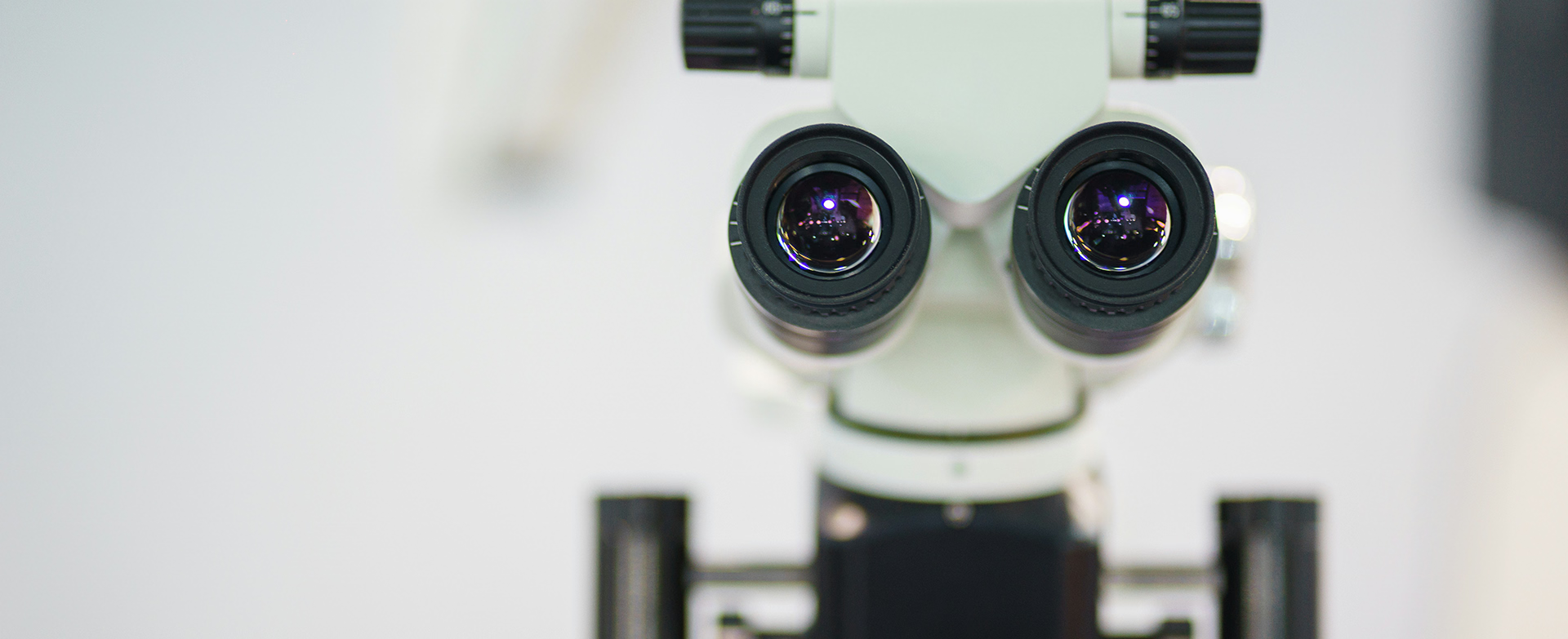
rubber dam and microscope for every procedure
-
3D diagnostics on site CBCT scanner and TRIOS 5 intraoral scanner
-
One dentist from consultation to result
Do any of these thoughts sound familiar?
My dentist told me: deep decay, it may end up needing a root canal.
My tooth hurts with cold and sweet things, but the pain passes quickly.
I want to keep my tooth alive for as long as possible.
Just hearing the words “root canal” makes me put off my visit.
I want a second opinion before I agree to having my root canals drilled.
If at least one of these sounds like you, it is worth checking whether your tooth qualifies for vital pulp therapy. This is decided by vitality tests and an X-ray at your visit - and the sooner you come, the better the chance that the nerve can be saved.
How can we help?
The five questions patients ask most often before this treatment, and our answers to each of them.
“Is it still possible in my case?”
If you are afraid it is already too late: the limit is set by the condition of the nerve, not the depth of the cavity alone. We determine this at your visit - with tests of how the tooth responds to stimuli and an X-ray, and finally while cleaning the cavity under the microscope. We tell you plainly what we see.
“What if it doesn't work?”
If you are worried you will end up paying twice: after the procedure the tooth stays under observation - with a check-up after a few weeks and a follow-up X-ray at a longer interval. If the nerve dies despite everything, root canal treatment is still possible. Vital pulp therapy does not close off any options.
“Is this a serious method or alternative medicine?”
If the name sounds suspicious to you: this is a procedure of modern dentistry, based on bioactive materials and carried out under rubber dam and microscope magnification. The only thing it has in common with “biology” is its aim - preserving the living tissue of the tooth.
“Does this procedure hurt?”
If pain is what is holding you back: the whole procedure is done under local anaesthetic, and a rubber dam isolates the tooth from saliva during treatment. After treatment the tooth may be sensitive for a while - we give you a clear line between what is normal and what is a sign to get in touch.
“How much does it cost compared with a root canal?”
If you are weighing up the costs: the procedure itself is 800 PLN, and the filling to restore the tooth is 450 to 650 PLN. By comparison, root canal treatment costs 1500 or 2000 PLN plus 1000 PLN for the restoration, and a tooth treated this way more often needs a crown later. You get the full quote after the examination.
Vital pulp therapy in Gdynia: the process at a glance
You will find a full description of each stage further down the page. Here is the shortest version of what to expect.
The same decay at three different stages
The middle stage is the shortest, and there is no telling how long it will last for a particular tooth. That is why pain that passes after a moment is a reason to book a visit, not to wait.
Who will treat me?
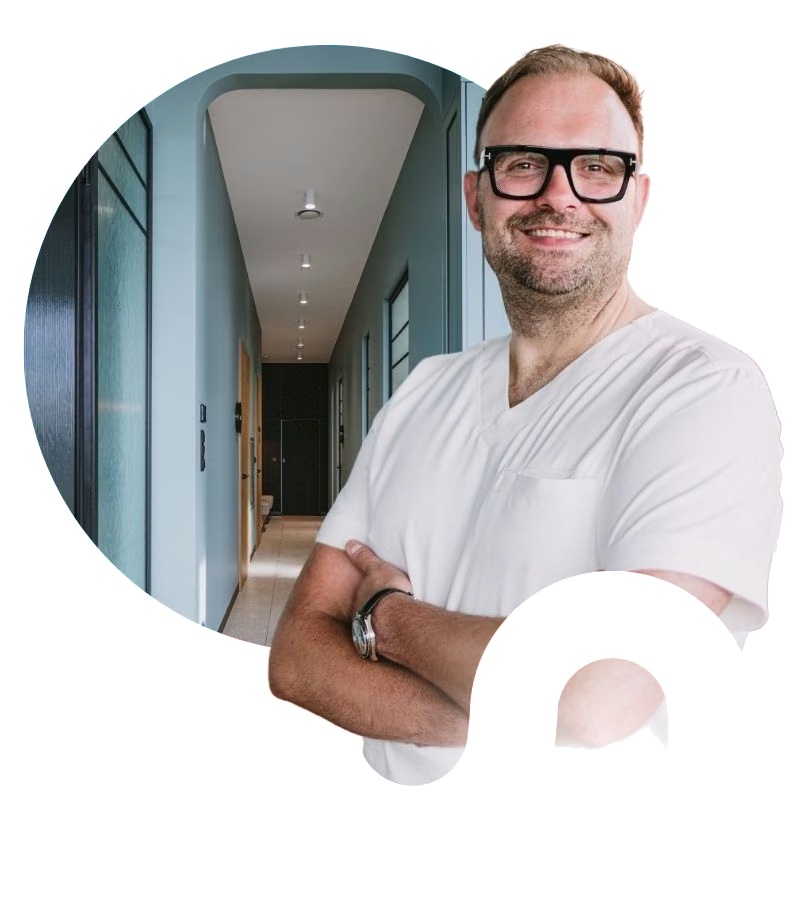
Treatment at Flow Dental Studio is provided by Adrian Kiepuszewski, dentist. He decides whether a tooth qualifies for vital pulp therapy based on vitality tests, an X-ray and how the cavity looks under the microscope - and he tells you plainly when another approach offers better chances.
In conservative dentistry he works with Dr Julia Mesjasz, whose areas include root canal treatment under a microscope. If your tooth ever does need it, you stay in the same hands. You can read more about his experience on the About Dr Adrian Kiepuszewski page.
- Vital pulp therapy
- Rubber dam and microscope magnification
- Vitality tests before any decision
- Observation after the procedure
How much does vital pulp therapy cost in Gdynia?
The procedure itself, listed in our price list as vital pulp therapy for pulp inflammation, costs 800 PLN. On top of this comes the final restoration, i.e. a composite filling priced at 450 PLN, 550 PLN or 650 PLN, depending on the number of surfaces being restored.
By comparison, root canal treatment of a single-canal tooth costs 1500 PLN, of a multi-canal tooth 2000 PLN, and a restoration on a fibreglass post a further 1000 PLN. A tooth after endodontic treatment more often needs a crown later, which means greater costs spread over time.
Diagnostics also affect the price. A dental examination costs 200 PLN, a panoramic X-ray 150 PLN, and a CBCT scan of the upper or lower jaw 250 PLN. The prices given are for information only and do not constitute a commercial offer within the meaning of Article 66 § 1 of the Polish Civil Code; the final quote is prepared after the examination.
-
filling on one surface450 PLN
-
filling on two surfaces550 PLN
-
filling on three surfaces650 PLN
-
dental examination200 PLN
-
panoramic X-ray150 PLN
-
CBCT scan of the upper or lower jaw250 PLN
By comparison: root canal treatment 1500 or 2000 PLN plus 1000 PLN for the restoration.
You can spread the cost of treatment in instalments.
See the full price list“This is definitely a practice you can trust completely”
Patient reviews on Google

Very professional and friendly. A visit to the dentist can be a pleasant experience after all. The aligners are comfortable and hygienic, and week by week I can see my teeth straightening. I recommend it.
Translated from Polish
I had the pleasure of being treated by Dr Kiepuszewski at Flow Dental Studio, and I can honestly say he is an exceptional dentist. Wisdom tooth extraction, which so many patients dread, took place in a comfortable atmosphere. Dr Adrian is not only extremely competent but also has a wonderful approach to patients, full of understanding and care. I also decided on aligner treatment. The doctor's precise work and professionalism mean the visits run smoothly and in a pleasant atmosphere. My smile looks better and better, and I know it was the best decision. I recommend him to anyone who dreams of straight teeth without pain or discomfort! The Flow Dental Studio practice itself also deserves a special mention. Modern equipment, a beautiful interior, a pleasant atmosphere and kind, courteous staff make patients feel looked after, and the visit becomes a much more pleasant experience. It is a place that cares not only about healthy teeth but also about the patient's wellbeing.
Translated from Polish
Flow Dental Studio is a place where professionalism goes hand in hand with empathy and care for the patient. I had professional teeth cleaning and fillings there, and I am very impressed by the precision and gentleness of the treatment. Dr Julia and Daria explain everything thoroughly, and the atmosphere at the practice is calm and friendly. It is definitely a practice you can trust completely, which is why I will be back whenever the opportunity arises :)
Translated from Polish
Beautiful practice, professional staff, and the doctor is the GOAT. I didn't even notice when it was over – the nasty wisdom tooth is gone. Highly recommended.
Translated from Polish
It is rare to find places where professionalism goes hand in hand with genuine empathy — but Flow Dental Studio is exactly that kind of place. I had the pleasure (yes, it really can be called that!) of being in Dr Adrian's care for a wisdom tooth extraction I had been dreading for a long time because of severe hypersensitivity. What sets Dr Adrian apart is not only his exceptional skill and precision, but above all his extraordinary respect for the patient's boundaries and feelings. Every gesture and every word – full of calm, understanding and attentiveness – made me feel cared for at every stage of the procedure. A procedure that had filled me with fear turned out to be an almost... soothing experience. No pain, no tension, and great attention to my mental and physical comfort. This is not just dentistry at the highest level — it is the art of creating a safe space in a place usually associated with stress. From the bottom of my heart, thank you to Dr Adrian and the whole Flow Dental Studio team for making it possible to come to you anxious — and leave grateful and smiling.
Translated from Polish
I recommend Dr Adrian. A very professional approach to patients.
Translated from PolishVital pulp therapy in Gdynia: frequently asked questions
“He explained everything to me clearly and in detail, and the treatment itself meant I stopped being afraid of dentists.”
Gabriel, root canal treatment patient, review on ZnanyLekarz
Does vital pulp therapy hurt?
How do you know the procedure has worked?
What happens if vital pulp therapy does not work?
Can vital pulp therapy be done on any tooth?
Will the tooth stay sensitive permanently after the procedure?
Is the procedure done straight away at the first visit?
How can a tooth's nerve be saved and root canal treatment avoided?
This is a way of treating deep decay in which, instead of removing the tooth's nerve (the pulp), we leave it inside and give it the conditions to heal. We clean the cavity under the microscope, and a bioactive material is placed on the nerve or the thin layer of dentine above it, stimulating the tooth to rebuild its natural barrier.
The tooth stays alive, and root canal treatment is no longer the only option. The procedure usually takes a single visit and ends with a tightly sealed composite restoration.
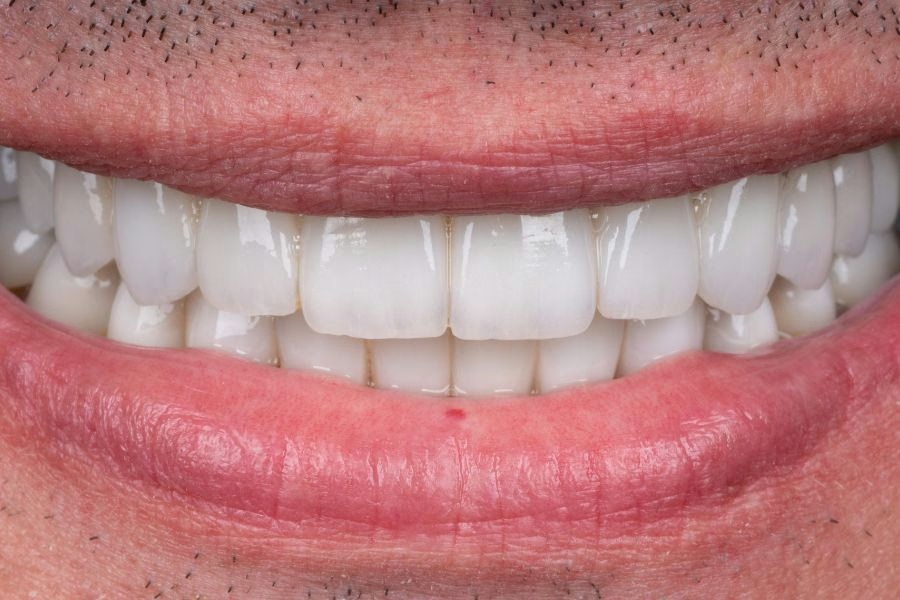
The difference is felt for years. A tooth with living pulp senses temperature, signals problems itself and copes better with the load of biting. Once root canal treatment is done, the tooth does not regain these properties.
At Flow Dental Studio in Gdynia we carry out vital pulp therapy under rubber dam isolation and microscope magnification. Success depends on a tight seal and precise preparation of the cavity.
Vital pulp therapy at Flow Dental Studio in Gdynia: key facts
The procedure preserves the tooth's living pulp and minimises the need for root canal treatment.
It is used for deep decay and when the pulp has been exposed by an injury.
The precondition is reversible pulpitis, i.e. pain only in response to a stimulus, which subsides once the stimulus is removed.
The three main methods are indirect pulp capping, direct pulp capping and pulpotomy.
Vital pulp therapy for pulp inflammation costs 800 PLN, and the final restoration is priced separately.
The procedure is done under local anaesthetic, usually in a single visit.
What is vital pulp therapy in Gdynia and why consider it instead of a root canal?
The method is based on a modern therapeutic approach of preserving tissue rather than removing it. In vital pulp therapy this is achieved with a dressing of bioactive material that protects the pulp until it rebuilds a barrier of dentine. The method therefore moves away from the traditional ways of treating deep cavities, which rely on removing the pulp. It is a procedure within minimally invasive dentistry, and its minimal invasiveness follows directly from its scope: decay is removed, not healthy tissue.
The pulp is not just filler inside the tooth. It is tissue containing blood vessels, nerve fibres and cells capable of producing new dentine. The pulp cannot be regenerated once it has died, so all that matters is the window while it is still alive. As long as it is alive, the tooth has sensation, responds to stimuli and is nourished from within.
A tooth with preserved pulp is more resistant to fracture than a tooth after root canal treatment. The natural dentine that the pulp can lay down strengthens the tooth from within and closes the way to bacteria. No composite material fully reproduces the natural structure of a tooth, which is why avoiding root canal treatment matters so much for the longevity of the restoration.
The aim of vital pulp therapy in Gdynia: preserving the living pulp
The aim of vital pulp therapy is to preserve the vitality and health of the pulp, not simply to close the cavity. Treatment is intended to stop the inflammation, isolate the pulp from bacteria and stimulate it to produce a new layer of dentine.
The aim of vital pulp therapy can be broken down into three elements that must all be present together.
Keeping the pulp alive, i.e. preserving sensation and blood supply inside the tooth.
Stopping the inflammation before it becomes irreversible.
Tissue destroyed by decay is rebuilt with a tightly sealed filling that cuts off the supply of bacteria.
Leaving out any one of them undoes the result. A tightly sealed dressing over a cavity that has not been fully cleaned traps bacteria inside, while a perfectly cleaned cavity with a leaking filling exposes the pulp to reinfection.
Indications: when is vital pulp therapy possible in Gdynia?
Eligibility is based on your medical history, an examination and an X-ray. Vital pulp therapy is used for deep decay and when the pulp has been exposed by an injury. The condition is that the inflammation is reversible. A correct, early diagnosis is crucial here, because the same decay may rule out the procedure just a few weeks later.
Reversible pulpitis as a condition for the procedure
The method is effective for reversible inflammation, which is recognised by the nature of the pain. Pain occurs with cold, sweet or sour things and disappears within a few seconds of the stimulus being removed. The tooth does not hurt spontaneously, does not wake you at night and does not react to biting.
The procedure is recommended for reversible and asymptomatic pulpitis. This also covers situations where the patient reports no symptoms and the deep decay is visible only on an X-ray. Pulp vitality tests and assessment of the response to cold complete the picture and make it possible to distinguish irritation from advanced inflammation.
Dental injuries in children and adults
When a tooth crown is fractured and the pulp is exposed, time matters. Prompt treatment after a dental injury increases the effectiveness of vital pulp therapy, because the exposed pulp wound becomes more infected with every hour. In practice, coming in on the same day gives the best conditions.
In children with damaged teeth this method is especially recommended when the root has not yet finished growing. The pulp has greater regenerative potential in children and teenagers, which is why the method is used in young permanent teeth whose roots are still developing. Keeping the pulp alive then allows the root to finish growing, which no other treatment can ensure.
How does your tooth hurt? This determines which method is an option
- it does not wake you at night,
- it does not hurt when you bite,
- without a stimulus it is quiet.
- the pain lasts long after something cold or hot,
- it hurts when you bite,
- the gum has become swollen.
What does vital pulp therapy in Gdynia involve, step by step?
The procedure can be done in a single visit. With very deep cavities a dressing is sometimes left in place for about two weeks, and the final filling is placed later. The choice of method depends on the clinical picture assessed while the cavity is being prepared, not on a plan made before the procedure. The sequence stays the same whichever method is chosen.
Diagnostics: medical history, assessment of the tooth's response to stimuli and an X-ray.
Local anaesthetic, so that preparing the cavity is painless.
Placing a rubber dam, which isolates the treatment area from saliva and bacteria.
Removing decay under microscope magnification, layer by layer.
Applying bioactive material directly to the pulp or to the thin layer of dentine above it.
Tightly sealed restoration of the tooth with composite material.
A check-up after a few weeks and an X-ray check at a longer interval.
Rubber dam isolation and working under magnification are not extras but conditions for success. Saliva contains bacteria and exposed pulp becomes infected within seconds, so without a rubber dam the risk of pulpitis after the procedure increases.
Indirect pulp capping, direct pulp capping and pulpotomy
Indirect pulp capping
Indirect pulp capping is used for deep carious cavities when the pulp has not been exposed. In these cases it involves deliberately leaving a thin layer of affected dentine just above the pulp chamber, instead of removing it completely and risking perforation.
A bioactive material is placed over the remaining dentine; it has an antiseptic effect and stimulates the pulp to produce tertiary dentine. The demineralised layer under the dressing gradually remineralises, and the distance between the cavity and the pulp increases.
Direct pulp capping
Direct pulp capping involves applying bioactive material directly onto the exposed pulp. It is used for a pinpoint exposure that has occurred while removing decay or as a result of an injury.
Before the material is placed, bleeding from the pulp wound must be stopped and its appearance assessed. Heavy bleeding that cannot be controlled and a dark colour indicate irreversible changes and rule the tooth out. With a normal response, a dentine bridge forms over the pulp over time - a natural barrier that closes the wound.
Pulpotomy
Pulpotomy involves removing the inflamed part of the pulp and leaving the healthy remainder. Most often the pulp in the chamber is removed and the root pulp is preserved, after which the cut surface is covered with bioactive material.
This method can be an intermediate option between direct pulp capping and endodontic treatment. It allows part of the living tissue to be preserved when the changes have reached deeper but have not affected the root canals.
Materials used in vital pulp therapy in Gdynia
The material used in vital pulp therapy is biocompatible, i.e. compatible with the tissues and non-toxic to the body. Biomaterials must be compatible with the natural tissues of the tooth, because they remain in contact with living pulp throughout healing. Compatibility here means no inflammatory reaction from the natural tissues surrounding the dressing. Biocompatible materials do not cause allergic reactions and do not release irritants.
Calcium hydroxide, the oldest of these preparations, has a strong antiseptic effect and stimulates dentine formation, but it dissolves over time.
Mineral Trioxide Aggregate, MTA for short, is a calcium silicate-based material that is highly effective in maintaining pulp vitality.
Biodentine and related calcium silicate preparations, known as synthetic dentine, set faster and allow the cavity to be restored during the same visit.
MTA and Biodentine are now among the most widely chosen biocompatible materials in vital pulp therapy. At Flow Dental Studio we treat the cavity with a dentine-replacing preparation known as synthetic dentine. Advanced techniques of working under the microscope allow it to be applied precisely, without disturbing the neighbouring tissues. The choice of preparation depends on whether the pulp is exposed, how deep the cavity is and whether the final restoration is placed straight away.
How do bioactive materials stimulate tooth regeneration?
Bioactive materials release calcium ions and form a layer of hydroxyapatite on the surface - the same mineral that the hard tissues of the tooth are made of. At the same time, the high pH of the preparation suppresses any bacteria left in the cavity.
This change in the environment stimulates odontoblasts, the cells lying at the edge of the pulp, to produce new dentine. In this way the body itself regenerates the pulp to a limited extent and rebuilds the missing barrier. Biocompatible materials support the regeneration of dental tissue but do not replace it, so without the patient's own response the procedure will not succeed.
Biological dentistry in Gdynia and oral health
This whole method is part of a wider approach known as biological dentistry. Biological dentistry uses biocompatible materials and aims to protect the teeth as much as possible. What counts is avoiding toxic materials and supporting natural processes rather than replacing them. A holistic approach here means considering how the treatment of one tooth will affect oral health and the rest of the body.
This kind of treatment supports your body's natural regenerative processes rather than doing their work with a material. The same way of thinking applies to prosthetic restorations and replacing missing teeth. Flow Dental Studio offers both solutions using traditional titanium implants and zirconia implants. Zirconia implants are biocompatible and metal-free.
Zirconia does not conduct electricity and does not show through thin gums, which is why it is sometimes chosen by people who want to limit the amount of metal in their mouth. In both cases the tissues around the implants need the same hygiene, because their condition is determined by bacteria, not by the implant material itself. The choice between zirconia and a solution based on traditional titanium implants is made individually, after assessing the bone conditions. Neither option is inferior; they differ in material and indications.
A separate area, still the subject of clinical research, is the use of stem cells to recreate the pulp in a tooth that has lost it. Stem cell therapies remain at the research stage and are not a routine dental procedure.
Vital pulp therapy versus root canal treatment in Gdynia: the key differences
Both methods save the tooth, but they do it differently and leave the tissues in a different state. Vital pulp therapy preserves the pulp, whereas in endodontic treatment the pulp is removed and replaced with a root canal filling.
- Aim: vital pulp therapy maintains the vitality of the pulp, root canal treatment removes it completely.
- The tooth after the procedure: a living tooth, nourished from within, versus a tooth without pulp.
- Strength: a living tooth keeps its flexibility, while non-vital teeth crack more easily and more often need a crown.
- Indications: reversible pulpitis versus irreversible pulpitis or pulp necrosis.
- Scope: removing the decay alone versus shaping and filling the root canals.
- Cost: 800 PLN for vital pulp therapy for pulp inflammation versus 1500 PLN or 2000 PLN for root canal treatment, plus the restoration.
Root canal treatment eliminates bacteria from inside the tooth even when the pulp is already dead, so it remains necessary in many situations. Vital pulp therapy can prevent the need for root canal treatment, but only if the patient comes in early enough. Some studies indicate that success depends above all on correct patient selection, not on the choice of preparation itself.
The choice of method is not a matter of preference. With reversible inflammation, the biological method is used to minimise the need for invasive treatment. With irreversible inflammation, endodontics is the only option.
Contraindications: when is vital pulp therapy not possible?
Irreversible pulpitis is a contraindication to vital pulp therapy. The symptoms that point to it are fairly characteristic and rule out the procedure regardless of the size of the cavity.
- spontaneous pain that occurs without a stimulus,
- pain at night that wakes you up,
- throbbing pain radiating to the ear, temple or lower jaw,
- long-lasting pain after something cold or hot,
- tenderness on biting and a loose tooth,
- swollen gums, a fistula or pulp necrosis,
- periapical changes visible on an X-ray.
With this picture, root canal treatment is the treatment of choice, and if the tooth is too damaged to be restored, extraction is considered. Attempting vital pulp therapy despite these symptoms leads to the pain returning and lost time.
How should you care for your tooth after vital pulp therapy in Gdynia?
The first few days determine whether the pulp has time to settle. After the procedure the tooth may be sensitive to cold and pressure, and this can last up to about 10 days. This is an expected reaction that usually resolves on its own.
- avoid hard and sticky foods on the side of the treated tooth,
- limit very cold and very hot drinks,
- brush the area around the treated tooth gently but thoroughly,
- clean between your teeth with floss or an interdental brush,
- come back sooner if the pain gets worse or appears at night.
The check-up visit is to assess whether the pulp has responded properly. A vitality test is done then and, after a longer period, an X-ray as well to assess the area around the root tip. Regular oral hygiene and check-ups are as important here as the procedure itself.
Book a visit at Flow Dental Studio in Gdynia
If your tooth reacts with pain to cold or sweet things and the pain passes after a moment, this is the point at which vital pulp therapy still makes sense. Delaying usually means moving on to more invasive methods, because reversible inflammation becomes irreversible over time.
The studio is at ul. Arkadiusza Rybickiego 2B/U2 in Gdynia and is open Monday to Friday, from 9:00 to 20:00. You can arrange an appointment by calling +48 786 420 004 or using the contact form.
Tell us how your tooth hurts and since when, and we will call you back to arrange an appointment in Gdynia. If it is an injury, call us - do not wait for a reply to the form.
Flow Dental Studio
ul. Arkadiusza Rybickiego 2B/U2, 81-340 Gdynia
+48 786 420 004
info@flowdentalstudio.pl
Monday – Friday, 9:00 – 20:00